
Mike Whitney — The Unz Review Aug 9, 2026
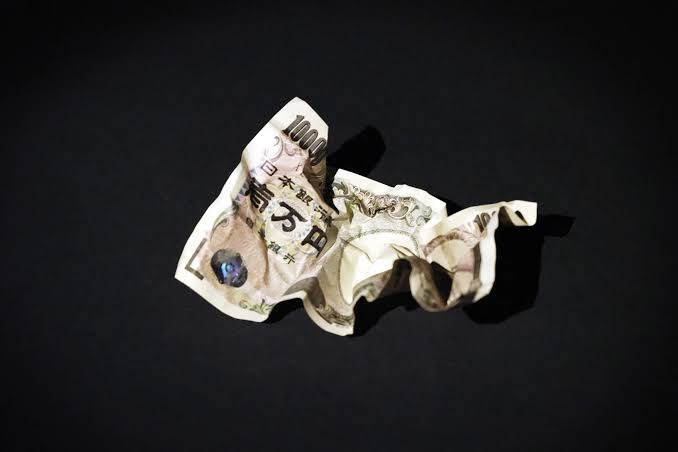
A cratering yen has set off alarms on Wall Street and in financial centers around the world. If the Bank of Japan sells its behemoth stockpile US Treasuries (now exceeding $1.2 trillion) to support its sagging currency, the US bond market could go into a nosedive dragging the global economy off a cliff. That is why on Friday, July 31, US Treasury Secretary Scott Bessent launched an unprecedented currency intervention to prop up the anemic yen and to forestall an impending financial meltdown. Surprisingly, Bessent implemented a euros-for-yen trade via the New York Fed so as not to weaken the dollar or trigger a selloff in bonds. The gravity of the intervention, however, was not lost on jumpy investors who have connected the dots and understand that America’s $40 trillion debt Ponzi is growing increasingly unstable and could trigger another financial crisis. In short, the teetering yen is merely the canary in the coalmine signaling deeper structural issues that could take down the entire dollar-based house of cards. This is from Forbes:
The wobbling Japanese yen could trigger a global financial crisis…. The yen recently reached a 40-year low against the dollar. The fear is that a further fall in the currency’s value will precipitate a crisis of confidence that will not only set off a serious bout of inflation inside Japan…. but also adversely impact financial markets around the world.
That’s why the U.S. and Japan just undertook a very rare joint intervention in currency markets to prop up the yen. In other words, both countries used dollars to buy the yen.
The intervention has had success. However , most experts believe the relief will be short-lived because of adverse fundamentals in Japan: a too-low short-term interest rate, which is 1% vs. around 3.5% in the U.S.; a national debt that is proportionately twice that of the U.S.; rising energy prices; and a declining and aging population.
The immediate worry for U.S. Treasury Secretary Scott Bessent is that in an effort to save the yen from collapse, Japan will start liquidating its $1.1 trillion portfolio of Treasury bonds and bills, not to mention its holdings of German and British bonds. Such sales would put pressure on interest rates. After all, financing our immense budget deficits and refinancing some $7 trillion of our existing debt that’s coming up for renewal are already worrying the markets. This anxiety, for instance, is why the interest rate on our 30-year Treasury bond has reached its highest level in almost 20 years.
Bessent wants the Federal Reserve to beef up a facility it created in 2020 to deal with a dollar shortage caused by the pandemic and use it now to help the yen. He could also employ a Depression-era facility called the Exchange Stabilization Fund. The idea is that through these devices Japan could borrow dollars using its Treasury holdings as collateral. No sales necessary.
This help is nice, but there are better, more immediate ways to deal with the crisis. Japan should boost its utterly unrealistic short-term interest rate…. Another important thing that both the U.S. and Japan should do… is to announce that they want a stable rate between the dollar and the yen. They might even give a range of, say, 150 to 155 yen to the dollar and make clear that the two countries would massively intervene in the exchange markets to keep it there. Japan would, if necessary, reduce the supply of yen to keep it in that range. These steps would quash the immediate crisis. Japan’s Wobbling Yen Could Trigger A Global Financial Crisis, Forbes
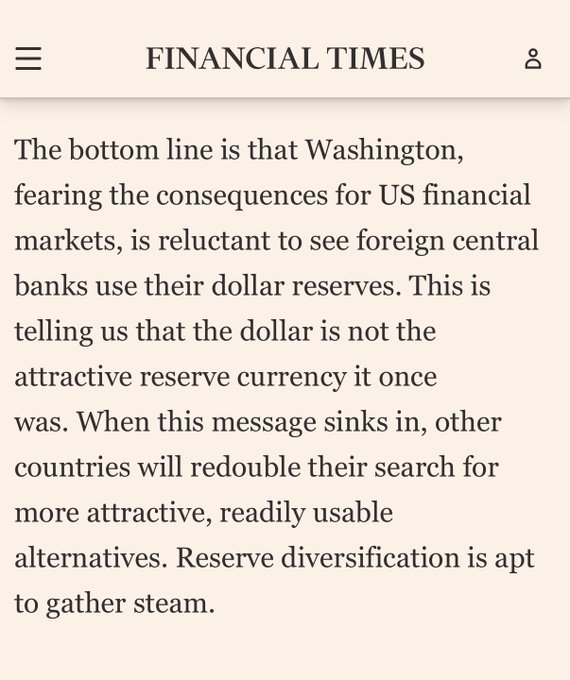
The United States and Japan are already massively meddling in the market to scare off short sellers who don’t think market fundamentals support a strong yen. In effect, Bessent is saying that if they bet against the yen, they will be crushed by the combined firepower of the Fed and its ally in Japan. In other words, anyone who invests believing that the market is “free and fair” will be clobbered.
Second, the “facility” to which Forbes refers, is another Fed-generated bailout outfit similar to ones created during the Great Financial Crisis.
It is called The Foreign and International Monetary Authorities Repo Facility or FIMA which is operated through the Federal Reserve Bank of New York “To help prop up the yen with dollar loans” in order to discourage Japan from dumping its US debt.
Simply put, it’s a bailout facility. The Fed is issuing dollar-backed loans to prevent the market from rebalancing and to avoid a catastrophic sell-off of US debt that could put the global financial system into downward death spiral.
But will all this meddling work?
Investors don’t think so. Look at this blurb from Reuters:
Fueled by interventions from Tokyo and coordinated action with Washington in recent days, the yen rallied about 4% against the dollar but was not able to reclaim a peak from the previous intervention by the Japanese authorities in May.
Nearly 95% of about 60 respondents in the July 31-August 5 survey said future Japanese currency interventions alone would not sustainably curb the currency’s weakness. Nearly every respondent who said that also said the Bank of Japan would have to raise interest rates to make a lasting impact….
“Intervention … can be effective in slowing the pace of depreciation, reducing excessive market moves and providing short-term support, but history suggests without a change in the underlying fundamentals, its impact fades relatively quickly,” said Ales Koutny, head of international rates at Vanguard. Reuters
There it is in black and white. They’re going have to raise interest rates which will divert the capital that was going into US Treasuries to Japanese debt instruments. And when America’s Number One buyer of US debt (Japan) starts ditching USTs and purchasing its own sovereign bonds instead, interest rates will rise sharply in the US sending the economy into a protracted slump while ructions in the bond market push the US closed towards insolvency. Here’s more from Leshka at X:
Something much bigger is happening underneath Japan’s financial system. The 2-year government bond yield just reached 1.51%.
Its highest level since 1995. The 10-year yield climbed toward 2.9%. And Japan’s policy rate is now 1%. Its highest level in 31 years.
That means the era of nearly free money in Japan is ending. For decades, investors borrowed cheap yen. Then moved that money into:
U.S. Treasuries. Stocks. Real estate. Crypto. And markets around the world.
Now borrowing in yen is becoming more expensive. And Japanese bonds are finally offering meaningful returns at home. This creates one enormous risk: Japanese capital no longer needs to stay overseas. If that money starts returning to Japan, the global carry trade begins to unwind. Foreign assets get sold. Bond yields rise. Liquidity leaves risk markets. And volatility spreads everywhere. Japan is already showing signs of panic.
The government spent a record ¥6.28 TRILLION defending the yen in a single day in April. Another intervention worth an estimated $95.5 BILLION may have followed in late July. Yet the yen still collapsed toward ¥164 per dollar before recovering. Intervention is buying time. It is not fixing the underlying problem. And now Japan is trapped between two opposite decisions. Raise rates to defend the yen. Or buy more bonds to stop yields from rising.
Prime Minister Sanae Takaichi has already urged the Bank of Japan to increase bond purchases when necessary. But more bond buying weakens the yen. While higher rates increase the cost of servicing Japan’s massive debt.
Fix one problem. Make the other one worse.
Monday will not automatically crash global markets. But it will reveal how much larger Japan’s debt burden has become while borrowing costs are hitting multi-decade highs.
That is the real risk. Leshka.eth
WARNING: TOMORROW WILL BE THE WORST DAY OF 2026!!
Japan just hit the panic button.
They’re currently sitting on ¥15.1 TRILLION in bond losses.
Next week, they will dump $6 TRILLION of U.S. Treasuries to cover the damage.
If you hold any assets today, you MUST know this:… pic.twitter.com/8ZVvNIFien
— 0xNobler (@CryptoNobler) August 9, 2026
So, are we headed for another Black Monday?
Who knows, but I suspect that analyst Cory Swan might be onto something when he suggests that Bessent and his fellows are pushing us towards hyperinflation followed by the loss of reserve currency status. In fact, it seems almost inevitable now. Check it out:
“…Japan cannot keep defending forever without selling Treasuries or pushing the Bank of Japan into even more extreme measures. The US just showed that it will use other currencies and its own balance sheet to paper over the pressure because a disorderly yen collapse threatens the entire dollar system. That path leads to more dollar printing, more liquidity, more attempts to manage what cannot be managed. Every one of those moves devalues the dollar, the unit of account that still prices nearly everything. @Cory Swan (start at 53 seconds)
Regardless of what happens on Monday, the nation’s path has already been charted by Soro’s protégé at Treasury (Bessent) and his esteemed colleagues at the Central Bank. The dollar will weaken, the economy will tumble, and the American people will suffer. That much is certain.
Wes Streeting addresses ‘unbelievable volume’ of homophobic abuse he receives
Story by PN Freelancer •
” well you should not be a pervert then should you ” ?
Teen arrested over assault in Thetford anti-migrant disorder
11h •
A teenage boy has been arrested on suspicion of assaulting an emergency worker during anti-immigration disorder in Thetford. Tensions flared in the Norfolk town last week when people attempted to storm homes linked to asylum seekers and police officers were assaulted in three nights of unrest.
The people do not want 1250 migrants brought to their area
Two more Thetford disorder arrests takes total to 15
Norfolk Police have turned on their own people in a shocking display of racism
Police have said a man in his 20s, arrested on Sunday on suspicion of assaulting an emergency worker and being in possession of a Class B drug, remains in custody.
A teenage boy, arrested on suspicion of assaulting an emergency worker, was taken to Bury St Edmunds Police Investigation Centre and has since been released on bail until 4 October.
The force has made 15 arrests in total since the disorder started last week.
A police spokesman said ” we dont want them here any more than you do, but we have a job to do
PLEASE PASS THIS AROUND, UNTIL EVERY ONE HAS HAD THE OPPORTUNITY TO READ IT… THIS IS SURELY SOMETHING WE ALL NEED TO THINK ABOUT!!!!
THE ONLY THING WRONG WITH THE GOVERNMENT’S CALCULATION OF AVAILABLE PENSION IS THAT THEY FORGOT TO FIGURE IN ALL THE PEOPLE WHO DIED BEFORE THEY EVER COLLECTED OLD AGE PENSION.
WHERE DID ALL THAT MONEY GO?
Remember, not only did you and I contribute to our Pension, our employer did, too. It totalled 15% of your income before taxes.
If you averaged only £15 000 over your working life, that’s close to £220,500. Read that again. Did you see anywhere that the Government paid in one single penny?
We are talking about the money you and your employer put in a Government bank to ensure that you and I would have a
retirement pension from the money we put in, it was not money that the Government had any right to spend elsewhere.
Now they’ve started to call the money we paid in an
‘benefits’ when we reach the age to take it back.
If you calculate the future invested value of £2500 per year
(yours & your employer’s contribution) at a simple 5%
interest (that’s less than what the govt. pays on the money that it borrows from Rothschilds banks, after 49 years of working you’d have
£892,919.98.
If you took out only 3% per year, you’d receive £26,787.60 per
year and it would last better than 30 years (that means until you’re 95 if you retire at age 65) and that’s with no interest paid on that final amount on deposit!
If you bought an annuity with the money and it paid 4% per year, you’d have a lifetime income of £1976.40 per month.
THE CROOKS IN GOVERNMENT HAVE PULLED OFF A BIGGER ROBBERY THAN THE GREAT TRAIN ROBBERS EVER DID.
Entitlement not Benefits!!??
My foot !! IT’S MY MONEY!! I paid IN cash for my pension.
Just because they borrowed the money to spend on other things, that doesn’t make my pension some kind of charity or handout!!
Remember MP’s benefits? —
free healthcare,
outrageous retirement packages,
67 days paid holidays,
three weeks paid holidays,
unlimited paid sick days.
Now that really should be called welfare entitlements, yet they have the nerve to spend my O A P retirement payments
on importing migrants ?
We’re “broke” and the government can’t help our own OAPs, our ex-service personnel, our orphans or our homeless
Yet in the past few years we have provided aid to Haiti, Chile, Turkey, India, Pakistan, etc., etc., etc. Literally, BILLIONS of Pounds !!!
But they can’t help our own citizens!
Our retired seniors living on a ‘fixed old age pension have to beg social services to receive additional aid, while our government and religious organizations pour hundreds of billions of £££ tons of food to foreign countries!
They call the old age pension a benefit even though most of us have been paying for it all our working lives, and now, when it’s time for us to collect, the government is running out of money.
Why did the government borrow from it in the first place?
It was supposed to be in a securely locked box, not to be used as part of the Government’s general funds.
Sad, isn’t it, that some people won’t have the guts to forward
this. I’m in the category with guts enough to do it – – – and I just did.
I hope some of you will do the same.
Our people first-migrants second Xx
Sent from Yahoo Mail for iPhone
Britain faces ‘worst food security crisis in decades’
Story by Tim Wallace • 1
Britain is facing its worst food security crisis in decades as repeated heatwaves risk ruining farmers’ harvests, analysts have warned.
farmers are being bankrupted so government can buy land cheap for MP hosing
MP or Migrant Priority Housing, is endorsed by all the controlled political parties
Starvation is coming very soon
Palestine today tomorrow the UK ”
The warning was issued as nearly three quarters of England was declared to be in drought, increasing the threat posed to food production across the country. soaring temperatures are damaging wheat yields, vegetable crops and milk production, Shore Capital warned, leaving the UK increasingly reliant on food grown abroad and sold to us by jewish middle men
Analysts from the investment bank said the recent period of unprecedented dry, hot weather could damage homegrown food supplies and increase our dependence on costly imported grain.
This risks driving up animal feed costs, according to Shore Capital’s Akhil Patel and Clive Black, which will trigger higher prices for consumers.
“The UK has not been so close to a food security challenge for many decades,” they said.
Drought was extended across more areas of England on Monday after a record-breaking spell of temperatures, and now covers 71pc of the country.
This has left more than 27 million people living under hosepipe bans Alistair Carmichael, the chairman of the environment, food and rural affairs committee, told the BBC on Monday that shoppers must brace for “further food price inflation shocks” later this year.He said: “The problem for farmers today will be the problems for consumers in six or 12 months’ time, because you see massively decreased yields for wheat and barley, and you see increasingly concerned voices coming from vegetable producers as well.”
Wheat yields in the UK are down by around 14pc this year, while oat production has fallen by at least 9pc.
The National Farmers Union warned last week that there would be a shortage of certain food products if the drought continues.
The threat to domestic production could drive food inflation up to 5pc in the coming months, Shore Capital warned, up from the current rate of 1.7pc.
The analysts called on the Government to introduce a “25-year strategy to increase food security”, built on becoming more self-sufficient in energy and water.
Despite soaring temperatures at home and abroad in recent weeks, Britain has so far escaped the type of shortages that dominated the years after the Second World War. Global supplies have held up sufficiently well for Britain to be able to import sufficient food.
However, certain food prices are at their highest in more than three years, according to the UN Food and Agriculture Organisation.
Cereals, vegetable oils and sugar all became more expensive in July compared with June, it said.
There are also looming dangers from changing global conditions, with signs of a strong El Niño weather event on the way.
This will potentially reduce global crop yields and even limit shipping through the Panama Canal.
That in turn would make it harder for Britain to rely on foreign produce, Shore Capital said.
“The assumption the UK can import when the agricultural outlook is difficult is severely flawed and based on that assumption there will be availability beyond the UK,” they said and at what cost ?
French and Spanish food production has been hit by droughts and wildfires, while the Iran war has limited the supply of fertiliser through the Strait of Hormuz.
The conflict has also pushed up the price of fuel, which has triggered higher diesel costs for farmers.
Crude oil rose to almost $87 per barrel on Monday amid concern over the state of peace talks between the US and Iran. That is up from below $70 per barrel before the war.
Sir Dave Ramsden, a deputy governor of the Bank of England, warned last month that El Niño “would have consequences for global prices”.
Britons must prepare for hunger,
dirty jews
https://www.presstv.co.uk/Detail/2026/08/10/774068/Israel-Palestinian-journalists-attacks-West-Bank-July
I loves US Treasury Secretary Scott Bessent. He whom on Friday, July 31 ‘launched an unprecedented currency intervention to prop up the anemic yen and to forestall an impending financial meltdown’.
Well that was mighty big of him, weren’t it.
Then again, yuv got to ask yerself … how come the Yen is so, ahem, ‘anemic’? After all, Japan has done NOTHING but work its ass off producing all kinds of consumeristical products which the US has gobbled up with insatiable avidity ever since, well, ever since they dropped rather large exploding devices on Nagasaki and Hiroshima. In exchange for what? A worthless bit of paper known as the ‘Federal Reservation Note’.
As Alexander Macris says, a fiat currency a la ‘greenback’ would be an improvement over the existing debt-based currency which the Yanklandians have managed to export all over the world, corrupting everything in its path. But sadly, any President who has tried has a bad habit of getting assassinated.
As the ‘elite’ become more and more panicked by their collapsing usury-based system-of-control, they WILL resort to more and more draconian measures to pound and pummel the world into submission. The trauma of Gaza continues to send shock waves all round the planet. Iran. Syria. Lebanon. Are ya feeling lucky today Punk?!
Nothing can change until these generational psychopaths are destroyed. And they know it too. Though it’s sad to face the truth.
Ch-ch-ch-ch-changes
Turn and face the strange
Ch-ch-changes
Don’t want to be a richer man
Ch-ch-ch-ch-changes
Turn and face the strange
Ch-ch-changes
There’s gonna have to be a different man
Time may change me
But I can’t trace time
Mmm, yeah
– David Bowie
richard vobes talks on fake truth blogs in controlled opposition
like the Tap blog
https://duckduckgo.com/?ia=videos&origin=funnel_home_searchresults&t=h_&q=richard+vobes&chip-select=sear
I’ve published 3 long comments on this article over at the Unz review with tremendous graphics, I explain in detail why interest rates are going to the moon and why the Fed must defend the dollar.
https://www.unz.com/mwhitney/could-the-crashing-yen-trigger-hyperinflation-in-the-u-s/#comment-7728705
https://www.unz.com/comments/all/?commenterfilter=Yukon+Jack
I suppose Japan then, will probably not be interested in fighting wars for the U.S.
What percentage of japan’s GDP is spent on their military?
As of the latest 2025 data, Japan spent about 1.4% of its GDP on the military.
Military spending: about US$62.2 billion
Share of GDP: 1.4%
This was a 9.7% increase from 2024 and Japan’s highest military burden since 1958, according to SIPRI.
Japan is also pursuing a significant military buildup. Its government has targeted a defense-related spending level equivalent to roughly 2% of GDP, with the 2% target originally planned for 2027 but brought forward to FY2025.
So, in simple terms: Japan currently spends roughly 1.4% of its economic output on its military, compared with about 2.5% globally.
_________________________________________________
Was Australia going to buy submarines made in Japan?
Yes — Australia seriously considered buying Japanese-made submarines, specifically the Sōryū-class, but ultimately did not.
The timeline was:
2014–2015: Japan emerged as a major contender to replace Australia’s six Collins-class submarines. The Turnbull government was particularly interested in the Japanese Sōryū because of its long range, endurance and relatively advanced diesel-electric/AIP technology.
2015: Australia launched a competitive evaluation involving Japan, France and Germany.
2016: Japan’s proposal was rejected. Australia selected France’s Naval Group to design 12 conventionally powered submarines, the future Attack-class.
2021: The French program was cancelled in favour of AUKUS and nuclear-powered submarines.
There was actually a debate in Australia about whether it should simply buy the Japanese Sōryū off the shelf. An Australian parliamentary committee examined the option and concluded that the Sōryū would need substantial modifications to meet Australia’s requirements, particularly for Australia’s unusually long-distance patrols.
So it wasn’t quite “Australia had a deal to buy Japanese submarines and cancelled it.” Rather, Japan was one of the three finalists, and Australia ultimately chose France.
Interestingly, Australia is now buying major Japanese-designed warships: in 2025 it selected Mitsubishi Heavy Industries’ Mogami-class frigate design, with the first three ships to be built in Japan.
If you want, I can also explain why Australia chose the French submarine over the Japanese Sōryū, because the reasons are pretty interesting.
_______________________________________________
World believes Japan is high risk for investment. Has a lot of debt and an aging population. Might as well bring their money home before they lose it.
Word on the street is that jap private corporations hold most of the us treasuries not govt.
the only worth : SLAVEWORK !
money is only paper . but work is
blood sweat +tears .
it was Hitlers currency turned into gold + tanks
IN VAIN !
Like all NATO occupied countries Japan has Amerika putting its soldiers and weapons there to ensure a) the right caste of politician is ‘elected’ and protected. b) Amerikan interests must come first.
Over the years, despite Japan’s impressive re-building, the production of high quality tools, machines, cars, watches and consumer items, it has languished financially due to the coils of the Amerikan Anaconda constricting it to death. When Amerika and Europe began shuttering their manufacturing, abolishing jobs, creating a casino economy and transferring it all to China et al. in the late c20th with the arrogant belief that China was backward, Japan began to suffer from having a major but low cost competitor. Since the Yen and Japanese finances were forced to buy up huge amounts of Dollar bonds this created yet more strangulation.
One Red Herring often allowed to swim very free, is the ‘problem’ of Japan’s ‘ageing’ population. There is no problem. Japan has a very high life expectancy, contrasted to Amerika’s abysmal health record: huge crooked private insurance and a doped, over medicated, and sick populace- a model now eagerly being copied by EU decision makers. Japans’ workers and employers have paid into proper pension funds over years to secure their lives. But it is subverted by 2 things. 1. Investment dependence on US currency and bonds. 2. Loud propaganda about the ‘need’ to replace Japan’s elderly populace with fresh new immigrant imports…. The Soros Plan. This is strongly resisted by Japanese culture & society who see no such need and by the very relevant advance of AI which makes the import of masses of unskilled people not only absurd but corrosive to vitality.
However, the Amerikan financial stranglehold and intimidation/reward of political castes has worked, so far. But this is now very shaky and players at the table have different hands. A real Amerikan Nightmare would be for Japan to shake off the occupation (Rape Force special) quit NATO and seek friendlier pragmatic relations with China. Impossible you say! Not so, see what Nixon did with China. Sino-Japanese relations have a lot of mutual benefit that Amerika cannot offer. Then if Japanese financiers really were to start burning their US holding en masse others would follow suit and Amerika would be The Empire Without Any Clothes.
All depends on the quality of thinker in current day Japan.
“Could the Crashing Yen Trigger Hyperinflation in the US”
Hope so, it’s about time this stool was ratcheted up a few notches so we can get on with it.