
The Cradle – July 9, 2026
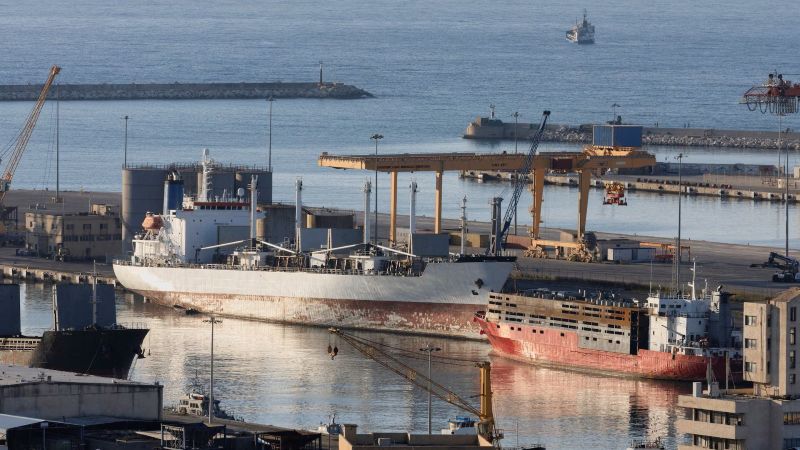
Russia plans to have a commercial logistics hub operating at its naval base in the Syrian port of Tartous by mid-July, Reuters reported on 9 July, citing Syrian officials.
Moscow has access to two berths at the naval base it leases from the Syrian government. It plans to operate the logistics hub from one berth, while maintaining a military presence at the other.
Naval base berths are specialized maritime infrastructures designed to accommodate warships and support vessels. They provide secure moorage and direct access to waterfront services like refueling, maintenance, and utility hookups.
The logistics hub is expected to receive some 250,000 tons of Russian goods for export to Syria and other regional states each month.
The hub will receive various products shipped from Russia’s Black Sea port of Novorossiysk, including wheat, grains, animal feed, vegetable oils, timber, steel, clinker, coal, rice, sugar, and mineral oils.
Russia has maintained its naval base in Tartous and air base at Hmeimim on the Syrian coast, despite the ousting of its former ally, Syrian president Bashar al-Assad, in 2024.
Syria’s new government is led by former Al-Qaeda leader Ahmad al-Sharaa, who enjoys backing from the US and Turkiye, and was previously an enemy of Russia.
In 2015, the Russian air force initiated a bombing campaign targeting Sharaa’s forces, at that time known as the Nusra Front, to prevent the extremists from taking power in Damascus.
However, Russian bombing also killed many civilians and caused severe damage in Syria’s major cities.
VIDEO: Russian troops seen abandoning their Tartous naval base to the jeers of French-speaking Al Qaeda terrorists. The Russian fleet has now reportedly left the port and is at anchor offshore. pic.twitter.com/FWv3DDW3jO #Syria #AlQaeda #Russia #Biden #Starmer #macron #Latakia
— Manchester Chronicle (@WithyGrove) December 11, 2024
Moscow has managed to maintain its interests in Syria after Assad’s fall, in part due to Israeli lobbying in Washington. According to a February 2025 report from Reuters, Israel wants Russia to maintain its military presence on the Syrian coast to keep the country weak and divided.
Russian President Vladimir Putin received Syria’s self-appointed President Sharaa at the Kremlin in October 2025 to re-establish relations between the two countries.
Syria’s new government has agreed to respect previous commercial deals struck with Moscow, including commitments to repay billions of dollars in loans issued by Russian banks to Assad’s government.
The logistics hub is being developed by the Syrian company Rus Line in cooperation with Russian companies that are members of the Russian-Syrian Business Council.
Russian companies from the council will jointly manage the project with Syria’s Sovereign Fund.
Around 85 percent of Syria’s imported wheat, 2.9 million tons for the 2025–26 season, comes from Russia.
Moscow is also a major oil exporter to Damascus, shipping 16.8 million barrels of crude to Syria in 2025 and an estimated 60,000 barrels per day (bpd) in the first months of 2026.
Reuters noted that according to Nanar Hawach, a senior Syria advisor at International Crisis Group (ICG), the logistics hub in Tartous “could help Russia maintain influence regardless of the eventual shape of its military presence.”
“Russia’s hold on Syria rests on what it supplies and maintains, and on its (United Nations) Security Council vote, which gives it influence that outlasts any drawdown of troops,” he said.
“A logistics role reinforces that by keeping Russia physically present at the port, strengthening its hand while the future of the base is being decided.”
> Despite the ousting of President Assad, Russia retains access to port facilities at Tartous. Giving the Russian Navy access to vital port facilities in the eastern Mediterranean
Whew! That’s lucky. You might almost thank the phoenix…
LOL..
‘Moscow has managed to maintain its interests in Syria after Assad’s fall, in part due to Israeli lobbying in Washington.’
says it all really.. what they really mean by Isreally lobbying is of course, the joo Gangsters that extract all the Russian resources and puppet the punch and judy show in the Gremlin.. using their contacts/family back in the stolen state to keep the lol ‘merchandise movin’…
hence the need for this bit of industrial wasteland they call a port…
This is part of the “deal” with Russia in abandoning Assad and the carving up of Syria and its people, people. The other part includes the carving up of the Ukraine. It is the Rothschild money power behind all of the strife and devastation.
I said it : it is very easy to end the war : Putin is a jew,
Zelensky is a jew, Trump is a jew, Satanjahu wants a
second israel for his Chabads + Ashkenazis as they
already stream in masses in their old homeland Ukraine
and the stupid ukrainian goyim needed 5 years to check
it . the only reason for the war is this + to slaughter as
much slave goyim on both sides + russias resources .
A “Russian” commercial logistics hub? Shipping “Syrian refugees” to Europe? Isn’t that rusty rose bucket in front of the Russian floater Jewlanis flagship ferry to infiltrate, rape and kill all the European infidels? With Allah’s help and Salomon’s brain it surely will make it there again and again until IT is done!
Putin wants to be friends with Pissrael and called it a Russian speaking country. RUSSIA IS THE ASSLICKER OF ZOG