
Rory Tingle – The Daily Mail Dec 5, 2025
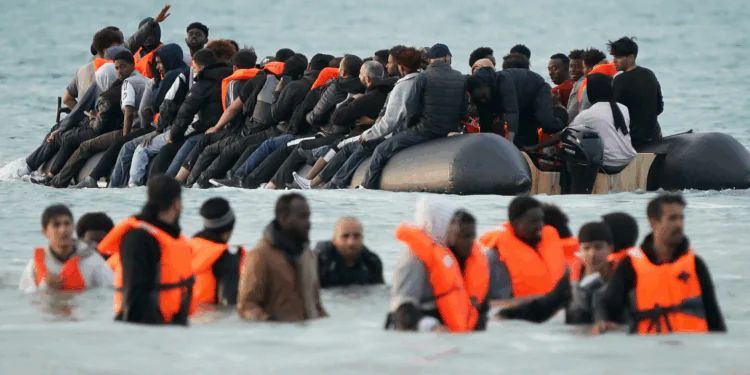
Gaps in official migration statistics mean ministers do not know how many illegal migrants are in Britain or the number using human rights law to avoid deportation, research has found.
The University of Oxford‘s Migration Observatory flagged 10 major areas where information is lacking, including immigration enforcement and returns, and the size of the population living in the UK without papers.
The research also raised how it is difficult to understand how many immigration cases are affected by the European Convention on Human Rights (ECHR), which the Conservatives and Reform UK have vowed to leave.
Experts found there is little data to know who and how many people apply for and are granted permission to stay in the UK through the convention, or successfully appeal against their removal.
Director of the Migration Observatory, Madeleine Sumption, said: ‘The UK’s membership of ECHR is a major issue in public debate, in large part due to its impacts on migration policy.
‘But the current data can’t give us a clear picture of where and when it has most impact. This makes it harder for the public or policymakers to make an informed choice about an important decision with long-term repercussions for the UK.’
Chris Philp, the shadow home secretary, accused Labour of ‘hiding the very data the public need to understand what is happening to our borders’.
He said ministers were ‘refusing to publish key enforcement data and they avoid saying how many cases are affected by human rights law’ claiming that ministers were ‘keeping the country in the dark because the truth would expose how weak and incompetent their approach really is’.
The research comes as Home Secretary Shabana Mahmood announced a series of reforms that aim to cut the number of people coming to the country.
As part of the asylum proposals, ministers will seek to bring in legislation to prevent human rights laws being used to frustrate deportations and make it easier to remove people.
Elsewhere, the Government will also make refugee status temporary, and refugees will have to wait 20 years before being eligible to apply for permanent settlement, instead of five years currently.
Asylum seekers whose claims are denied will be limited to make one appeal against their removal, instead of having the ability to make multiple challenges on different grounds.
One of the themes the Migration Observatory found in the study were poorly linked records for a person’s migration journey.
Senior researcher Peter Walsh said: ‘These evidence gaps are particularly challenging when trying to track asylum seekers through the immigration system: official data can’t tell us much about what happens to asylum seekers who are refused but not returned, or what type and sequence of appeals some people make when told they must leave the UK.
‘These are important questions, especially at a time when the Government plans to reorganise the immigration and asylum appeals system.’
The researchers however found promise for data improvement through recent pilots such as linking HMRC and Home Office immigration datasets, and changes from the Office for National Statistics on measuring net migration.
Research affiliate Georgina Sturge added: ‘The challenges the UK faces in properly getting to grips with migration data are often because the issue of migration is hugely complex and interacts with every part of society and Government.
‘IT systems that collect the records are often not up to the job.
‘That said, new approaches already being piloted have the potential to improve things significantly, and several recent investments are already bearing fruit.’
In a new announcement this week, the Home Office revealed that 60 delivery riders are to be deported from the UK after they were found to be working in Britain illegally
Large numbers of newly arrived migrants have been found to be working for takeaways companies – flouting a ban on paid employment for asylum seekers.
The Home Office said targeted action of workers in the so-called gig-economy, across the country, led to 171 arrests last month, including 60 detained for removal from the UK.
Those arrested included Chinese nationals working in a restaurant in Solihull, West Midlands, Bangladeshi and Indian riders in Newham, east London, and Indian delivery riders in Norwich, Norfolk.
Video footage released by the Home Office of wider action shows officers escorting an arrested man into the back of an immigration enforcement van, arresting another man by his bike in the street, and Ms Mahmood present at an operation in Streatham, south London.
Trump’s son-in-law to run Gaza with Tony Blair
Story by Henry Bodkin • 18hteve Witkoff and Donald Trump’s son-in-law Jared Kushner will help run Gaza,
Western officials have said.
<ass murder Tony Blair ? is this a joke.
The negotiators, who both played key roles in securing the ceasefire, will be involved in the practical rebuilding of the war-torn Strip, under US plans to be announced this month.
This is despite both also being centrally involved in US efforts to end the war in Ukraine.
According to briefings from Western officials to media in the US and Israel, Mr Kushner and Mr Witkoff will join Tony Blair on Gaza’s executive board, which will sit under the board of peace, chaired by Mr Trump. The formula, which now has UN backing, was largely devised over the summer by Mr Kushner and Tony, both jews.
The pair have been close ever since the former British prime minister helped Mr Kushner achieve the Abraham Accords agreement between Israel, the UAE and others in Mr Trump’s first term. The executive management board will oversee a committee of 12 to 15 Palestinian technocrats with no links to Hamas or Fatah.
The body with ultimate authority, will comprise heads of Arab and European countries, such as Mohammed bin Salman, the crown prince of Saudi Arabia, also a secret jew )
Tony Blair, the former prime minister will be involved in the practical planning of rebuilding Gaza –
Known internationally as the " arsole " Tony Blair, will be involved in the practical planning.
It is expected that Mr Trump will announce the details of phase 2 – the establishment of government and security mechanisms in a post-Hamas Gaza – including the names on the various governing bodies, before Christmas.
Hamas disarmament a sticking point
are the IDF going to be disarmed ?
However, although Hamas has indicated it might hand over power to a Palestinian government of Gaza, it refuses to disarm,
a key demand of Israel, which says it will not withdraw from Gaza until this happens.
A Western official told Axios: “All of the different elements are pretty well-advanced. It’s all moving ahead, and the aim is to announce it before people break for the holidays.
“The big question is: will Hamas agree to disarm, ( they would have to be damn fools to disarm ) and allow the new government to take power and govern the place? They can’t be in government directly or indirectly through their weapons. The moment of truth will come in the next few weeks.”
Gaza is part of palestine, let them run their own land
MASS MURDERS OF BABIES
Evidence of a burial ground has been discovered at the site of a former catholic institution for unmarried mothers and their children in Tuam, County Galway.
The mother and baby home came to international attention in 2014, after research led by local historian Catherine Corless, indicated that 796 babies and young children had died there without burial records.“ The presence of burials at this location has now been confirmed,” the Office of the Director of Authorised Intervention, Tuam (ODAIT) wrote in its fourth update since the agency began its work at the site in July.
It said it had found “graves of child or infant size” at the edge of the site, which was open from 1925 until 1961.
“The layout and size of the graves is consistent evidence that, at this part of the site, there is a burial ground from the time of the operation of the mother and baby institution,” it continued.“ The presence of burials at this location has now been confirmed,” the Office of the Director of Authorised Intervention, Tuam (ODAIT) wrote in its fourth update since the agency began its work at the site in July.
It said it had found “graves of child or infant size” at the edge of the site, which was open from 1925 until 1961.
“The layout and size of the graves is consistent evidence that, at this part of the site, there is a burial ground from the time of the operation of the mother and baby institution,” it continued.
Four sets of infant remains are believed to have been recovered in the dig according to initial assessments, in addition to seven sets of remains, all buried and discovered last month. Further forensic analysis is underway.
Historical documents had indicated the possibility of a burial ground but there were no initial signs of its existence at the ground or surface level, according to ODAIT.
In 2017, a government inquiry found “significant quantities” of human remains in underground chambers, just 100m from another part of the site.
At last 160 people have offered to give DNA samples to help identify the bodies, Daniel MacSweeney, director of authorised intervention at ODAIT, told RTÉ.
The story is that the nuns murdered babies born out of wedlock, and there for in sin.
A replica built by Catherine Corless, who discovered that nearly 800 children died at a mother and baby home in Tuam, Ireland. (AP Pho)
“I know from experience that sometimes the discovery of remains can be a catalyst for people to come forward,” he said.
In 2021, Irish leader Micheal Martin issued an apology on behalf of the state for the treatment of women and children who were housed in catholic mother and baby homes across Ireland.
His apology followed the final report of an inquiry into the nuns behaviour, which concluded that over 9,000 children had died in 18 catholic mother and baby homes that housed mothers who became pregnant outside marriage.
“They should not have been there,” he said in Ireland’s parliament. “The state failed you, mothers and children in these homes.”
The report lied and said 15 percent of all children in the homes had died from disease and infections like stomach flu, a figure almost double the nationwide infant mortality rate.
The catholic orphanage in londons shernhall st has been rumoured since the 1950s, that nuns killed nanies who are buried under what was the sports field
It’s not a “migration crisis”. They’re importing them, primarily on planes, to implement the great reset.
they dont control the illegales but want control
their own goyim natives with electronic ID
suspecting them of highcrimes of free speech,
antisemitism, racism, nationalism, fascism,
taxevading, BBCevading etc
PERFIDES ALBION !
James Balderson (first commenter here) doesn’t know that Hamas was created by Mossad so that the state of Israel would never have to sit down to negotiate with the Palestinian people as I and 24 other people know. See http://www.truedemocracy.net/w01/10.html Scroll down till you see Hamas; this is my Did You Know?
feature.
http://www.truedemocracy.net/td24/33.html Second and third items. This is my Did You Know? feature.
http://www.truedemocracy.net/hj31/40.html
These links are corroborated by these links:
1. https://rumble.com/v4l4oqw-october-7-was-an-inside-job-documentary-2024.html
Duration: 55:55
2. David Sorensen provided this 1:03:22 video that corroborated what I published. See
https://rumble.com/v3p9613-the-mystery-of-israel-solved-incredibly-shocking.html?fbclid=IwAR0jZgBnAsfyn7K1Ja8wJWlI489_6G5t807YIw-fn_OvnJk-NvKhT4havq8
3. Rodney Atkinson published this article. See
http://freenations.net/hamas-created-by-israel-and-recognised-by-council-of-europe/
4. Redacted’s Clayton Morris did this video saying the same thing. Watch
https://www.youtube.com/watch?v=W5Pgkp54m7Q
Duration: 22:34
5. A chap did a BitChute on this: Watch
https://www.bitchute.com/video/d0zwFNpt2Wfd/
Duration: 3:10
6. Brian Shilhavy reprinted what Professor Michel Chossudovsky published that includes 1. Netanyahu is on Record for Supporting and Financing Hamas Terrorists at https://vaccineimpact.com/2023/christians-continue-to-be-murdered-in-gaza-netanyahu-supported-both-hamas-and-al-qaeda-terrorists/
7. At around 44 minutes hear it again by Mike Adams at https://www.brighteon.com/59cbbb99-5f8f-4bcd-9622-0da42e942f9c
8. Bob Avery, in Ohio sent this out
2023/1/11
https://reinettesenumsfoghornexpress.substack.com/p/revealed-the-sinister-web-of-hamas
Duration: 12:09
9. An Aussie friend
2023/10/20
https://www.globalresearch.ca/netanyahu-supports-both-hamas-as-well-as-al-qaeda-terrorists/5836901
10. A Christian in America
2023/11/5
https://www.newstarget.com/2023-10-31-jeffrey-prather-michael-flynn-israel-stood-down.html
11. A Christian in Canada:
https://reinettesenumsfoghornexpress.substack.com/p/if-the-lights-go-dark-call-out-the?r=fh3vd around the 1:01:00 timeframe
12. Josh Sigurdson on World Alternative Media on Bitchute:
https://www.bitchute.com/video/pw6J0i69v42j/ during the 10 minute timeframe
Duration: 28:52
13. Jeff Berwick also said it. See
https://rumble.com/v5cug99-kill-gates-pest-control-agenda-in-action.html?utm_source=newsletter&utm_medium=email&utm_campaign=DollarVigilante
Duration: 1:33:43
14. An unknown YouTuber whose name I don’t know yet:
https://www.youtube.com/watch?v=9vK-g1QmcDA
See right at the 8 minute timeframe.
15. From Robert Morningstar
https://www.youtube.com/watch?v=fMXllVmTuKQ&rco=1
Duration 55:55
16. From Max Igan at the 8 minute timeframe:
https://stewpeters.com/documentaries/occupied/?no=1733245075&email=a%40truedemocracy.net
Duration: 1:47:55
17. https://www.bitchute.com/video/Ix9QWM44lry4 Stew Peters says Hamas was created by Israel too.
Duration: 19:05
18. From Jane in the USA:
Netanyahu, Zionist-Satanist, had a hand in creating Hamas. They are working together to clear out the Palestinians so that they can create a new shipping port in that region. Netanyahu gave a speech a number of years ago whereby he stated his desire to kill off white Christians and Jews.
Our elected officials in Congress serve the interests of Israel over the U.S. The first day on the job requires them to sign a loyalty pledge to Israel under threat of death and/or blackmail.
Both the citizens of Israel and of Gaza are the real victims in all of this nefarious plotting. We need to stop financing Hamas and Netanyahu’s government because it’s leading to the death of innocent people.
Jane
19. From James Corbett comes this very long article which finally exposes that Hamas was created by the state of Israel:
https://corbettreport.substack.com/p/the-secret-history-of-hamas
See the entire article that I saved in its entirety, not just the link which I labelled Hamas – Created by Israel by James Corbett
20. https://www.theburningplatform.com/2025/05/07/gaza-to-be-destroyed-operation-gideons-chariots/
21. https://www.voterig.com/.ty2.html
2025/7/27
Excerpt from regarding Hamas:
HAMAS IS ENTIRELY ISRAELI and it was placed for the sole purpose of fracturing Palestine and undermining the Palestinian authority. Palestinians by and large hate Hamas, there’s no way Hamas is constantly getting voted in, the Palestinian elections are obvious rigged.
22. From Jimmy Dore comes this 16:33 video:
https://www.youtube.com/watch?v=IhEN14luMHI
23. https://www.thetruthseeker.co.uk/?p=313572
24. https://www.youtube.com/watch?v=G8Vyg6_WVXE Ron Paul said it too, and here too: https://x.com/JOKAQARMY1/status/1976775635466174542?s=09
Peace,
Arlene Johnson
Publisher/Author
http://www.truedemocracy.net
To access the rest of my work, click on the icon that says Magazine.
I’d say that they don’t care how many migrants there is in Britain and that there isn’t enough of them to make those Labour Party shitheads in Parliament happy.
Young people on benefits to be helped into jobs with £820 million boost
Story by Alexander Brown • 9h
what jobs ? governments imported in milions of migrants and gave them the jobs
Musk: EU must be abolished
Story by Memphis Barker, Connor Stringer
Elon Musk has called for the EU to be “abolished” after the bloc fined his social media platform X €120m (£105m).
In a series of posts on the site, the billionaire lashed out at the officials who handed out the punishment for transparency breaches and threatened to pursue each country individually.
“The EU should be abolished and sovereignty returned to individual countries, so that governments can better represent their people,” he wrote.
The British public have said this all along
Gaza truce incomplete without ‘full withdrawal’ by Israel, Qatar PM says
Story by FRANCE 24 •
thats obvious
MASS IMMIGRATION WAS A MISTAKE
‘We made a catastrophic mistake’ Shadow Home Secretary admits to government failures on immigration: ‘Numbers were far too high’hadow Home Secretary Chris Philp has admitted that previous government made a “catastrophic mistake” on immigration.
Speaking on GB News’ Camilla Tominey Show, Philp acknowledged the record levels of immigration since 1945 were “far, far too high”.
“That was completely wrong and that was a catastrophic mistake,” he said.
The nonsense of multiculturalism has ruined the country
“I agree with what Edward Leigh said about that, he is absolutely right. Its now too late, I would honestly admit that.”
Crooked politicians were told again and again Enoch Powell Oswald Mosley William Joyce
and others.
Let’s be crystal clear: these aren’t “migrations”, they are invasions. Period. And they have been engineered and financed by criminally insane jews and aided and abetted by agents of treachery and treason in the cartel regimes posing as “government”…who should be chased through the streets and slaughtered.
The Protocols are real. The Kalergi Plan is real. And you and yours are totally f*cked if you don’t do something about it real f*cking soon. I kind of get it if you don’t have the yarbles to actually go hands-on, but you had better at least speak up.
cherie blair set up matrix chambers for the sole purpose of helping migrant criminals stay here
her ex husband toerag tony made one law change almost every day of his 10 years in power to assist her, she forgave him for nobbing the delicious wendy deny rupert murdochs wife, but his affair with cliff richard was too much
politicians who betray the people should be punished