
Karen DeYoung, Missy Ryan and Alex Horton – Washington Post July 1, 2023
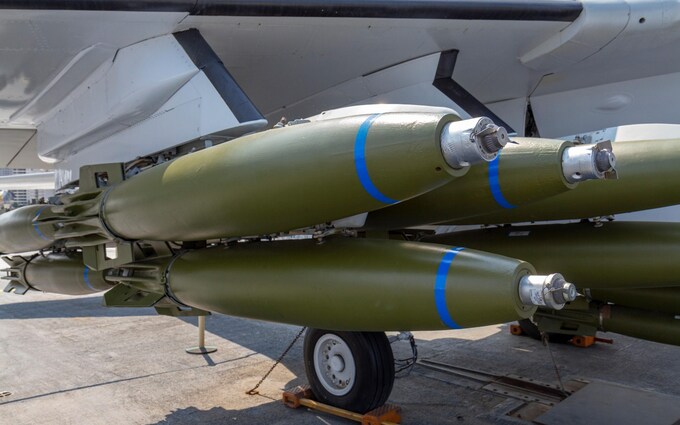
Confronted with a worrying shortage of artillery ammunition, a counteroffensive that has been slow to launch and increasingly desperate appeals from Kyiv for more weaponry, the Biden administration is facing an imminent decision over whether to supply Ukraine with controversial cluster bombs.
“We have been thinking about DPICM for a long time,” Gen. Mark A. Milley, chairman of the Joint Chiefs of Staff, said Friday at the National Press Club, referring to dual-purpose improved conventional munitions. “Yes, of course there’s a decision-making process ongoing.”
Senior administration and defense officials have in recent weeks contacted Capitol Hill and allies long opposed to the use of cluster munitions to make the case that they are needed on the Ukraine battlefield and to provide assurances on how they would be used. Deputy national security adviser Jon Finer made calls to lawmakers to gauge the comfort level on the issue, according to people familiar with the conversations, though they were told that a final decision had not yet been made.
The United States concluded months ago that cluster weapons could be an effective tool against advancing Russian troops and Wagner Group mercenaries, according to a January intelligence assessment that was among a trove of leaked classified documents obtained by The Washington Post. The assessment came amid the brutal months-long battle for the city of Bakhmut in eastern Ukraine.
Ukrainian forces found that the Russians tended to mass before an assault, rendering them vulnerable to cluster munitions, shells that contain dozens or even hundreds of smaller bombs that are dispersed over an area. The weapons “likely would increase the [Ukrainian military’s] effectiveness against assault waves because one cluster munition exhibits the same lethality as 10 155mm artillery rounds against grouped infantry,” the top-secret document said, referring to the ammunition used by howitzers that the United States has provided to Ukraine and that is now in short supply.
At that time, President Biden was opposed. “According to our own policy, we have concerns about the use of those kinds of munitions,” National Security Council spokesman John Kirby said in December in response to questions about Kyiv’s requests for the weapons.
The White House is now reviewing its position, according to several U.S. officials who, like others in this report, spoke on the condition of anonymity about the sensitive issue. “We’ve always said our security assistance would evolve as battlefield conditions have evolved, and that continues to be the case,” one official said. “In recent weeks, we’ve seen an increasing need for cluster munitions … that could help address any ammunition shortages that [Ukraine] might otherwise face.”
Another official said the State Department had long been opposed to the use of cluster bombs but that Secretary of State Antony Blinken had withdrawn his objections as the Pentagon awaits Biden’s final decision.
The administration’s remaining concern is as much focused on the optics of such a move, particularly among allies, as on the military efficacy of cluster munitions on the Ukrainian battlefield and the long-term danger they could pose to civilians.
“Our military analysts have confirmed that DPICMs would be useful especially against dug in Russian positions,” Laura Cooper, a deputy assistant secretary of defense focusing on Russia and Ukraine, told lawmakers during a congressional hearing last week. “The reason why you have not seen a move forward in providing this capability relates both to the existing congressional restrictions on the provision of DPICMs and concerns about allied unity,” Cooper added.
For years, Congress has inserted in its budget approvals a moratorium on exporting the weapons, although there are provisions allowing the president to waive the prohibition. President Donald Trump removed a policy stipulation saying the rate of unexploded bomblets, known as duds, could not be above 1 percent.
The United States is one of nearly four dozen countries — including a handful of other NATO members as well as Russia, China and Ukraine — that retain stockpiles of cluster munitions and have declined to join more than 120 other nations that have signed an international convention banning their use, transfer or production.
The weapons, which can be delivered by artillery, rockets, bombs and missiles, explode in the air over a target, releasing smaller submunitions across hundreds of yards.
Human rights organizations and other governments have denounced their use as inherently inhumane and indiscriminate, documenting the extent to which these weapons have maimed and killed thousands of civilians around the world, particularly because of their propensity to leave duds scattered across the ground. These explosive charges can be triggered long after the end of a military conflict.
Civilians have been maimed by cluster bomblets in places like Vietnam and Laos decades after they were dropped, underscoring their enduring harm. Critics say their use in this conflict would make it likely that the last Ukrainian to die from a bomb launched during this war has not yet been born.
“They are indiscriminate, and they harm civilians,” said Sarah Yager, Washington director of Human Rights Watch. “We are also talking about breaking a global norm against using cluster munitions, at least for countries that believe in humanity even in times of war.”
According to the nonprofit Landmine and Cluster Munition Monitor, the United States has used these weapons in a number of past conflicts, including Southeast Asia in the 1960s and 1970s, and Iraq in 2003. Saudi Arabia used U.S.-supplied cluster munitions in Yemen in 2009, the group said.
Ukrainian troops also could be endangered by their own use of the weapons. The rampant use of cluster bombs by the United States during the Persian Gulf War at times halted combat operations “because units were afraid of encountering unexploded ordnance,” according to a 1993 Government Accountability Office report that detailed how American troops were killed by dud munitions during and after the war.
“These duds are dangerous because they are so easily triggered, making them a threat to everyone who enters an area where they have been fired,” said Brian Castner, a senior crisis adviser at Amnesty International and a former Air Force bomb technician. “It’s like scattering random booby traps across the battlefield.”
The Defense Department has not confirmed whether the United States still produces cluster munitions and it is unclear what remains available in its arsenal to provide Ukraine. Many have been decommissioned and converted into other uses, such as training rounds, said Mark Cancian, a senior adviser with the Center for Strategic and International Studies.
U.S. officials say both Moscow and, to a lesser extent, Kyiv have employed cluster munitions in Ukraine since Russian President Vladimir Putin’s invasion. They argue that American-produced cluster munitions have a far lower failure rate than those produced by other countries. Although critics say the Pentagon has not provided reliable, updated data, one U.S. official said that the two types of American munitions under discussion for transfer to Ukraine have dud rates of approximately 1.3 percent and 2.5 percent.
when princess diana wanted to take her anti lnd mine campaign to palest8ine
this was why tony blair asked rothschild to kill her she was actually told she would die ina car crash
and so it was
The US knows it’s in a TERMINAL condition…. and now has a DEATH WISH.
Ditto UK.
Cluster bombs, delivered by what aircraft? How will these none existent aircraft get near the Russian lines?
Think Storm Shadow cruise missiles, fired from which planes, from which country, and flown by who? They are probably being fired from NATO territory.
Putin please cluster bomb Bidens hide out
where ever he + his jews be !
Zelensky concerning the delivery? of F16’s thinks this is deliberately delayed by the West: “So far their is no concrete understanding how the agreements reached will be implemented or when the training of pilots begins” ..
It’s another fake article about a fake war regarding a massive fraud that this is. Of course they are gonna bring in cluster bombs, making money, all wars seem to be between cousins to make a lot of money. Raiding the treasury, routing billions to private bank accounts, handled by fake guys like zelinski and Putin and Biden.