
Michael Rosneft – Defence Security Asia Nov 2026
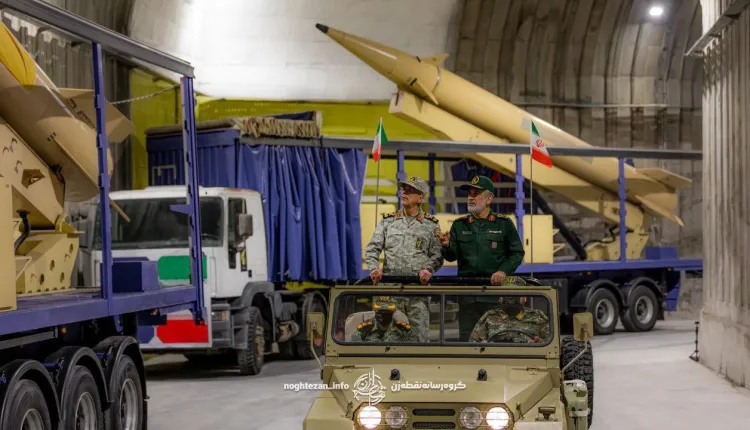
Iran’s claim that its missiles have demonstrated reach approaching 4,500 kilometres raises a strategic question extending beyond the Middle East: whether distant military infrastructure can still rely on geography to reduce exposure during regional conflict.
Islamic Revolutionary Guard Corps spokesman Brigadier General Hossein Mohebbi linked the claimed capability to activity toward Diego Garcia, placing the joint American and British Indian Ocean base at the centre of Tehran’s latest deterrence messaging.
The remarks, reported on November 19, follow Iran’s announcement earlier this month that its longstanding, self-imposed 2,000-kilometre ballistic missile restriction had been lifted, widening its declared targeting framework without independently establishing an equivalent operational breakthrough.
Mohebbi said Iran had previously demonstrated missile capabilities “with a range of up to 4,500 kilometres,” but the available information does not establish the missile type, flight profile, payload, or independently measured distance actually achieved.
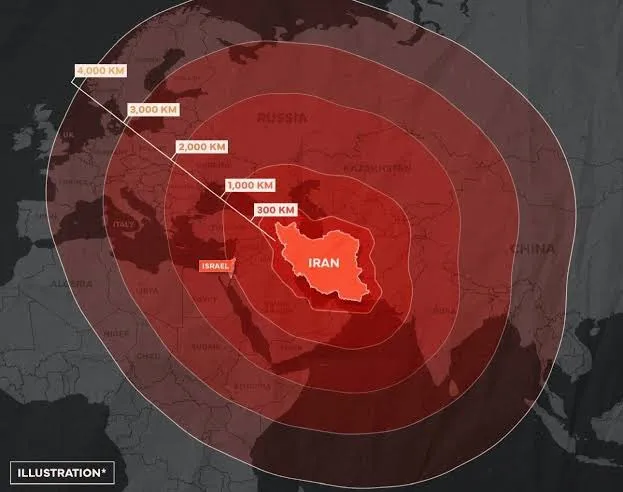
Iran’s growing missile range
The distinction matters because announcing a longer engagement envelope can influence military planning immediately, while demonstrating reliable precision strike against defended infrastructure requires evidence beyond an official range figure or a politically framed operational claim.
For Washington and London, the potential consequence concerns the security of distant support infrastructure, because an expanded Iranian missile envelope could complicate assumptions underpinning force posture, logistics concentration, and operational access across the Indian Ocean.
For European governments, Tehran’s announcement broadens an existing security debate by suggesting that facilities supporting American operations could feature more prominently in Iranian signalling, although geographic exposure remains dependent on launch location and actual performance.
The latest claim also revisits disputed events from March, when Western officials attributed two missile launches toward Diego Garcia to Iran, while Tehran denied responsibility and characterised the episode as a false-flag operation against it.
Neither missile reportedly struck the base, with one described as failing during flight and the other facing interception, leaving unresolved questions about achieved range, terminal performance, and the relationship between those launches and current claims.
In DSA’s assessment, the immediate strategic development is the widening of Iran’s declared deterrence geography, while the larger military transformation remains conditional on independently demonstrated range, accuracy, survivability, and repeatable performance under operational combat conditions.
Iran’s reported removal of the range ceiling therefore carries greater immediate evidentiary weight as a policy announcement than the assertion that a reliable, deployable 4,500-kilometre ballistic missile capability has already entered established operational military service.
The central issue for defence planners is consequently whether Tehran can convert strategic signalling into sustained long-range strike capacity, rather than whether a single announcement redraws the military balance across Europe and the Indian Ocean.