
Press TV – Nov 20, 2026
Iran has sharply rejected the latest wave of unsubstantiated US allegations that the Islamic Republic is developing biological or chemical weapons, describing the claims as a familiar and deliberate attempt to manufacture a pretext for further aggression.
In a statement posted on X on Thursday, Iran’s Foreign Ministry spokesperson Esmaeil Baghaei noted that after the long-running narrative of an “Iranian nuclear threat,” American officials are now asserting that there are “indications” that Iran is pursuing biological or chemical weapons capabilities.
“The allegations keep changing, but the underlying narrative remains disturbingly familiar,” he said. “Once again, the world is apparently expected to suffer a bout of collective amnesia.”
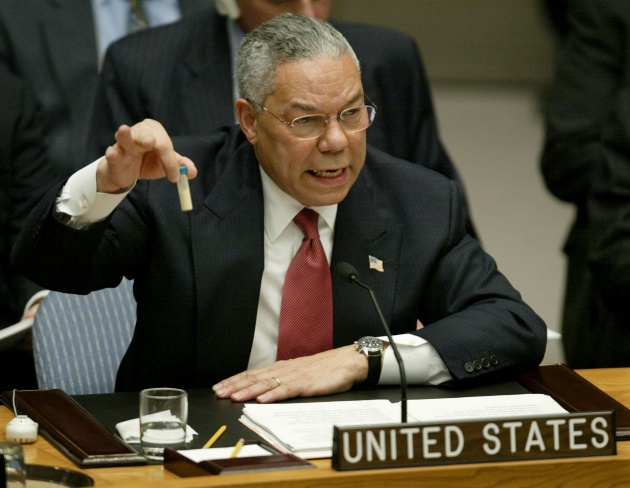
Baghaei explicitly recalled the infamous 2003 appearance of then-US secretary of state Colin Powell before the UN Security Council, in which Powell held up a small vial as supposed evidence of Iraq’s weapons of mass destruction. That presentation, Baghaei stressed, has since become a lasting symbol of one of the most consequential intelligence failures and political deceptions in modern history.
“Unsubstantiated intelligence claims about Iraq’s possession of WMDs were deliberately weaponized to manufacture public support and pave the way for a military invasion,” the spokesperson said. “The consequences were catastrophic—not only for the Iraqi people, but for the wider region and, ultimately, for American society itself.”
After the grand narrative of the “Iranian nuclear threat,” U.S. officials are now claiming that there are indications Iran is developing biological or chemical weapons! The allegations keep changing, but the underlying narrative remains disturbingly familiar. Once again, the world is apparently expected to suffer a bout of collective amnesia – much like Dory, the forgetful fish from Finding Nemo. Do American officials really expect the world to forget Colin Powell’s infamous appearance before the UN Security Council in 2003, when he held up a small vial as a visual representation of the alleged threat posed by Iraq’s weapons of mass destruction? That moment has since become an enduring symbol of one of the most consequential intelligence failures and political deceptions in modern history. Unsubstantiated intelligence claims about Iraq’s possession of WMDs were deliberately weaponized to manufacture public support and pave the way for a military invasion. The consequences were catastrophic – not only for the Iraqi people, but for the wider region and, ultimately, for American society itself. And now we find ourselves facing ominous new allegations and a narrative that appears to be following the same fraudulent script. The question is: has the world learned anything from the disastrous lessons of 2003, or are we about to let them deceive the public on a grand scale all over again?
— Esmaeil Baqaei (@IRIMFA_SPOX) November 19, 2026
He warned that the current allegations appear to be following “the same fraudulent script,” and asked whether the world had learned anything from the disastrous lessons of 2003 or was once again prepared to allow public deception on a grand scale.
The Iranian response comes amid reports citing unnamed US intelligence sources claiming Tehran might be exploring options involving chemical agents or a so-called “dirty bomb.” US President Donald Trump recently told Fox News there was an “indication” that Iran was “looking at gases, looking at bio,” while simultaneously downplaying any imminent threat.
US Secretary of State Marco Rubio has also publicly dismissed the reports as non-imminent and questioned the reliability of the sources involved.
Iran has consistently rejected such claims as baseless. The Islamic Republic is a state party to both the Chemical Weapons Convention and the Biological Weapons Convention. It remains one of the principal victims of chemical warfare in modern history, having suffered repeated attacks by the Saddam Hussein regime during the 1980–88 imposed war, attacks made possible by technical assistance and political cover from Western countries, including the United States.
Tehran has repeatedly stated that it has no chemical or biological weapons program and has no intention of developing one. Officials note that the same Western governments now leveling accusations previously armed and supported the Iraqi regime that used chemical weapons against Iranian soldiers and civilians, most notoriously in the 1987 attack on the city of Sardasht.
The latest allegations emerge against the backdrop of ongoing US-Israeli military threats and acts of aggression against Iran, including strikes on nuclear facilities under IAEA safeguards and continued pressure regarding the country’s peaceful nuclear program.
Iranian officials have maintained that normal cooperation with the International Atomic Energy Agency has been made impossible by these unprovoked attacks and threats of further strikes, and that any resumption of verification activities must be preceded by an end to military aggression.
Iranian authorities have warned that fabricated narratives of this kind risk being used to justify renewed military action, and have reiterated that any further aggression will be met with a decisive and proportionate response in defense of the country’s sovereignty and territorial integrity.
The Iranian Foreign Ministry has urged the international community to reject the recycling of discredited intelligence claims and to address the real sources of instability in the region, namely the continued US-Israeli policy of aggression and the failure to hold accountable those who have previously used and enabled weapons of mass destruction.