
Larry C. Johnson – SONAR21 Nov 11, 2026
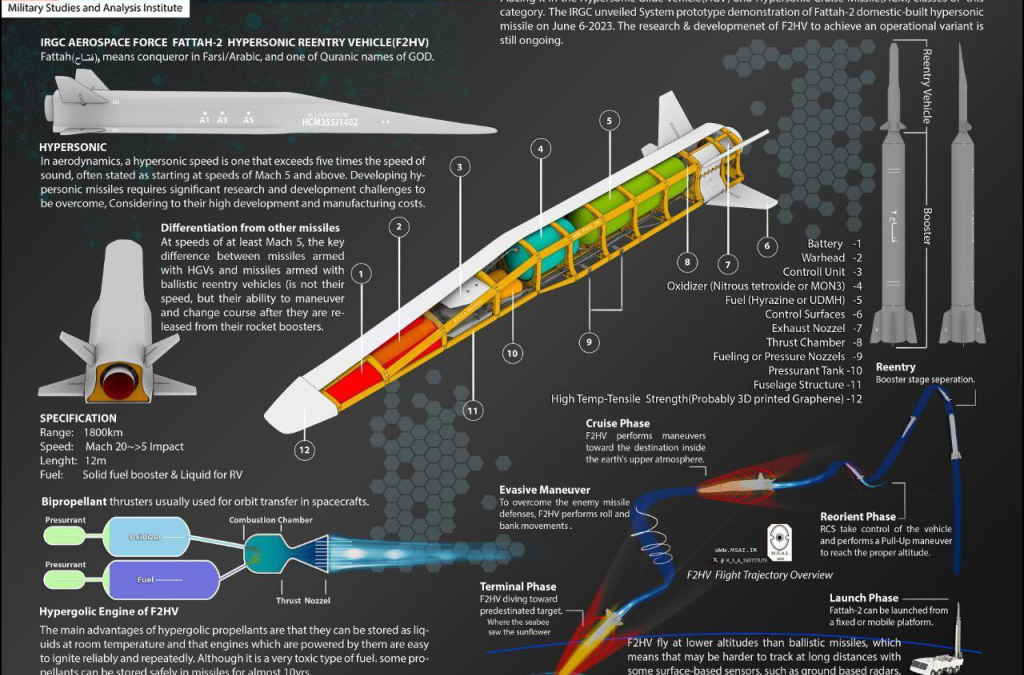
Washington has a well-worn method for handling Iranian threats: dismiss them as bluster, then act surprised when the missiles show up. We ran that play in March. Tehran had insisted for twenty years that its missiles stopped at 2,000 kilometers, and the Pentagon was happy to believe it. Then two Iranian ballistic missiles went screaming toward Diego Garcia, about 3,900 kilometers from Iran’s southern coast. Pete Hegseth later told the Senate he’d seen a 4,000-kilometer missile fired at the base. Oops.
On Wednesday, Mohsen Rezaei sent another postcard. If American planes take off from bases in Europe to bomb Iran, he said, Iran will hit those bases. He promised strikes on “remote American bases” that have “not yet been attacked,” and on “some islands, which they think our missiles can’t reach.” Then came the line that should keep a few wing commanders up at night: Iran’s “defensive and offensive capabilities are much greater now than they were on the first day of the war.”
The reflex in Washington will be to roll its eyes. I’d suggest a different exercise. Assume Rezaei is telling the truth. Assume he is quietly admitting that Iran now has a longer-reaching, more numerous missile force than the one it fired in March. Then look at where the US Air Force keeps its airplanes in Europe.
This is not a backbencher talking
Earlier this month the threats against Europe came from the usual chorus. A member of parliament’s National Security Committee told Euronews that Iranian missiles would fly toward Europe if America used its bases in Italy and Germany. Kayhan, the paper that speaks for the Supreme Leader’s office, said the target list now reaches “the heart of Europe.” Tehran’s Hamshahri reported that Iran had updated its target bank to include US support bases in Europe, under a doctrine of “response without geographical limits.” Western commentators filed all of this under noise.
Rezaei is harder to file. He is the secretary of the Supreme National Security Council, Iran’s top security official, appointed in August by Mojtaba Khamenei. He commanded the Revolutionary Guards for sixteen years. When the man who coordinates Iran’s war policy names your bases, the polite response is to stop calling it rhetoric.
The threats also followed a reported US strike on an Iranian missile facility on Qeshm Island. Tehran is not issuing these warnings in a vacuum. It is telling Washington what the next round will cost.
Get out a ruler
I did the arithmetic so the Pentagon doesn’t have to. Measured from Iran’s western and northwestern border, every major US air base in Germany, and the main ones in the UK, sits inside the 4,000 kilometers Iran demonstrated in March.
| Base | What’s there | Distance from western Iran |
| Incirlik, Turkey | US tactical aircraft, munitions storage | 810–950 km |
| Souda Bay, Crete | Naval air station, Sixth Fleet logistics | 1,810–1,940 km |
| Sigonella, Sicily | Navy patrol aircraft, Global Hawk drones | 2,530–2,760 km |
| Aviano, Italy | 31st Fighter Wing, F-16s | 2,630–3,040 km |
| Ramstein, Germany | USAFE headquarters, airlift hub for the region | 3,040–3,310 km |
| Spangdahlem, Germany | 52nd Fighter Wing, F-16s | 3,110–3,380 km |
| Lakenheath, UK | 48th Fighter Wing, F-15Es and F-35s | 3,570–3,840 km |
| Mildenhall, UK | Tankers, special operations aircraft | 3,570–3,840 km |
| Fairford, UK | Rotating B-52, B-1 and B-2 bombers | 3,720–3,990 km |
Notice who sits at the bottom of that list. Fairford is where American bombers stage when Washington wants to hit a target in the Middle East without asking a Gulf monarch for permission. Mildenhall’s tankers keep those bombers in the air. Those are exactly the “planes taking off” Rezaei described.
The islands are another matter. Cyprus and Crete are well within reach of Iran’s ordinary 2,000-kilometer missiles. Sicily is just past it. If you’re stationed on a Mediterranean island and were told Iran couldn’t reach you, I’d ask for a second opinion.
Parked airplanes don’t dodge
In March, Iran fired two missiles at Diego Garcia. Two missiles make a demonstration, not a campaign. The comforting assumption in Washington is that Iran’s intermediate-range force is a handful of prototypes. If Rezaei means what he says, that assumption has expired. “Much greater than the first day of the war” means more of those missiles, longer legs, or both.
Think about what that does to the bases on my list. The fighter wings at Lakenheath, Spangdahlem and Aviano at least have Cold War hardened shelters. The bombers at Fairford and the tankers at Mildenhall don’t. They’re too big for shelters and sit on open ramps, lined up like a parking lot at a county fair. A missile doesn’t need surgical accuracy to wreck a row of KC-135s. It doesn’t need to destroy a B-52 to ground the whole bomber force for a week. A cratered runway does that nicely.
Then there is the defense. Here the irony is almost too rich. For fifteen years NATO told Moscow that the Aegis Ashore sites in Romania and Poland were built to stop Iranian missiles headed for Europe, and the Russians called it a fig leaf. We are about to find out whether the fig leaf works. Those sites carry a limited number of interceptors. Meanwhile Patriot batteries have been drawn down for Ukraine and the Gulf. A defense sized for a few rogue missiles is not a defense against a salvo.
In fairness, missiles fired at maximum range carry lighter warheads, and Iran’s accuracy at 3,500 kilometers is unproven. That is a real limitation. It is also the kind of limitation that sounded very reassuring right up until March 20.
The message isn’t for the Pentagon
Read Rezaei’s condition again: Iran strikes the bases “if American planes take off from them and bomb Iran.” That sentence is addressed to Rome, Berlin and London, not Washington.
Some European capitals got the message before he sent it. Italy and Spain have already blocked the United States from using bases on their soil to attack Iran. London allowed it only for what it called “specific and limited” purposes, mainly hitting Iranian missiles in depots or on launchers. Every one of those governments now has to ask whether a B-52 sortie out of Fairford is worth an Iranian warhead landing in Gloucestershire.
That is the real weapon here. Iran doesn’t have to hit anything in Europe. It only has to make European governments believe it can. Each capital that says no to Washington shrinks the US bomber campaign back to the Gulf bases, which Iran has already shown it can reach with ease.
Take him at his word
I spent a career watching Washington underestimate adversaries because the alternative was inconvenient. Iran said its missiles stopped at 2,000 kilometers, so we planned around 2,000 kilometers. Iran fired at Diego Garcia, and we decided two missiles were a fluke. Now Iran’s top security official tells us he has more, and that he will use them on the bases our bombers fly from.
Maybe he’s bluffing. But if Rezaei is telling the truth, the airplanes at Lakenheath, Fairford, Ramstein and Aviano are no longer sitting in a rear area. They are sitting in a war zone, with no shelters for the big ones and a missile defense built for a threat that just got bigger. The prudent response would be to disperse the aircraft, stock up on interceptors and think hard before launching the next strike from European soil. The likely response is a Pentagon spokesman calling it rhetoric. We’ll find out which one was right the same way we did in March.
Pepe and I discuss the latest twist and turns in the JD Vance effort to negotiate an end to the war in Iran:
—
Mario and I discuss the latest psyops percolating across the internet:
—
I discuss why Pete Hegeseth merits an impeachment with Kyle Anzalone:
—
Nima and I discuss General Rezaei’s threat to strike Europe if the US launches a new war:
—