
Firstpost – Nov 11, 2026
Iran Unveils JASSM-Like Cruise Missile in Underground Missile City
Defence Security Asia – Nov 11, 2026
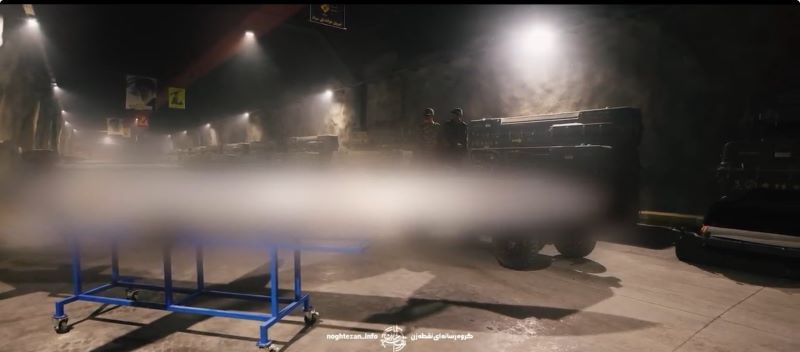
Iran’s Islamic Revolutionary Guard Corps displayed a previously unseen cruise missile inside an underground missile city on November 10, linking a possible shift in Iranian airframe design to a effort to show its missile force can withstand sustained pressure.
The missile’s angular profile recalls the American AGM-158 JASSM, or Joint Air-to-Surface Standoff Missile, and the resemblance has drawn attention because damaged components attributed to the US weapon were recovered on Iranian territory during the conflict in 2026.
The footage supports a limited conclusion about external design, while claims that Iran captured a complete JASSM or reproduced its combat performance still depend on evidence of guidance, propulsion and flight testing absent from the display.
The airframe has been provisionally identified as a possible Paveh variant, a distinction that matters because a derivative could eventually enter an established Iranian ground-launched missile force with different integration requirements from those of an entirely new weapons programme.
That prospect gives the November unveiling significance even if the JASSM connection remains unresolved, since a change to an existing Iranian cruise missile could matter to regional air defence planners well before any system approaches the performance of its American counterpart.
“Advanced missiles will surprise enemies with their battlefield impact,” said Major General Ali Abdollahi, chief of staff of the Iranian Armed Forces, whose appearance alongside missile hardware and transporters placed the display within Tehran’s wider effort to project postwar readiness.
The visit by Abdollahi and IRGC Aerospace Force commander Brigadier General Seyyed Majid Mousavi also gave Tehran a platform to address several audiences at once, from Israel and the United States to neighbouring governments weighing the risk of renewed fighting.
Iran’s claim that missile and drone production has moved underground widens the story beyond the unfamiliar airframe, because rebuilding stocks under pressure requires sustained industrial output and a transport network capable of moving equipment from factories to military units.
American expenditure estimates give that contest a second dimension, with roughly 1,100 JASSM-family weapons reportedly used over about 39 days, a figure that would make the campaign a major draw on US standoff missile stocks if the estimate holds.
The display therefore raises two separate readiness questions for governments assessing another confrontation, namely how quickly the United States can replenish weapons used in the campaign and how quickly Iran can turn its displayed equipment into a deployable force.
Those questions carry implications beyond the Middle East because US standoff missile stocks support commitments in other theatres, while the Iranian case illustrates how a major strike campaign can leave an adversary with physical evidence of weapons used against it.
The reported development shows how Iran used the unveiling to advertise continuity across design, storage and logistics, while the evidence for a combat-ready low-observable cruise missile remains substantially thinner than the evidence for that signalling effort.