
Paul Birch – The Daily Sceptic Nov 3, 2026
The screening on Thursday November 5th of an ITV documentary Dear Henry: Our Fight for Justice should provoke someone, somewhere in the corridors of power into finally telling the Nowak family the truth. Because they deserve the truth rather than another round of bureaucratic excuses. And the British public deserve to know whether the police have lost sight of their most basic responsibility: to protect us and uphold the law impartially.
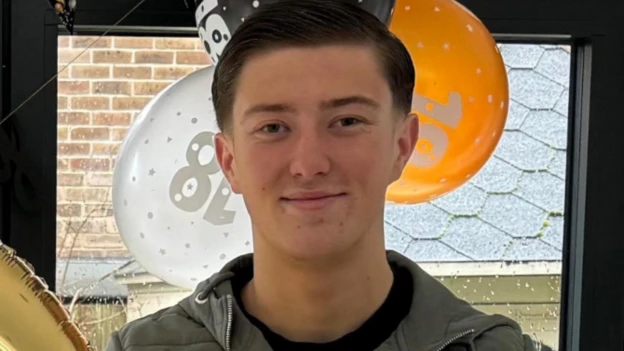
Henry, an 18 year-old university student, was stabbed by Vickrum Digwa in Southampton on December 3rd 2025. As Henry lay dying, police officers handcuffed and arrested him because Digwa told them that he’d been racially abused. Despite repeatedly telling officers that he had been stabbed and couldn’t breathe, Henry was treated as a suspect rather than a victim. Police body-camera footage subsequently exposed the heart-rending reality of his final moments. One officer responded to his pleas for help with the now notorious words: “I don’t think you have, mate.”
Digwa was eventually convicted of Henry’s murder and sentenced to life imprisonment. In November 2026, Hampshire Police Chief Constable Alexis Boon apologised and publicly acknowledged that Henry and his family were failed by the force. I’ll say they were. They received explanations that were misleading and inconsistent, and had to undergo the added almost unimaginable trauma of the police going through Henry’s electronic devices to see if Digwa’s initial allegation of racism had had some foundation.
But Boon’s apology is not accountability. We now know that Hampshire Police’s training culture was one which propagandised Diversity, Equity and Inclusion (DEI), and that it developed a course with the University of Reading entitled “Inclusion Matters“. This taught such vital policing skills as “education on organisational culture, biases, banter, micro-aggressions, privilege and the importance of being an ally”. Whether that included being an ally of a murderer isn’t clear.
The Independent Office for Police Conduct (IOPC) has confirmed that two officers are now under investigation for potential gross misconduct. But the inevitable guilty finding against these two will do nothing in and of itself to rid the police of the cancer of progressive activism. British policing has wholeheartedly embraced DEI programmes, with the College of Policing placing these objectives firmly within national policy.
The police exist to establish facts, investigate criminality and protect the public. They should not be social engineers or enforcement officers for the prevailing political orthodoxy. Some officers are clearly now more concerned about appearing sufficiently progressive rather than exercising independent professional judgement.
Home Secretary Shabana Mahmood has appointed former lord chancellor Alex Chalk KC to lead an independent review of Henry’s murder. This should examine potential missed opportunities to prevent the murder and the treatment of the family by the police. But unless any resultant findings are truly earth-shattering, this will be just yet more evidence that the Establishment has become remarkably adept at responding to institutional failures with more investigations, working groups and promises of reform. With failures originating in senior management and organisational culture, responsibility cannot end with individual constables.
There is a related concern about the state’s growing interest in influencing public perceptions of such events as Henry’s murder and Islamist terror attacks. The Home Office’s Research, Information and Communications Unit (RICU) undertakes “strategic communications work” designed to influence attitudes towards extremism and security-related issues.
Questions have been raised about Government-backed communications campaigns and the use of apparently independent voices to influence public opinion. The Independent Review of Prevent also raised concerns about aspects of RICU’s approach. The unit was certainly very busy during the protests in Belfast earlier this year, which followed the attack on Stephen Ogilvie by Hadi Alodid, a Sudanese asylum-seeker.
RICU swung into action to advise the Police Service of Northern Ireland (PSNI) on how to control the narrative and portray the protesters as nothing more than thugs. Indeed, the statement issued by the Ogilvie family was remarkably similar in tone to that of the initial Nowak family communication, although there is no direct evidence that RICU was involved in the Nowak case.
But RICU as a team and the wider principle of Government using ‘controlled spontaneity’ techniques deserve our attention. Government communication should inform citizens, not covertly manipulate them – especially if such wholesome TV shows such as Great British Railway Journeys could be deemed potentially ‘far Right’.
The same applies to bereaved families. They are not public relations assets. They have absolutely no obligation to endorse Government policy, reassure particular communities or provide advantageous political statements. They have every right to express anger, challenge official accounts and demand accountability. If public authorities are encouraging those who are going through the most traumatic period of their lives to deliver politically convenient messages, maybe it’s finally time to look back in anger.
Paul Birch is a former police officer and counter-terrorism specialist. You can read his Substack here.