
Kit Knightly – Off-Guardian Oct 21, 2026
Earlier today, the British government published their apparently long-awaited review into antisemitism in the education system.
The purpose of the review was – allegedly – to assess the scale of antisemitism faced by Jewish pupils in British schools. The real aim seems to have been to torture definitions until they manage to create a problem of the desired scale.
The report’s findings can be summed up in a headline plastered on every front page: 60% of Jewish school children have experienced antisemitism in school.
The BBC calls it “shocking”. So does ITV. Sky News reports on the “vast scale” of antisemitism.
The government itself calls the report a “generational moment”, as the Education Secretary Lucy Powell “promises action”.
Everyone is very upset. Nobody really seems to be engaging with just how odd that numbers is – 60% really doesn’t make much sense.
Firstly, because 70% of Jewish pupils go to all Jewish primary schools and 50% go to all Jewish secondary schools. Which implies a sizeable percentage of the alleged “antisemitism” is being experienced at Jewish schools.
And secondly, because “60% experiencing antisemitism” is a HUGE increase from last year, where a report from Jewish Policy Research group found it was 24%.
Why the disparity? Does it make any sense?
If you read the report you start to see where these divergent figures come from, it’s a question of definitions.
For one thing, it’s all based on survey data. Which is near-enough pointless at the best of times, and clearly open to falsification and manipulation.
Secondly, the report uses the infamously broad definition of “antisemitism” adopted by the International Holocaust Remembrance Alliance, which essentially conflates criticism of Israel with anti-Jewish bigotry.
Thirdly, it chooses to include in its definition of “experiencing antisemitism at school”, anything that happens while travelling to or from school, and all digital or online interactions during school hours.
So, under these definitions, a child who overheard someone calling Netanyahu “Hitler” on the bus, or saw a tweet saying Israel had no right exist during lunch, just “experienced antisemitism at school.”
Suddenly, that 60% doesn’t seem high at all, if anything it’s rather low.
Questions arise about how real any of these statistics really are. It’s pretty clear this report – like all government reports – is much more a means to a legislative end than a real investigation.
Something made all the more obvious by the fact the government has already said it plans to act on every single one of the report’s recommendations the same day it was published.
Here’s the list, I’ve emphasised the ones I find potentially troubling.
- Recognise antisemitism as a distinct form of hatred, not just general racism
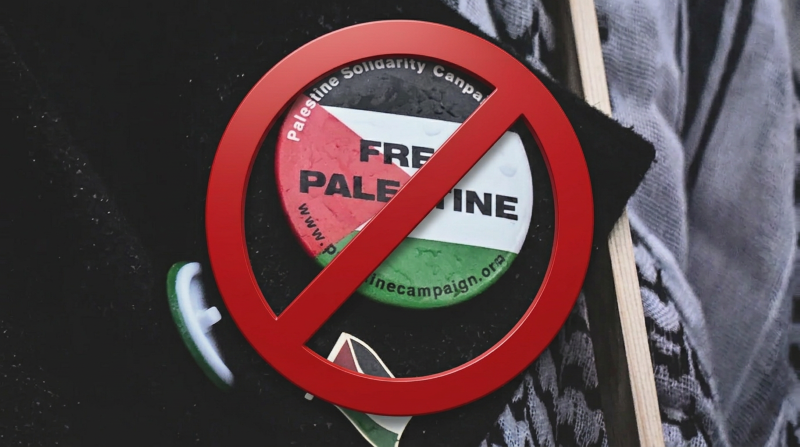
- Strengthen political impartiality guidance, including limits on teachers wearing pro-Palestine badges
- Establish a national hotline for school leaders dealing with antisemitism
- Improve teaching about contemporary antisemitism and modern Jewish life
- Teach pupils to recognise and challenge antisemitic conspiracy theories
- Include antisemitism explicitly in school safeguarding policies
- Train teachers to recognise and tackle antisemitism
- Work with the Home Office and the Prevent programme to help schools identify when antisemitism may be linked to radicalisation
- Encourage schools to adopt the IHRA working definition of antisemitism
- Improve procedures for reporting antisemitic incidents, including signposting
- Ensure antisemitic bullying and complaints are investigated and acted on consistently
- Make clear in staff conduct policies that antisemitism is unacceptable
- Strengthen Holocaust education, including antisemitism’s role in the Holocaust, and encourage schools to mark Holocaust Memorial Day
- Create more opportunities for pupils to engage with Jewish communities, including visits to synagogues
- Make sure Judaism and modern Jewish life are properly represented in religious education
- Improve media literacy so pupils can also identify online antisemitism
- Provide better resources for teaching the Israel-Palestine conflict fairly and sensitively
- Ensure schools have clear policies for dealing with antisemitism involving external speakers
- Ensure education unions have clear antisemitism policies
- Establish a dedicated support service to help schools, colleges and councils deal with antisemitism
- Use some of the Government’s security funding to help Jewish schools and colleges undertake educational visits safely
- Run a campaign to tackle antisemitic behaviour at transport hubs near Jewish schools and colleges
- Provide Jewish school and college leaders with mentoring and more security advice
- Strengthen accountability for schools that fail to deal properly with antisemitism
- Enable Ofsted and the Independent Schools Inspectorate to assess how schools tackle antisemitism
- Make local councils identify local patterns of antisemitism and help schools respond
- Share effective practice and guidance between schools and colleges
“Improve media literacy”? “teach pupils to recognise conspiracy theories”? “work with the home office to identify radicalisation”?
That’s creepy Orwell talk.
Also, “limits on teachers wearing pro-Palestine badges”?
Really?
This is absurd to the point that, if they were actually trying to encourage resentment of Israel and the Jewish people, I’m not sure what they’d do differently.
—
Off-Guardian is kept alive by support from readers.