
Mike Whitney — The Unz Review Oct 2, 2026
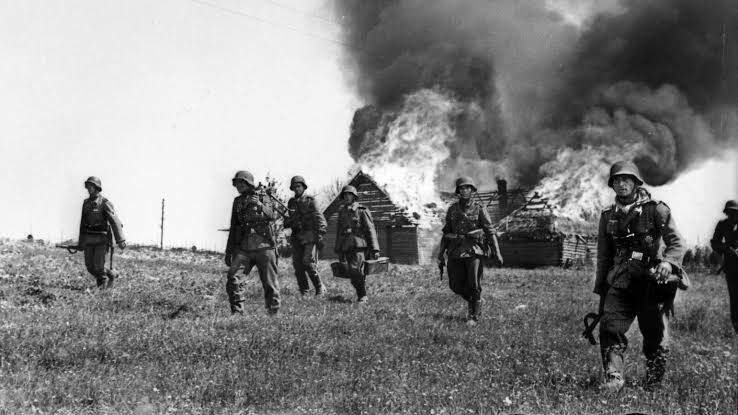
Only when I increasingly sensed, week after week, that Russia now considered the time ripe to move against us, when we had only three divisions in East Prussia, twenty two Russian divisions were assembling there; when I gradually received reports of airfield after airfield being built along our border; and division after division being brought here from across their vast empire; then I was obliged to be concerned as well. For history offers no excuse for an oversight that “I didn’t notice it” or “I did not believe it”. As long as I stand at the head of the Reich, I feel responsible for the safety of the German people…. and their future. I was then compelled to begin defensive measures of my own…. Nevertheless, by August and September of last year, one thing became clear, ….that behind us stood a state that was already preparing to move against us ...Only now have we learned the full extent of those preparations. ….From then on, I watched Russia with the greatest interest. Every division we could identify was carefully recorded, and appropriate countermeasures were taken. And toward the end of May, these signs accumulated to such a degree, that one could no longer dismiss the prospect of a struggle to the death. …For once I see an enemy bring his rifle to bear, I will not wait until he pulls the trigger. Instead, I am determined to pull the trigger first myself.… On the morning of June 22, the greatest struggle in world history began. Adolf Hitler, explaining that Barbarossa was intended to defend Europe against imminent Russian invasion
“It is necessary to move from defense to offense. While conducting the defense of our country, we are obliged to act in an offensive manner: to move from defense to a military policy of offensive actions. We must restructure our education, our propaganda, agitation, and our press in an offensive spirit. The Red Army is a modern army, and a modern army is an offensive army.” Soviet Premier Joseph Stalin’s speech of May 5, 1941, delivered to graduates of the Red Army’s military academies at the Kremlin just weeks before Hitler invaded Russia (Barbarossa, June 22, 1941)
There is no doubt that Joseph Stalin supported the spread of Marxist communism beyond Russia’s borders or that he helped establish and finance the Comintern to promote communist revolution worldwide. There’s also no doubt that Stalin anticipated a future conflict with Europe. (Capitalism vs Communism) In fact, Stalin’s speech to graduates of the Soviet military academy on May 5, 1941, proves that Stalin viewed as war with Germany as increasingly likely. There’s also no doubt that Soviet military doctrine had undergone a recent and dramatic makeover in its emphasis of offensive over defensive operations. And, most importantly, there’s no doubt that Stalin had moved enormous numbers of troops, tanks, aircraft, and artillery to its western frontier along the European border by the spring of 1941. The Soviet regime had called up hundreds of thousands of reservists suggesting that plans had been made for offensive operations in Europe.
What we don’t know, however, is whether Stalin was planning to launch an invasion of Europe or if he was just signaling to Hitler that he was prepared for any eventuality should hostilities break out. That’s a question that will probably never be answered. Even so, the massive buildup of Russian troops in the West suggests that there is more to this story than what we’ve read in school textbooks, documentaries and popular Western histories. At the very least, the massive Russian mobilization implies that Europe (and particularly Germany) faced a growing national security crisis that required a firm response. What we can glean from Hitler’s statement above, is that he felt “compelled to begin defensive measures of my own” because Stalin was “preparing to move against us”. In this respect, Hitler’s action was no different than Putin’s who refused to wait until NATO physically moved its military infrastructure into Ukraine but preempted that prospect by invading the Donbass. Hitler merely reiterated the position of every great power when he said: “Once I see an enemy bring his rifle to bear, I will not wait until he pulls the trigger. I will pull the trigger first myself.” This is as true for Hitler as it would be for the United States if China deployed combat troops to its Mexican border.
It’s worth noting that historian David Irving largely agreed with Hitler’s analysis (that Barbarossa was a preventative attack.) In fact, “Wikipedia’s summary of “Hitler’s War” states that Irving argued the German invasion of the Soviet Union in 1941 “was a ‘preventive war’ forced on Hitler to avert an impending Soviet attack.” Irving did, however, include a caveat that –while the war may have been preemptive at the beginning– it quickly turned into a war of conquest.
As we mentioned earlier, Soviet military doctrine had dramatically changed in the months preceding Barbarossa. Prewar Soviet doctrine generally envisioned responding to an attack by rapidly moving the war into enemy territory. The new doctrine emphasized offensive capability. This is from chatgpt:
On May 15, 1941, Soviet General Staff chief Georgy Zhukov and Defense Commissar Semyon Timoshenko presented Stalin with a document generally translated as: “Considerations for the Plan for the Strategic Deployment of the Armed Forces of the Soviet Union in the Event of War with Germany and Its Allies.”
It proposed concentrating Soviet forces against Germany and then launching an offensive. The plan envisioned striking German forces before they could fully deploy….
By June 1941, the Soviet military had assembled enormous forces in the western military districts. The Red Army had approximately 5 million personnel overall, although not all were near Germany. The western Soviet forces included: hundreds of divisions and brigades, thousands of tanks, thousands of aircraft, and enormous artillery concentrations.
So, how should Hitler have responded to these developments?
Keep in mind, the Molotov–Ribbentrop Pact was signed on August 23, 1939, in Moscow. The pact was basically a non-aggression agreement that split Poland between Germany and the Soviet Union. So now –less than two years later– Moscow was amassing troops on the border in an obvious threat to its treaty-partner Germany? Can you see how this must have aroused suspicion?
Also, most people fail to understand that Hitler did not explicitly agree to provisions in the agreement that would allow Russia to invade and occupy Finland or that gave Stalin a green light to garrison troops in Romania. Hitler opposed both of those, in fact, subsequent diplomatic meetings suggest that Hitler felt increasingly threatened by Stalin’s apparent territorial ambitions regarding Finland, Romania, and the Dardanelles. Which is why — in a speech he delivered on May 4, 1941– Hitler told German military leaders that they must eliminate the Soviet threat before it becomes overwhelming. Two months later, he launched Barbarossa, the largest military invasion in history.
Much of what we have stated here is supported in the Memoirs and Nuremberg testimony of Hitler’s informal foreign policy advisor Joachim von Ribbentrop. Ribbentrop characterized Hitler’s goals as a means of revising the universally despised Versailles Treaty which seized German territory and left 8 million German nationals stuck in locations beyond Germany’s borders. Hitler blamed France, England and Poland for their intransigence regarding the peaceful annexation of territory that had been part of Germany pre-Versailles. But the Allies were determined to prevent Germany from emerging as a strong, independent nation at the heart of Europe. The obvious goal was to reduce Germany to permanent colonial dependency which was exactly what Versailles achieved.
In an official declaration that was delivered to the Soviet ambassador on June 22, 1941, Ribbentrop said:
I have this morning received the Ambassador of the Soviet Union and informed him that in view of the threatening of the German frontiers by the armies of Russia, Germany has taken military measures of defense. Today, not less than 160 divisions are massed against Germany on the Russian side. This shows that the Russian supreme command can at any time undertake aggressive action against the German frontier.”
In conflict with all her obligations, the Soviet Union has turned against Germany and increased her anti-German measures since the outbreak of the war. All her armies are ready on the German frontier. … The Fuehrer thus gave every command to meet this threat with all available means.” upi.com
Here again, a German official characterizes Barbarossa as a defensive action intended to deter Russian aggression. Ribbentrop underscored that Hitler was afraid of being “overrun by Russia”. He claimed he counseled against immediate “preventive action” at times but ultimately supported Hitler once the decision was made. Hitler told him he had decided to attack because “all available military intelligence … confirmed large-scale Russian preparations along the whole front from the Baltic to the Black Sea” and he was “not willing to be taken by surprise.” Ribbentrop further stated that German military sources indicated that if Germany did not strike first, the Russians would invade.
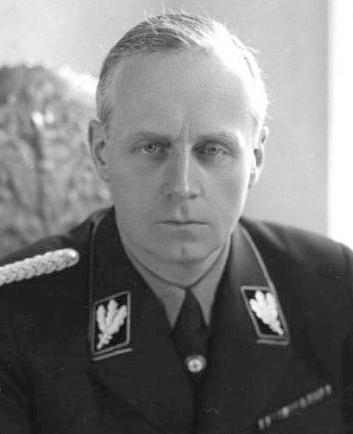
Joachim von Ribbentrop, sentenced to death and hanged at Nuremberg
Ribbentrop publicly and officially asserted the existence of a Soviet military threat and the possibility of aggressive action in the June 1941 declaration. In later testimony he repeated that Hitler and German military reports pointed to Soviet preparations that risked an attack on Germany.
Of course, none of this proves that Stalin planned to invade Europe, but it does change our perception of Hitler’s motives while casting doubt on the official version of events. (which excludes any record of the buildup of Russian troops on Europe’s border. That is more than an innocent omission; it’s professional malpractice.)
The one historian who argues most persuasively that Stalin was preparing a surprise attack on Germany in July 1941, is Viktor Suvorov, who posits that Stalin expected Hitler to attack eventually, so he moved the Red Army westward planning to strike Germany first. That is his theory in a nutshell although the details make his case all the more convincing.
Author Ron Unz has written extensively on Suvorov, so I have included an excerpt from his article When Stalin Almost Conquered Europe below:
The “Suvorov Hypothesis” claimed that during the summer of 1941 Stalin was on the very verge of mounting a massive invasion and conquest of Europe, while Hitler’s sudden attack on June 22nd of that year was intended to forestall that looming blow. Moreover, the author also argued that Stalin’s planned attack constituted merely the final act in a much longer geopolitical strategy that he had been developing since at least the early 1930s.
Following the Bolshevik Revolution, the new Soviet regime had been viewed with extreme suspicion and hostility by other European countries, most of which also regarded their own domestic Communist Parties as likely fifth columns. So to fulfill Lenin’s dream and carry the revolution to Germany and the rest of Europe, Stalin somehow needed to split the Europeans and break their common line of resistance. He allegedly viewed Hitler’s rise as exactly such a potential “icebreaker,” an opportunity to unleash another bloody European war and exhaust all sides, while the Soviet Union remained aloof and bided its strength, waiting for the right moment to sweep in and conquer the entire continent.
To this end, Stalin had directed his powerful German Communist Party to take political actions ensuring that Hitler came to power and then later lured the German dictator into signing the Molotov-Ribbentrop Pact to divide Poland. This led Britain and France to declare war on Germany, while also eliminating the Polish buffer state, thereby placing Soviet armies directly on the German border. And from the very moment he signed that long-term peace agreement with Hitler, he abandoned all his defensive preparations and instead embarked upon an enormous military build-up of the purely offensive forces he intended to use for European conquest. Thus, according to Suvorov, Stalin ranks as “the chief culprit” behind the outbreak of World War II in Europe, and the updated English edition of his book bears that exact title…..
Suvorov’s reconstruction of the weeks directly preceding the outbreak of combat is a fascinating one, emphasizing the mirror-image actions taken by both the Soviet and German armies. Each side moved its best striking units, airfields, and ammunition dumps close to the border, ideal for an attack but very vulnerable in defense. Each side carefully deactivated any residual minefields and ripped out any barbed wire obstacles, lest these hinder the forthcoming attack. Each side did its best to camouflage their preparations, talking loudly about peace while preparing for imminent war. The Soviet deployment had begun much earlier, but since their forces were so much larger and had far greater distances to cross, they were not yet quite ready for their attack when the Germans struck, and thereby shattered Stalin’s planned conquest of Europe.
All of the above examples of Soviet weapons systems and strategic decisions seem very difficult to explain under the conventional defensive narrative but make perfect sense if Stalin’s orientation from 1939 onward had always been an offensive one, and he had decided that summer 1941 was the time to strike and enlarge his Soviet Union to include all the European states, just as Lenin had originally intended. And Suvorov provides many dozens of additional examples, building brick by brick a very compelling case for this theory…..
….while in Junior High, I became an avid war-gamer with a strong interest in military history, and the Eastern Front of World War II was certainly a very popular topic. But every reconstruction of Operation Barbarossa always noted that the Germans owed much of their great initial success to the very odd deployment of the huge Soviet forces, which were all massed along the border in vulnerable formations almost as if preparing for an attack, and some writers casually suggested that this might have indeed been the case. But the sheer volume of supporting evidence accumulated by Suvorov goes far beyond this sort of idle speculation, and he produces a historical picture radically different than what our standard accounts have always implied. American Pravda: When Stalin Almost Conquered Europe, Ron Unz, The Unz Review
So, what are we to make of all of this?
IMHO, the primary issue is not ‘whether Stalin was preparing for large-scale offensive operations in Europe’ or not. The real issue is what happens when great powers feel threatened by the behavior or actions of other great powers. That’s when impulsive leaders overreact and drag their countries into wars of annihilation. When nations move troops to their borders, their actions are perceived as a threat to their neighbors. They should not be surprised when their neighbors respond. We don’t defend that response as right or wrong; we merely say that’s how the world works.
Mike Whitney is actually kicking at an open door here. The definitive work on the issue was published by former GDR General Bernd Schwipper in 2016 (in German), and in an English translation earlier this year.
what i can tell you altough i am now 89 years old and reading this was a struggle
Churchills home office minister was herbert morrison peter mandelsons grand father
has said on record morrison wanted to see ” bolshevisation all across europe” the plan was to trap hitler in a2 prong arrack
the military calls ita scissors action
the soviets planned to cut through germany to europe but hitler stopped that
the soviets then withdrew making the germans follow them
churchill was to come in then and catch the germans from the other side
rothschilds planned it all out
Hitler believed our promises we would support germany resisting communism
but we lied and attacked those who would have fought at our side
atmy commanders know never to divide their forces but an attack on germany from both sides forced germany to do just that
dont forget victor rothschilds speech
” by the year 2000 the UK will be communist
it may not be called that but thats what it will be “
Bad planning from Adolph. He should have built a robust defense line. How on earth could he trust a Bolshevik!?
“Was Hitler a secret Bolshevik?”, by Bjerknes.
True or false it is a tactical chicken or the egg false paradigm argument, because the wars are really just genocide human sacrifice operations against all humanity. The war between Nazi Germany and the USSR was as contrived as contrived could possibly be. National Socialism verses International Socialism in a fight to the death! What a pitiful sick joke of an excuse for the greatest war in the known history of humanity! If Stalin wanted to fight Germany why invade Poland on August 17th,1939 the way he did? A warlord who wanted to fight and conquer Europe would have let the Germans fight Poland alone and lose three or four times more men. Poland could have put up a far better even if hopeless fight if they had fought a one front war against Germany in 1939. If Stalin had given weapons and men to Poland what could Hitler have done? Oh, he would have made an angry radio speech about how evil Stalin was. Why would Stalin have sacrificed one million Soviet soldiers in Finland if he was planning on invading Germany in 1941? Why wouldn’t Stalin have made an even earlier peace deal with Japan in 1939, or only offer a non- aggression pact to Japan if Japan agreed to not join Germany and Italy? For that matter why not force the Japanese to help the USSR fight Germany and invade Europe? Send Japanese warships to Norway that kind of thing. After France fell in June 1940 why didn’t Stalin immediately invade Germany while the entire German Military was far in the West and as weak as they would ever be? If Stalin had done that before the fall of Paris France might have fought on for a few more months. Germany would have been in a two- front war in June 1940. Why would Stalin not think the Yugoslav Crises in April 1941 was not just a dirt- cheap pretext for the Germans to stage a vast army in the east against the USSR? Nothing that Stalin did makes any sense if he was really planning to strike Germany and Eastern Europe first.
Not once have we ever heard Stalin talk of Lebensraum. He had the living space Hitler wanted. Is this a re-writing history lesson? Trying to damn Russia for doing something it never did and isn’t doing now but we are? I’ve thought for a while Mike Whitney belongs in the MSM not alt-media.
Maybe the mindset of the German collective was that through the dark times of the 1920’s.
and the ridiculous moral decline along with economic hardships for the poorer of the public.
& Communist agitators & Jews who ran the economy at the time, They knew full well that the bolsheviks Intended to take over their nation after 1918 & Beyond. The threat from the east was real & nothing new.
Maybe if we’d helped them against the communists, The rest of Europe wouldn’t be in the grip of Jewish hegemony today. And millions of white Russian Christians wouldn’t have been slaughtered &/or sent to the gulags.
LOL…
you’ll see a lot of this sort of prole slop, lol, goin forwards (but backwards), from regime agents like whitney… as they re-prime the muggles for war and reorientate the krauts for the fake conflict with the russkies…germany v russkies will be a talking point.. with a rehabilitation of the krauts and it’s MILITARY..
but guess what..
you wont hear a whisper about any of NS germany’s social policies, that will still be verboten, shitler bad, zyklon B, coloured geysers of blood and masturbation machines.. and the proles wont bat an eyelid because they are so used to contradiction..in fact cog dis is their de facto state..
it wasn’t so long ago that the corrupt harpy von der lyin had the modern wehrmacht marching with brooms and gay commie spies sniffin out nazi special forces..
my my, how things change (but stay the same).
lolo..
A lot of this may hold truth. The foundations of the Nazi-Soviet non aggression pact were always built on lies and rhetoric, but they suited both sides for nearly two years. Poland was divided and here lay the border, not in Germany or the USSR but a giant buffer zone to be filled by both sides by strike formations.
To use quotes from Hitler or Stalin to support the thesis of this article is spurious and faulted, both leaders were bound to use the language of being forced into this situation – when both sides knew conflict was inevitable only a question of time. Hitler, buoyed by his successes in the West (blighted by his refusal to finish off the British) was also emboldened by the apparent difficulty the Red Army had in annexing part of Finland in 1939-40 in an inept campaign. This too was to prove an undoing of Hitler as his inability to take Moscow when it was within his grasp and his subsequent total refusal to apply tactical doctrine against the USSR. His refusal to stage strategic retreats, micro managing of details and incompetent wilful interference with battles condemned millions of German troops and civilians to unnecessary slaughter. The great white hope of some commentators here-who perhaps should stay indoors re-reading their Sven Hassel novels…the great white hope who killed more Whites than anybody, so far…
As for Stalin, no less ruthless than Hitler, he was more cat like in his patient cruelty and ability to bide time. Ultimately, he was able to overwhelm the III Reich not due to American or British help, largely symbolic and welcome, but because of his enemy’s mania for massive engagements and refusal to retreat when opportune-guaranteeing their annihilation albeit at huge Soviet loss too. To go from Stalingrad, the 900 day siege of Leningrad, from the Don to the Vistula and the Vistula to the heart of Berlin itself was a feat of arms that dwarfed the American and British armies in the West, no Western soldier got near Berlin until Stalin allowed them in after 9th May.
But what of today? What of the aftermath of this appalling episode of murder, extermination and cruelty imposed by these two leaders Hitler & Stalin? Clearly it was regarded as a fight to the death, but it has not lead to the death of their policies and mindset, far from it: The regimentation of society, the demand for total obedience-dissidence treated as treason not reason. The militarisation of society, the military industrial complex, the surveillance police state, the constant harping on of ‘threats’ Where is this alive and well?? You don’t find Stalin’s USSR steering modern day Russia, despite Western propaganda. But the aggressive expansionist military state has moved from Berlin and Moscow to Washington and Tel Aviv. In the USA and Jizzrael you find such behaviours and paranoias very much to the fore, naked gangsterism on steroids with nukes. Whack first or be whacked! The Divine Right of Things.
Ahhh, the truth comes dripping slow as exemplified by the book, Icebreaker” written by Soviet Intelligence defector, Vicktor Suvorov.
By the way the German ambassador, von Ribbentrop was not just “hanged”, the you know ((( who’s ))) made sure that his face hit the side of the trapdoor as his body fell and the hanging was deliberately botched so that the poor man took 20 minutes to strangle. That’s pure hatred from ((( them ))).
In fact it mirrors the hatred that ((( they ))) now have for the Iranian People.
“Stalin’s orientation from 1939 onward had always been an offensive one, …” The Wehrmacht would have reached Moscow and defeated the COMMUNIST, Stalin in 1941 but that great “democrat”, Roosevelt kept the USSR in the war with limitless armaments.
So we had Roosevelt – a “democrat” helping Stalin – a communist. Interesting until it is realised that Churchill, Stalin and Roosevelt were all war mongering jews. And here we are today and who is the great threat to world peace??? Hint: It ain’t Iran.
Preemptive dog dukey, I knew it! The lil chump somehow found out how to generate 1.21 gigawatts, went back to the future, then stole the idea from Israel!
Seriously, has Mike Whitney turned to the dark side, or, (if this makes perfect sense to you) is this how the world seemed to work?
Doesn’t really matter, either the EU screwed itself, or (prolly) the Russians ARE coming anyway…
Today, any free nation would improve it’s defences with Adolf as neighbour. Dunkerque was a piece of cake, but when the CityofLondon came within reach their Masters hastily send the Germans to Russia! This unforeseen decision led to all sort of complications. The Russians had JS tanks at the time that to the germans amazement simply destroyed their Pantzer4’s. But it seems the Russians were not prepared too. However, Hitler knew he could never win this war and, as a good servant, totally destroyed his army and broke the back of the German Spirit…