
Alastair Crooke – Strategic Culture.su Aug 15, 2026
Trump’s pivot to economic pressure as the key to Iranian capitulation is not a credible strategy.
President Trump took Secretary of War Hegseth’s military cheerleading (‘U.S. military potency is awesome’) at face value, only belatedly to discover that the U.S. is out of interceptors in a war that hinges on air defences. ‘The restock mathematics is just as cold. Four years to refill the stocks (not four months), because components include rare earth materials that are controlled by China’.
Hegseth, it seems, is now in the dog-house, whilst Treasury Secretary Bessent’s star is ascendent.
Reportedly, Bessent has continuously reassured Trump that the oil shortage triggered by the closure of the Hormuz Strait “is temporary and manageable” (it isn’t), arguing too that energy-driven inflation also will ease once global tensions cool. He has bet his hat on it. And Trump seems to believe in the manipulation of oil and market futures.
However the figures floated around in Washington for vessels slipped through via the Oman corridor are fictitious. Brett Erickson, of Obsidian Risk Advisors, writes:
“After speaking to several of my professional colleagues that I trust absolutely, there is zero evidence whatsoever to support that 8M barrels per day are transiting via the Omani Route, and zero evidence that 9Mbpd is exiting the Strait of Hormuz per day. Zero. Not “maybe”, not “potentially”. No evidence. And even more damning, [there is] evidence directly to the contrary”.
To the question, “Is their plan to just lie low until everything falls apart? What then?”, Erickson replies:
“From what I understand, they actually think some of this information is correct. They’re stupid, not disingenuous necessarily … which is worse”.
Trump’s pivot to economic pressure as the key to Iranian capitulation is not a credible strategy. Even if a tighter siege did succeed in worsening further the plight of the Iranian people, it is implausible that their suffering would bring about some beneficial endgame – such as a Delcy Rodrigues style régime change?
Iran is in an existential war with the U.S. and Israel, and were the Iranian leadership ever to be pushed to having to choose between capitulation and escalating the confrontation, they would almost certainly opt for escalation. In fact, the decision to escalate militarily – to put the pressure on Trump – seems already to have been taken, as evidenced by recent statements by Mosen Rezaei, the newly-appointed Secretary of the Supreme National Security Committee. Iran will continue with pro-active military action, even if Trump opts to forego military action.
Iran, however, is showing no signs of economic collapse under the renewed U.S. blockade. Iran had an estimated 120–140 million barrels of oil positioned offshore in tankers at the outset of the conflict and has exported another 80 million barrels during the limited term of the MoU. The Rial has, in fact, strengthened during the MoU, so the question is: What happens if Iran not only refuses to capitulate, but instead toughens its posture towards Trump – as it appears to be doing?
Danny Citrinowicz, a leading Israeli military analyst, notes that maintaining the current standoff is hardly cost-free for the U.S.. Hormuz remains severely restricted; the Red Sea is blocked to Saudi exports; and U.S. forces are compelled to sustain an expensive military presence and blockade. Additionally, American munition inventories face pressure, and Tehran still retains numerous ways to harass U.S. forces and threaten regional shipping. Meanwhile, the economic consequences of disrupted energy flows certainly do not fall on Iran alone. As the Wall Street Journal noted this week:
“Persian Gulf energy producers are concluding that Iran’s control over the Strait of Hormuz will become permanent, disrupting their oil and gas exports and global energy supplies indefinitely … [effectively they have] no good option for countering [a more assertive Iran]”.
And oil is not the only component disrupted by the conflict. A series of vital supply-line components are disrupted too.
Should it ultimately transpire that the U.S. went to war without doing due diligence on its armoury status (wrongly assuming that the war would be concluded in a weekend, as David Barnea, head of Mossad insisted at the 11 July 2026 Situation Room briefing insisted to Trump), and should it transpire that the Treasury Secretary has been confabulating about the true energy situation, then some people ultimately will have serious questions to answer.
Israeli strategic commentator Shemuel Meir raises the most compelling doubts that need to be answered:
- Was the Iran war truly a ‘preventative’ war launched on a false pretext of an imminent threat?
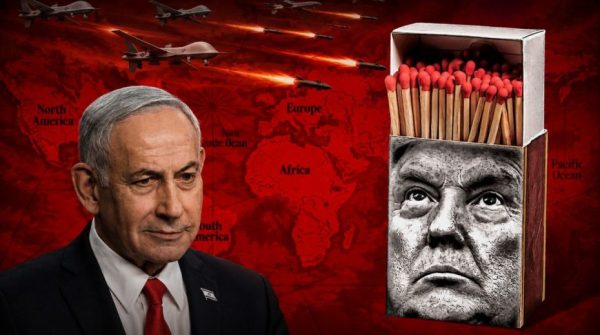
- Did Netanyahu lie about the imminence of an Iranian nuclear threat?
- Or, in other words, did Netanyahu emulate the deceit of ‘Iraq and its Weapons of Mass Destruction’ to push Trump into the war?
Writing in early July this year, leading Israeli commentator Ben Caspit admonished Netanyahu:
“Really, Bibi? Did the Iranians have atomic bombs? Are you serious about that? You know, you’re the Prime Minister. Every statement, sentence or word you utter makes the headlines. When you say something like that, it has consequences. Are you aware of that? Well, I’m sorry to disappoint [you] … but Iran did not have atomic bombs. Not at all. Not even as a joke … One cannot say that Iran possessed atomic bombs. Because that is not true … Because it is entirely fictional”.
(In fact, Conflicts Forum noted in early July (see here) that alongside Caspit, a chorus of Israeli premier security and intelligence former officials and commentators alleged that Netanyahu had lied about Iran’s nuclear threat in the run up to Iran war – and that he continues to lie about an Iranian nuclear threat).
Shemuel Meir points out that in Israeli doctrine, a pre-emptive war is intended to remove an existential threat within an immediate time frame where there is no doubt about the threat’s imminence.
Meir states however that:
“We [the Israeli public] essentially do not know what happened or how the decision was made to launch a preventive war on June 13, 2025 (“Operation Rising Lion”), and its continuation in the second round of the preventive war on February 28, 2026 (“Lion’s Roar”). How the decision was taken to launch this war remains, as Aluf Benn puts it, Netanyahu’s ‘Black Box’ of decision-making.
He continues:
“Let us then try to examine the facts as far as possible. To determine how solid the justification was for a war that has changed the face of the Middle East and…despite being a conventional war, was the first nuclear preventive war in history. And one conducted with the approval of the U.S. President.
“The question arises: how is it that we have not seen a critical scrutiny and detailed investigative reporting into the decision-making behind the June 2025 preventive war? This is especially striking in light of two investigative reports published, rather surprisingly, in Israel over the past two weeks …
“Both these further investigations … rely on strong intelligence sources and good access to senior levels of the IDF General Staff. In both reports, we learned something that we had not heard anywhere else: facts and details concerning the Chief of Staff’s reservations about the second [28 February] preventive war, which was intended to solve the nuclear problem – by bringing down the regime”.
Meir adds:
“According to the investigative reports, the Head of Military Intelligence AMAN (the national intelligence assessor within the Israeli system) and the Head of the Intelligence Research Division assessed and wrote in the intelligence reports that were delivered to the Prime Minister and Cabinet members, that there was a low probability of success in the Second Iran War. For anyone familiar with Israel’s intelligence history, this was a courageous assessment”.
“In launching the two rounds of the same preventive war, Netanyahu stated that the reason for the war was “new intelligence” warning of an immediate existential nuclear threat to Israel’s destruction. According to him, Israel could not stand by and watch; there was an immediate imperative to go to war. To illustrate the immediacy of the threat, Netanyahu saturated the public discourse – both in the run-up to the first war and during the year between the two “wars” – with existential metaphors such as “a sword at our throat,” and compared Iran’s nuclear sites to the extermination camps of the Holocaust of European Jewry”.
“On the night of June 13, 2025, concerning the immediate existential threat posed by an Iranian nuclear weapon. Netanyahu declared that “we are in the twelfth hour”. Iran had reached the point of no return. In recent months, Iran had been racing ahead in “clear steps it had never taken before toward weaponization, that is, toward creating a nuclear weapon, and not merely accumulating fissile material””.
Was there then really an existential threat on 13 June 2025, Shemuel Meir asks –
“The ostensibly intelligence-based arguments concerning “new intelligence” presented by Netanyahu and the heads of the IDF General Staff about an acceleration of Iran’s nuclear weapons program in the immediate timeframe (weaponization was the key term in their arguments) stood in contradiction to highly reliable, up-to-date intelligence assessments. These included U.S. intelligence reports that contradicted the claims of an immediate nuclear threat and were apparently known to Israeli intelligence”.
“According to an investigative report by Ronen Bergman (Yedioth Ahronoth, June 26, 2026), based on senior Israeli intelligence sources, Israeli intelligence did not possess solid information indicating that a weapons program was actually being activated. There was only “troubling information about thoughts and talk,” but no smoking gun indicating that weapons laboratories were being activated.
The question arises: “Did all the senior officials in the IDF General Staff and Military Intelligence agree with and fully support the Prime Minister’s argument that this was a necessary preventive strike to thwart an immediate nuclear threat? Was this a war to eliminate an immediate existential threat, or a war of “opportunity exploitation”?”
(Other reports indicate that none of the senior officials present raised the possibility that Iran would not implode, nor that it might emerge stronger from the conflict).
Meir asks, were the senior IDF officers who took part in the decision following proper procedures, “or were they so swept up in Netanyahu’s euphoric mood that they failed to recognize the metaphysical mission he had assumed upon himself in his role as the “Protector of Israel” – to attack Iran and destroy every possibility of a diplomatic nuclear agreement?” (Meir analysed in an earlier article, “Requiem for the Nuclear Deal” that one-third of Netanyahu’s autobiography “My Story” is devoted to that same metaphysical mission [—] that a war against Iran’s nuclear sites was Netanyahu’s lifelong dream).
This clearly is an existential question for Israelis, given that the war so completely failed in its stated objectives.
But it is absolutely pertinent too, for Americans. At the 11 February 2026 White House Situation Room briefing, Netanyahu made a hard sell to President Trump, suggesting that Iran was ripe for regime change and expressing the belief that a joint U.S.-Israeli mission could finally bring an end to the Islamic Republic.
Were the U.S. officials, who were present and who expressed doubt about the Israeli claims, aware that the Head of Israel’s Military Intelligence AMAN (the national intelligence assessor within the Israeli system) and the Head of Israel’s Intelligence Research Division assessed and wrote in the intelligence reports that were delivered to Netanyahu and Cabinet members, that there was a low probability of success that the Iranian Republic would implode? The Mossad Chief by contrast, insisted that Iran would be a quick and easy war.
The AMAN assessment however fully coincided with reliable leaks from U.S. intelligence officials and analysts that were published during the 12-Day War in June 2025.
The New York Times, Wall Street Journal and CBS all reported that these U.S. intelligence sources were unaware of any new intelligence indicating an Iranian dash for a bomb; that there had been no change in the intelligence assessment; that Iran was not on a path toward a nuclear weapon; and that no order had been given to proceed with weaponization.
Nonetheless, Trump ploughed ahead with the war – one that continues still today? Why?
Trump’s attempts at financial destruction for Iran is backfiring on the US. A Canadian commenter on Sean Foo’s site says four Canadian banks are offering Yuan/renminbi accounts. That’ll surely take off. A bit of money saved in renminbi, partially backed by gold and guaranteed by China is an attractive hedge, especially if it’s readily transferable into Canadian dollars on withdrawal. When foreign banks are a safer haven than the dollar then the dollar bleeds a little bit more.
I’ve said the way British banks are treating their British customers by closing most High Street branches to force us online, then we should be able to join foreign banks online. If that happens it bring an end to British banking, but they will have brought that end upon themselves.
Turkiye is Israel’s next target in the Middle East?
Following Israel’s Doha strikes, Ankara is increasingly on high alert over Tel Aviv’s regional ambitions.
Turkish President
Turkish President Recep Tayyip Erdogan, left, and Israeli Prime Minister Benjamin Netanyahu [File photo]
By Elis Gjevori
Istanbul, Turkiye – Just hours after Israel launched strikes last week against Qatar – a United States-designated “major non-NATO ally” and one of Washington’s closest Gulf partners – pro-Israel commentators quickly shifted their attention to Turkiye.
In Washington, Michael Rubin, a senior fellow at the right-leaning American Enterprise Institute, suggested that Turkiye would be Israel’s next target and warned that it should not rely on its NATO membership for protection.
list 1 of 3Israel killed 10 children from this football youth academy in Gaza
list 2 of 3Israel attacks Qatar: What’s next?
list 3 of 3Mapping the 21 illegal settlements Israel had in Gaza 20 years ago
end of list
On social media, Israeli academic and political figure Meir Masri posted, “Today Qatar, tomorrow Turkey.” Ankara responded sharply. In unusually harsh language, a senior adviser to President Recep Tayyip Erdogan wrote: “To the dog of Zionist Israel … soon the world will find peace with your erasure from the map.”
For months, pro-Israel media outlets have steadily escalated their rhetoric against Turkiye, portraying it as “Israel’s most dangerous enemy”.
Israeli commentators have also framed Turkiye’s presence in the eastern Mediterranean as a “threat” and its role in rebuilding post-war Syria as a “new rising danger”.
With Israel’s regional aggression escalating and its war on Gaza showing no sign of ending, Turkish Foreign Minister Hakan Fidan retaliated in August by suspending economic and trade ties with Israel.
In Ankara, this [anti-Turkish] rhetoric is taken seriously, with Israel seen as seeking regional hegemony,” Omer Ozkizilcik, non-resident fellow at the Atlantic Council, told Al Jazeera.
Turkiye increasingly feels that Israeli aggression has no limits and enjoys American support,” added Ozkizilcik.
The strikes on Qatar also likely underscored Ankara’s doubts about US security guarantees as a NATO ally. Despite Doha’s special ally status with Washington, Israel faced no visible pushback from the US, leading to questions over whether the US would truly see any attack on Turkiye as an attack on itself, as the NATO charter dictates.
Missing model offered to Epstein by ‘creep’ scout before vanishing without a trace
Story by Liam Randall
A 22-year-old model described as incredibly beautiful, vanished over a decade ago was pitched to late paedophile financier Jeffrey Epstein by a “creepy” talent scout shortly before she disappeared. German model Michele packed her bags and walked out of her mother’s home in September 2015, with her family assuming she was embarking on another routine overseas trip
But after weeks without a single call, message or digital footprint, her family reported her missing, sparking an 11-year nightmare that remains unsolved. Files linked to Epstein have revealed a concerning twist in her final weeks. Unsealed US Justice Department records uncovered a staggering 1,840 references to Siad, including messages where the scout likened himself to a “fisherman” making a good “catch.” tricking girls into Epsteins orbit
It is known many bodies were buried on his properties
In 2014, Siad sent photos of a 21-year-old Michele directly to Epstein, asking if the disgraced financier wanted to send a plane ticket for her. Pitching the young beauty, Siad made a promise to Epstein: “You will love her.”
Model scout Daniel Siad, who remained in Michele’s orbit after meeting her in Dubai in 2012, was heavily linked to Epstein’s trafficking ring.
Brigitte Jones who started to whistleblow on the trafficking, was told stay quiet or what happened to Virginia Gufrei could happen to you