
Charlotte Gill – The Daily Sceptic Aug 4, 2026
This week, The Great British Sewing Bee managed to push the climate agenda into its otherwise harmless show in what was termed “Reduce, Re-use, Recycle Week”.
Sewers were given three tasks “focused on the environment and sustainability”: first to create underpants from old t-shirts; second to transform material intended for landfill into “a garment with drama at the back”; and third to make outfits with an environmental message.
The third challenge was by far the most ideologically heavy-handed. “Throughout history, fashion has been used as a tool for protest, a statement for resistance and a spark for social change,” began presenter Sophie Willan, introducing the task to contestants. “So the judges want you to create an outfit with an environmental message that’s close to your heart.”
When quizzed later about the impetus for the challenge, Sewing Bee judge Patrick Grant told Willan: “Fashion designers have always been people that are kind of very socially engaged, and a big part of that is them having strong views on all sorts of things, and they want to put those forward through the clothes that they make.”
Luckily the designers didn’t seem to mind having their “strong views” decided for them by the judges and programme creators. “It is incredibly important to be environmentally conscious. Because we’re killing the planet,” one sewer was filmed saying. Another making a “Save Our Seas” protest dress was asked by Grant: “Why is the plastic thing so important to you?” She replied: “It’s so detrimental to the animals and the beauty of the sea.”
The show also featured a segment with a fashion historian on how “fashion has been at the heart of many protest movements”, from the Suffragettes and the Women’s Social and Political Union, to Black Lives Matter and environment activists. The message was clear: environmental activism makes you anti-Establishment, rather than utterly conformist and useful to the extremely wealthy eco industry.
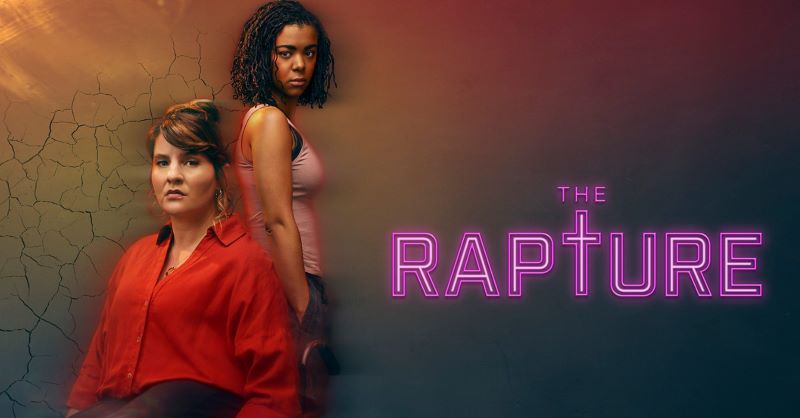
As if that wasn’t enough indoctrination, this same week the BBC streamed The Rapture, a psychological thriller based on the book by self-described “climate and ecological fiction writer” Liz Jensen. It follows Bethany Krall, a 17 year-old locked in a high-security psychiatric hospital who can predict the future – including adverse weather events. “As temperatures rise, a convicted murderer foretells apocalyptic disaster – is she a manipulative psychopath or does she know the truth? High-stakes thriller crackling with danger,” reads the BBC description of the show.
The Rapture is packed with references to climate change, and it soon becomes obvious who the goodies and baddies are meant to be – the latter often being people who say the UK needs a mixed energy portfolio including oil (how evil!) In one scene, a goodie character explains how a baddie organisation was “lobbying to overturn Net Zero” (the horror!)
Viewers will have no idea that the show was informed by climate consultants from the organisation Climate Spring, whose funders include the Wellcome Trust (which received £105,998,100 from taxpayers between 2020-24), Unbound Philanthropy (based in the US), and Luminate, the philanthropic arm of Pierre Omidyar, a French-born Iranian-American who founded eBay. Why are these foreign funders helping to promote climate narratives on British TV, you might quite reasonably wonder.
Climate Spring works with ITV, Channel 4 and many others (such as Mammoth Screen, which produced The Rapture) to embed climate narratives into film and TV. It is a partner of the Climate Playwriting Prize, in which a winner will be optioned for Shakespeare’s Globe, among other initiatives.
Unfortunately this is just the tip of the iceberg when it comes to ‘Edutainment’: entertainment that tries to ‘educate’ viewers into political positions, in this case on the climate. Shockingly, for years the taxpayer- and National-Lottery-funded Arts Council England (ACE) has been asking artists to show their commitment to “Environmental Responsibility” when applying for grants. This is listed as one of ACE’s four “Investment Principles”, which also include “Inclusivity and Relevance”.
Personally, I find it very hard to make sense of the science on climate change: it’s an enormously complex subject that I am not an expert on. What I do know is that using drama to promote climate narratives is a quick way to suggest your side deals in fiction.
Charlotte Gill regularly publishes about the use of taxpayers’ money to fund Left-wing causes and Left-wing researchers in Woke Waste, her Substack. You can subscribe here.
“being pushed”… No.
s’been going on for a LOOONG time.
For years something as mundane as the F1 commentary pushes this continually & not even very subtlety imo.
Any show any channel any film, They always include a chemtrail in the sky. Always.
In our ongoing (c) groundbreaking ™ never-before-seen (r) journalism (lol), here’s today’s tip-top stories:
1. https://www.rt.com/news/643864-us-payout-terrorism-palestine/
The PLO (honestly, I thought they’d gone the way of the IRA) are arguing about $655.5m that the jew owned American courts want given to the jews feeding off of America.
Question: Why is $655.5m of Palestinian money sitting in American banks?
Question: Where did it come from?
Question: Why isn’t it being used to help the “millions of starving” in Palestine?
As usual, something doesn’t quite add up, and it smells very jewy. I bet you didn’t think the ragheads had all that dough sitting in America. I wonder how much they have there it total? Billions? It’s not quite the “Palestine” you thought is it?
2. https://www.rt.com/news/643861-gaza-funeral-israeli-strike-victims/
Apparently 308 members of two families were blown up by the jews three years ago, and they’ve only just got around to burying them.
Question: What would a body be like after sitting around in 40 degree temperatures for three years?
Question: How do two families have 308 members?
Question: How are 30 of them women and 40 children? That would mean 238 of them were men – which is a bit of an imbalance. (It’s BS.)
Question: Why does 308 = 3 + 0 + 8 = 11?
3. https://www.rt.com/news/643856-eu-wildfire-restoration-costs/
The story is that “wildfires” have cost the european taxpayer 3 billion euros to “restore burned land and forests”.
Question: What exactly are they doing there? Planting individual blades of grass?
Question: Who believes this BS?
The answer to the first question is that they’re stealing 3 billion euros from the “taxpayer”.
In terms of global swarming, go to any global temperature map and look. Go on, I dare you. They’re currently pushing South Korea as the global oh-no-we’re-melting point, with national drainpipe bands and all the rest. Because it’s 37 degrees. Only it’s 42 degrees in Saudi Arabia and they’re not melting. Neither is anyone else in that region. And throughout most of the rest of the world it’s about 25, which is normal. Do you see what they’re doing there?
The total amount of land “engulfed” in forest fires in America is 169 square miles. America is 3,794,083 square miles America in total. That’s 0.00004% of the total. Do you see what they’re doing there?
4. https://www.rt.com/news/643833-coldcard-bitcoin-theft-ai/
We’re told that users of “Coldcard wallets” – which seem to be some sort of external drive to “store cryptocurrency on” – were “hacked” and they “lost” $89 million.
Question: Why would anyone buy a separate “device” to store “crypto” on if they also stored it in a central “exchange”?
Question: Even if you wanted to do that, why buy a super-duper whatnot, no doubt for hundreds, when any old “device” like a second hand external hard drive or phone would serve the same purpose?
Question: Why are humans so dumb-dumb?
What happened was this: The owners of “Coldcard” sold their “platform” as super-duper “secure”, waited for the suckers to buy enough of it, them hoovered up the numbers and cleaned out their accounts. Simple. No “hackers” required.
Also, the tribe took over “crypto” long ago, so you’re basically storing your “money” in the bank of CIA, who hoover it up when they need to fund yet another school shooting. “Bitcoin”, the original “cryptocurrency”, was created by the CIA, as shown elsewhere. The CIA run all the “exchanges”. Remember when they were telling you it was unsafe and run by “money launderers”? Well, that was true. They are money launderers. They just laundered yours. And so now it’s all lovely and “safe”.
“We believe this is a sober reality of the new AI paradigm,” Rodolfo Novak, CEO of the Canadian company Coinkite Inc., wrote Friday in a message apologizing for the flaw in Coldcard devices.”
Novak is the Polish version of the jewish name Nowak.
They’re using “rogue AI” as the “player”, as you can see by all the OpenAI stories they’ve been running as the entree to this little heist. I would imagine there’ll be others coming soon to a “device” near you.
Interesting photo at the top. Let’s see, we have a half caste negro above a fat white female. Hmmm, says it all.
It’s not just the “Climate Agenda” that’s ” Being Pushed into “Our” TV Shows”…
but the Diversity Agenda, the Tranny Agenda, the Rapeugee Agenda, the War With Russia Agenda etc etc.
Is it any wonder that tv-addicted Brits are so cognitively-impaired?🙄
The anti=dote to climate propaganda is to read Yukon Jack. I have done all the work, simply click on the following links to free your mind of evil climate propaganda. You will learn:
CO2 is not a pollutant, it is a life gas.
Current CO2 levels are near rock bottom lows.
We are still in the ice age, near the end of an interglacial.
We are 8,000 years past the Holocene Optimum, earth is cooling
The modern warm period is from natural causes.
CO2 has never forced temperature ever.
All glaciations start with high CO2 and end with low CO2.
SIX COMMENTS THAT CHANGE YOUR PERCEPTION OF REALITY
https://www.unz.com/article/the-climate-co2-hoax/#comment-7717040
https://www.unz.com/article/the-climate-co2-hoax/#comment-7717526
https://www.unz.com/article/the-climate-co2-hoax/#comment-7718157
https://www.unz.com/article/the-climate-co2-hoax/#comment-7718694
https://www.unz.com/article/the-climate-co2-hoax/#comment-7718869
https://www.unz.com/article/the-climate-co2-hoax/#comment-7720924
Yup – this Climate Change / Global Warming bullshit started years ago and the military was involved with their published “Weather As A Force Multiplier – Owning the Weather by 2025”. Do a search on ‘geoengineeringwatch.org’ and check LBJ’s statement. And also matches the health debacles that have occurred since the Rockefeller’s took over the Medical Complex during the early 1900’s. It’s a racket and only the few Elite Parasite Scumbag Pedos profit from this along with the depopulation thrust by the idiot psycho Bill Gates.
Old news. Climate Change propaganda started to appear in British TV screens well over a decade ago.