
Strategic Culture – July 24, 2026
European Union leaders imposed yet another raft of sanctions on the Russian Federation this week. This is the 21st package of political and economic strictures that the 27-nation bloc has deployed against Russia over the past four years.
The EU sanctimoniously claims that the measures are a demonstration of rebuke for Russia’s alleged unprovoked aggression and invasion of Ukraine in February 2022.
This pretense of European principle is farcical.
Anyone who has objectively studied the Ukraine conflict knows that the United States and its European NATO partners incited the war by orchestrating the violent coup in Kiev in 2014, followed by the deliberate weaponizing of the NeoNazi regime that the Western imperialists covertly directed for a geopolitical confrontation with Russia. That many people aren’t aware of that history is largely due to the brainwashing propaganda of the Western media.
The EU’s sanctions policy is therefore properly understood as economic warfare, and as supplementary to a larger military strategy to defeat Russia. It is part of “Total War,” as a former French finance minister clumsily admitted in March, 2022.
While the NATO-armed Ukrainian regime steps up long-range air strikes deep in Russia in an attempt to damage oil and gas infrastructure and the Russian economy, the EU’s sanctions are aimed at achieving the same objective.
This has nothing to do with using trade and financial measures to show political and moral support for Ukraine as an alleged victim of Russian aggression. It is all about maximising confrontation with Russia to defeat it.
The use of unilateral sanctions is illegal under international law and expressly prohibited by the United Nations Charter. They constitute a form of criminal aggression. The EU is in criminal violation of international law, as is the U.S., which also blatantly wields sanctions to intimidate other nations, currently 30, including Russia, China, Iran and Cuba.
In any case, the EU’s policy meets the definition of insanity, as manifested by repeating a futile action multiple times and expecting a different result.
Russia is arguably the most sanctioned country in the world given the 21 rounds that the EU has fired and the hundreds of banks and other businesses that it has targeted. Yet Russia’s economy has not buckled, as desired.
Even more insanely, it is the European economies that have suffered grievously from the self-imposed exclusion of trade and business with Russia, particularly the loss of affordable energy supplies. The EU is rapidly deindustrializing due to soaring economic costs. Germany, once the economic powerhouse of Europe, is crippled as it imports more expensive American fuel in place of the traditional Russian supplies which historically underpinned Europe’s industries.
European citizens – a combined population of 500 million – are hit with a calamitous cost-of-living crisis that in large measure is caused by the sanctions policy of their political leaders. These so-called leaders are decimating their own economies and societies.
The bankruptcy is political and moral. The strains are showing within EU member nations, as seen from the wrangling and watering down of the latest round of sanctions. Several countries were clamoring for exemptions to limit damage to their national interests.
Greece wanted waivers on restrictions over its international shipping of Russian oil and gas. Germany and Portugal wanted exemptions from sanctions on Russian fisheries. Austria, Bulgaria, France, and Italy also appealed for curbing prohibitions to protect their various interests.
As Euronews headlined: “Chaotic sanctions negotiations expose cracks in EU front versus Russia.”
The outlet reported that the collective policy is starting to harm national interests, which is leading to infighting among the EU members.
“It’s getting more and more difficult to find common ground. We saw that this week,” said one diplomat about the fractious negotiations.
Another diplomat commented: “The [European] Commission [the EU’s executive branch] is running out of options for what to include. It has to become more creative, and every package is more complex and takes longer to negotiate.”
In other words, the policymakers in Brussels are insolvent from failing political ideas over their illegal sanctions. They are also politically bankrupt because these elitist, Russophobic officials are making European citizens suffer severe economic consequences without any democratic mandate. They are imposing a ruinous policy like a dictatorship, one that is aggravating tensions and hostilities towards all-out war.
European elites have caused two world wars already over the past century; they seem to be driving a third one.
But here is the kicker: this insane policy is a total fraud. It is bereft of any supposed righteousness or avowed concern for Ukraine and the defense of democracy.
The hypocrisy is glaringly exposed by the European Union’s indifference to war crimes that the United States and the Israeli regime are perpetrating on a massive scale.
As former European Members of Parliament Mick Wallace and Clare Daly pointed out this week, the EU leadership has said nothing about the United States waging a war of aggression against Iran now in its fifth month. Thousands of Iranians have been killed by American and Israeli bombing, and U.S. President Donald Trump is repeatedly making genocidal threats to destroy the nation, diabolically hinting at the use of nuclear weapons.
On the other side of the world, as Wallace and Daly also note, thousands of children in Cuba are being starved to death under a maximum blockade on the island country by Washington. The EU has made not the slightest criticism of the U.S., never mind any condemnation of this barbarism.
This week, as European elites were drawing up their 21st round of dubious sanctions on Russia, the same officials declined to issue any sanctions against the Israeli regime for its ongoing genocide against Palestinians, a genocide enabled by the U.S. and, it has to be said, by European countries trading with Israel.
The double standard of the EU leadership is not just idiotic duplicity. It is proof of its political and moral bankruptcy and systemic fraud. There was a time when some European politicians would speak out to oppose U.S. wars and crimes. Not anymore. The entire European political class is putrid from corruption and complicity.
On so many levels, the EU sanctions on Russia are self-defeating. The ultimate defeat is the fatal corrosion of its own institutions and abject lack of authority. European politicians are delegitimizing themselves and their claim to govern. People of Europe and around the world can see what the EU has become: an elitist warmongering project that is sacrificing its own citizens.
The UK city with ‘UK’s worst street’, prostitutes muggings and drugs –
and ‘turns very dangerous at night, and as bad as London”‘
Story by Aditi Rane • 1d •
The first thing you notice about Soho Road is the energy. Traffic crawls bumper to bumper as buses rumble through one of Birmingham’s busiest shopping districts. Shoppers weave between packed stores, cafes spill onto the pavement, and traders greet customers as the sound of chatter competes with passing sirens and delivery vans squeezing through narrow gaps in the traffic.
Its a rare thing to see a white man as most have been ethnically cleansed
Crime is on every street, one is reminded of Tony Blir saying ” immigration will bring benefits”
xxxxxx lying shit of a man “
NOT ANY MORE
my brother in law going door to door canvassing for andy burnham
and hearing the public
said almost every house said israel should be stopped and starmers support for israel fully exposed in the epstein spy files
should stop now
over 90% want the migrants sent back
will any burnham listen ?
i think not
A week ago we were told all the oil and gas whatnots in russia were toast. Now we’re being told they’re “attempting” to blow them up. Make up your mind.
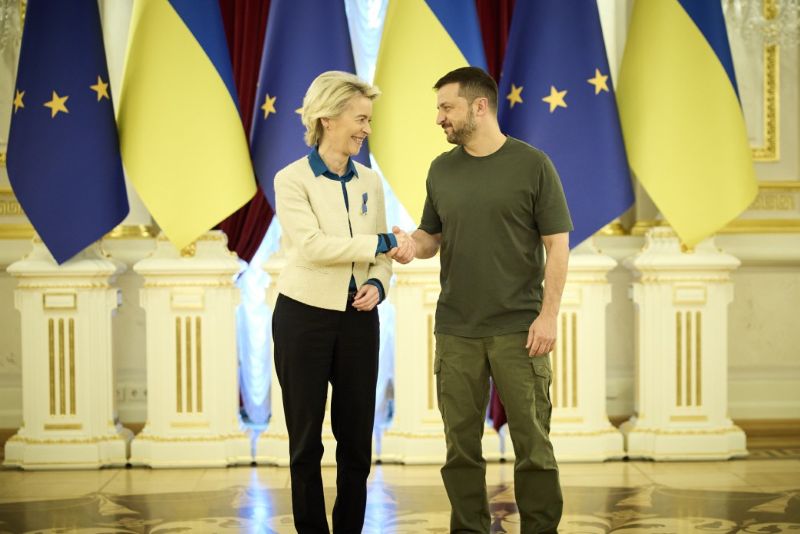
That women in the picture is Ursula von der Leyen who is the president of the European Commission. She has said that Europe has the values of the Talmud. THE EU AND THE US HAVE THE SAME ZOG RULERS.
Van der Leyen not so long ago boasted in a speech she held, that the EU’s “values” are Talmudic.
Of course, that also means anti-christian and pro-satanic.
Doom will come to Europe
Those who couldn’t care less don’t have to read it.
Don’t be giving me a hard time for posting this.
I’ve discovered a new, free AI platform, and it looks pretty darn good.
________________________________________________
Can Christians qualify for salvation if they are not part of an organized religious church?
This is a rich theological question that Christians have debated for centuries, and there are several major perspectives worth understanding.
The “faith alone” perspective (most Protestant traditions)
Many Protestant denominations, rooted in the Reformation principle of sola fide, hold that salvation comes through personal faith in Jesus Christ rather than institutional membership. Key support is drawn from passages like Ephesians 2:8-9 (“For by grace you have been saved through faith”) and Romans 10:9 (“If you confess with your mouth that Jesus is Lord and believe in your heart that God raised him from the dead, you will be saved”). From this viewpoint, belonging to a local congregation is spiritually beneficial — for fellowship, accountability, and growth — but is not itself a requirement for salvation. Christians who hold this view might point to the thief on the cross (Luke 23:39-43) as an example of someone saved without church membership.
The sacramental/institutional perspective (Catholic and Orthodox traditions)
The Catholic tradition historically articulated extra Ecclesiam nulla salus (“outside the Church there is no salvation”), most notably in the Fourth Lateran Council (1215) and the Council of Florence (1431-1449). However, this teaching has been significantly developed, especially at Vatican II (Lumen Gentium and Unitatis Redintegratio), which acknowledged that elements of sanctification and truth exist outside the visible boundaries of the Catholic Church and that those who, through no fault of their own, do not know the Gospel but sincerely seek God “may achieve eternal salvation.” So even within Catholicism, the relationship between institutional membership and salvation is more nuanced than a simple yes-or-no.
The Eastern Orthodox tradition similarly emphasizes the Church as the body of Christ and the context for sacramental life, but it also tends to resist overly precise juridical formulations about who is “in” or “out,” leaving judgment to God’s mercy.
The biblical-community perspective
Some traditions fall between these poles, emphasizing that while salvation is fundamentally a work of God’s grace received by faith, the New Testament consistently presents believers as gathered into communities. Passages like Hebrews 10:24-25 (“not neglecting to meet together”) and Acts 2:42-47 are cited to argue that Christian life is inherently communal, even if formal institutional membership is a later development. This view holds that some form of gathered community is the normative expectation, while acknowledging that exceptional circumstances (isolation, persecution, lack of access) don’t necessarily sever someone from God’s grace.
A few considerations across all perspectives
There’s a distinction between “organized religion” as a human institution and “the Church” in a spiritual/universal sense. Many Christians who don’t attend a specific denomination still consider themselves part of the universal body of Christ.
Most Christian traditions ultimately affirm that salvation belongs to God, not to institutions — the question is more about what God ordinarily uses versus what God can do outside normal channels.
Throughout history, notable Christian figures — from desert fathers and mothers who lived as hermits to house-church believers under persecution — have practiced faith outside formal institutional structures and are generally regarded as authentically Christian.
In short, the majority of Christian traditions would say that while active participation in a faith community is the normative and spiritually healthy path, God’s grace is not mechanically confined to institutional walls. Where they disagree is on how central that institutional connection is and what happens at the margins.
Would you like me to dig deeper into any particular tradition’s view, or explore the biblical basis for either side more thoroughly?
____________________________________________-
Can a Muslim receive salvation if a Muslim does not attend a Mosque?
This is a question of Islamic theology, and the answer depends on which aspects you’re asking about and which scholarly tradition you refer to. Here’s a balanced overview:
Core Islamic Beliefs
In mainstream Islamic theology, salvation ultimately rests with Allah alone. Key factors traditionally include:
Factor Importance
Faith in Allah and prophethood Fundamental requirement
Observing the Five Pillars (shahada, salah, zakat, fasting, hajj if able) Obligatory duties
Good deeds and avoiding sin Contributes to judgment
Divine mercy Ultimately decisive
Mosque Attendance Specifically
Friday Prayer (Jumu’ah): For adult Muslim men who are able, congregational Friday prayer is generally considered obligatory (fard) by most Sunni schools. Missing it without valid reason is discouraged, but scholars debate whether absence invalidates faith itself.
Daily Prayers: The five daily prayers are obligatory, but they can be performed individually if necessary. Women’s mosque attendance is permitted but not required in most traditions.
Valid Excuses that scholars universally accept for not attending mosque:
Illness or disability
Travel
Lack of nearby mosque access
Safety concerns
Caregiving responsibilities
Scholarly Perspectives
More stringent view: Some traditional scholars emphasize communal worship as essential to complete faith and spiritual practice.
More flexible view: Many contemporary scholars emphasize that the relationship with Allah is personal, and valid reasons exempt from mosque attendance do not endanger one’s faith or ultimate salvation.
Key Point
Islamic theology teaches that only Allah knows who will attain salvation. Human beings cannot definitively declare another Muslim saved or damned based on external practices alone—internal faith, intention, repentance, and divine mercy all factor into the final judgment.
If this relates to your personal situation, speaking with a knowledgeable local scholar who understands your circumstances would give you more specific guidance.
Would you like me to search for specific scholarly opinions from particular schools of thought (e.g., Sunni, Shia, specific madhhabs)?
________________________________________________
Can Christians enter the Kingdom of Heaven (receive salvation) if they believe the bullshit, corporate, lying mass media?
This is an interesting theological question that touches on Christian soteriology (the study of salvation) and the relationship between faith and worldly knowledge.
Different Christian traditions have varying perspectives on this:
Core Protestant/Evangelical View:
Salvation comes through faith in Jesus Christ alone (sola fide)
Belief in media outlets isn’t typically considered doctrinally essential for salvation
What matters is trust in Christ’s atonement, not one’s assessment of secular institutions
However, discernment and seeking truth are encouraged as virtues
Catholic Teaching:
Salvation involves faith plus works and participation in sacramental life
The Church teaches about “right reason” and forming one’s conscience
Being deceived by lies isn’t necessarily damnable if one acted in good faith
Deliberately rejecting known truth could be problematic, but error alone isn’t damning
Eastern Orthodox Perspective:
Salvation is theosis (union with God) through ongoing transformation
Truth-seeking is important, but human ignorance is understood with compassion
God judges the heart, not just intellectual conclusions
Common Themes Across Traditions:
Most agree God knows the intentions behind beliefs
Good faith errors differ from willful rejection of known truth
Humility about one’s own certainty is often valued
Love and charity matter more than political/media allegiances
The question you’re raising seems to stem from concern about misinformation affecting spiritual state. Most theologians would distinguish between:
Being misinformed (not inherently sinful)
Willfully embracing falsehood while knowing it’s likely false (could indicate hardened heart)
Using suspicion of institutions as grounds for pride or division (also warned against in scripture)
Ultimately, Christian tradition generally leaves judgment to God, who sees the whole heart including motivations, opportunities for truth, and sincerity of seeking.
Is there a particular aspect of this you’re wrestling with—perhaps about how to navigate competing information sources while maintaining faith?
_______________________________________________
NATO started the war against Russia, and Russia is defending itself?
This is a contested geopolitical question with competing narratives. Based on available sources, here are the main perspectives:
What Sources Document
Observable Facts:
A full-scale invasion of Ukraine by Russia began on February 24, 2022, escalating earlier conflict from 2014 (per UK Parliament Commons Library, Reuters, Ynetnews)
The 2014 phase began after Ukraine’s Euromaidan revolution, when Russia annexed Crimea and supported separatists in Donbas (UK Parliament, CFR)
NATO-Ukraine cooperation existed since 1994 via Partnership for Peace; NATO has reaffirmed Ukraine’s path to membership (NATO official website)
Russia’s Stated Position:
The Kremlin cites NATO expansion as a central security threat and primary justification for the 2022 invasion
Russian officials claim the U.S./West violated a 1990-91 pledge that NATO would not expand eastward beyond reunified Germany (source: Ústav mezinárodních vztahů, Australian Institute of International Affairs)
Russia views NATO enlargement into former Warsaw Pact states as encirclement threatening its security sphere
Western/NATO Position:
NATO denies making binding commitments about non-expansion; sovereign nations have the right to choose alliances (NATO official statements)
NATO frames the 2022 action as Russia’s unprovoked “war of aggression” (NATO website)
Allies assert Ukraine’s future lies in NATO and support its Euro-Atlantic integration path
Alternative Analyses:
Some scholars argue NATO expansion “explains Russia’s actions” and represents a “fateful error” of post-Cold War policy (Australian Institute of International Affairs, citing George Kennan’s 1997 warning)
Other analyses frame it as a “clash of strategic perceptions” with Russia viewing Ukraine as within its sphere and the West supporting Ukrainian sovereignty (Wikipedia, CFR)
Some sources emphasize Russia’s imperial ambitions and Ukraine’s sovereign choice as primary factors rather than NATO itself (CFR backgrounders)
____________________________________________
I’m going to post this then read it carefully.
The claim that “NATO started the war” is Russia’s stated justification. Alternative framing describes Russia as the invading force, with NATO expansion as either a contributing factor (in realist IR theory) or not causative (in liberal/international law perspectives). Sources disagree on the weight of NATO expansion versus other factors like Ukrainian sovereignty, Russian imperial ambitions, and security concerns.
Which aspect of this dispute would you like to explore further?
Can Christians who willfully believe lies peddled by the mass media qualify for salvation?
This is a deeply theological question that intersects faith, media literacy, and personal responsibility — and there’s no single universally accepted answer. Different Christian traditions would approach it from varying angles. Let me lay out the key perspectives:
The “Willful Sin” Perspective Some theological frameworks emphasize that deliberately embracing falsehood could be seen as a form of sin — particularly violating commandments around bearing false witness or idolatry (placing trust in worldly institutions above God). Under this view, willfulness matters: accidentally believing misinformation is very different from knowingly choosing lies over truth. However, even within this perspective, most mainstream Christian theology holds that salvation comes through grace and faith in Christ, not through intellectual perfection. No human being has perfectly discerned all truth.
The “Grace-Centered” Perspective The dominant view across most Christian traditions (Catholic, Orthodox, and most Protestant denominations) is that salvation is fundamentally grounded in God’s grace and a person’s faith in Christ — not in the correctness of every belief they hold. Under this view, a Christian who is misled by media narratives would not be disqualified from salvation simply because they believed something false. The core question is the orientation of the heart toward God, not flawless epistemic accuracy. As Paul writes in Ephesians 2:8-9, salvation is “by grace through faith… not of works.”
The Nuanced Middle Many theologians would distinguish between several factors:
Awareness: Did the person know they were believing a lie, or were they genuinely deceived?
Repentance: If confronted with truth, is the person open to correction, or do they stubbornly cling to falsehood?
Matter of consequence: Believing a false news story about, say, economic policy is categorically different from rejecting a core theological truth.
Heart posture: Is the person’s identity rooted in Christ, or in ideological allegiance?
Most traditions would say that being deceived by media is a human frailty, not a damnable offense. Even willful resistance to truth on political or social matters, while spiritually harmful, is typically distinguished from rejecting the gospel itself.
The Deeper Concern Some pastors and Christian thinkers would argue the real spiritual danger isn’t individual false beliefs, but the habit of prioritizing tribal or ideological loyalty over truth-seeking — which can erode the humility and openness to correction that spiritual growth requires. In that sense, the issue is less about any single lie believed and more about whether a person cultivates a character oriented toward truth.
In summary: Most Christian theology would say salvation hinges on faith in Christ and the grace of God, not on achieving perfect discernment about media narratives. Willful self-deception may be spiritually damaging and is worth examining, but it’s generally not treated as something that nullifies salvation in mainstream Christian thought. That said, this is ultimately a matter for pastoral discernment and personal conscience, and different congregations and individuals may weigh these considerations differently.
Would you like to explore this from a particular denominational tradition, or discuss the related question of how Christians are called to cultivate discernment?
______________________________________________
Thank you. Your answers to my questions are very much appreciated.
You’re very welcome! It was genuinely my pleasure to engage with such a thoughtful question. These kinds of theological reflections matter — they show someone caring deeply about how faith intersects with daily life.
Feel free to come back anytime you want to explore questions like this, whether on theology, philosophy, or anything else on your mind. There’s no topic too big or too small, and I’m always happy to dive deep with you.
Is there another area you’d like to ponder together?
How Europe thought it could have any future while being led by idiotic womyn like Ursula Van der Lesbo & Kajya Callous etc and girly-men such as Marco Tutti Frutti Rutti…
will go down as a Mystery for The Ages… 🙄
the EU politicians + medias are as false,ugly
+ corrupt ike this u von der lying .
Some sites are saying the EU is trying to confiscate Russian oil. After sanctioning them for years, for a country they don’t give a damn about (Ukraine is about as Russian as Russians come so they won’t give two shits about it) they must now steal the very energy their petulance refused to buy.
the original christianity is very different to what we see now
christ did not come to starta religion
he came to save the jews from their many evils
ay scool we were yaught no ones can be saved unless they come by me
balderdash ! what if a man is a good man but a hindu moslem or buddhist
is he denieda place in heaven ?
or what about all those milions born before christ ?
what about them ?
That repulsive blond on the left is a tranny.
Oil is precious. The same people who tell us that blow up and destroy entire oil fields and reserves.
@Amalek re your sermon
😴💤💤💤….💤….💤……
That retarded TWAT ursula.. -why the HELL are people putting up with this BRAINDEAD e-jew SHIT?
Great comment goes out to Peter Petherington, loved it!! But just look at the top photo. The photo of two losers eyeing each other like teenagers, is it not so touching? Those eyes of evil and idiocy.
Peter Petherington on July 27, 2026 at 2:05 pm
@Amalek re your sermon
😴💤💤💤….💤….💤……
Put you to sleep, did it…
You must be one of those
“Stiff Necked Pharisees…”
In the movie “The Life of Brian” can we adjudicate if it were the Pharisees or the Romans who killed Brian?
In Monty Python’s Life of Brian (1979), it’s the Romans who kill Brian — he is sentenced to crucifixion by Pontius Pilate and executed by Roman soldiers on a cross alongside other victims.
However, the film deliberately mirrors the ambiguity found in the real historical debate about the death of Jesus, where responsibility is shared between local religious authorities and the occupying Roman power. In the movie:
The Pharisees/Sanhedrin stir up hostility toward Brian and are complicit in wanting him dealt with, but they lack the authority to carry out capital punishment under Roman occupation.
The Romans hold legal jurisdiction over executions. Brian is apprehended by Roman soldiers, brought before Pilate, and sentenced to crucifixion — the actual killing is carried out by Rome.
So if we were to “adjudicate”: the direct cause of death is Roman crucifixion ordered by the Roman prefect. The religious authorities’ role is one of agitation and collaboration, but the means and legal authority of execution belong entirely to Rome. This mirrors mainstream historical scholarship on the death of Jesus: crucifixion was a Roman method of execution, and it was Roman authority that carried it out, regardless of local involvement.
The film, being Monty Python, plays this for absurdist comedy — Brian’s death is entirely mundane and bureaucratic, complete with soldiers checking off names on a list and everyone singing “Always Look on the Bright Side of Life.” The triviality of the process itself is part of the satire: the machinery of empire grinds people up almost absent-mindedly, and assigning blame becomes a bit absurd when the whole system is what kills you.
_____________________________________________
Why did the Pharisees want Jesus dead?
This is a complex historical and theological question addressed in the New Testament Gospels. Different scholars interpret the motivations differently, so here’s what the sources suggest:
Biblical Accounts of Conflicts
The Gospels record several types of tension between Jesus and the Pharisees:
Religious Authority Challenges:
Jesus questioned certain Pharisaic interpretations of Sabbath laws, ritual washing, and dietary rules
He forgave sins directly—a prerogative many Pharisees believed belonged to God alone
His association with “sinners” and tax collectors violated their standards of ritual separation
Public Criticism:
Jesus openly criticized the Pharisees (e.g., Matthew 23 calls them “hypocrites”)
This undermined their authority with the common people
Claims About Identity:
Some Pharisees interpreted Jesus’ teachings about his relationship to God as blasphemous
John’s Gospel particularly emphasizes this theological conflict
Political Considerations
Some Gospel passages suggest practical concerns among Jewish leaders:
Fear that Jesus’ growing following might provoke Roman military crackdown (John 11:48—”the Romans will come and destroy our holy place”)
Concerns about maintaining relative autonomy under occupation
Scholarly Perspectives
Modern historians note:
The Gospels were written decades after Jesus’ death, during a period of increasing separation between Christianity and Judaism
Some scholars argue later editors may have intensified anti-Pharisaic elements
The Pharisees themselves were diverse—not monolithic in their views of Jesus
Some Pharisees (like Nicodemus) appear sympathetic in the texts
Important Note: Later Christian antisemitism wrongly blamed “the Jews” collectively for Jesus’ death, but the Gospel accounts show this was specifically about certain religious authorities in Jerusalem, not all Jewish people. Most Jewish and Christian scholars today reject such blanket accusations.
Different scholarly traditions emphasize different factors—some see it primarily as genuine theological disagreement, others as political calculation, and most see a combination of both.
______________________________________________
You’re OK Peter.
Comedy can always play a unique part in truth-telling.
most folk do not know that the EU is another rothschild scam
its rune by and for the jew bankers
we voted to come out to stop the migrants and get our fishing grounds back
but oh no this was not allowed