
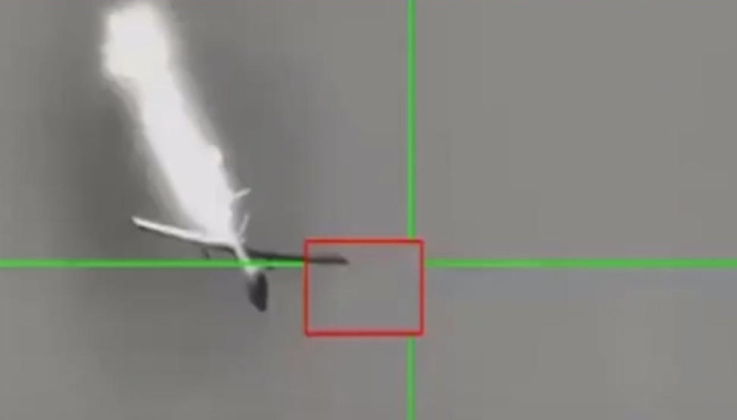
A US MQ-9 drone is shot down
Defense Security Asia – July 21, 2026
Iranian ballistic missiles struck the drone hangar complex at Muwaffaq Salti Air Base near Azraq, Jordan, on the night of 17 July 2026, in what now appears the culminating strike of a months-long campaign deliberately targeting America’s MQ-9 Reaper fleet.
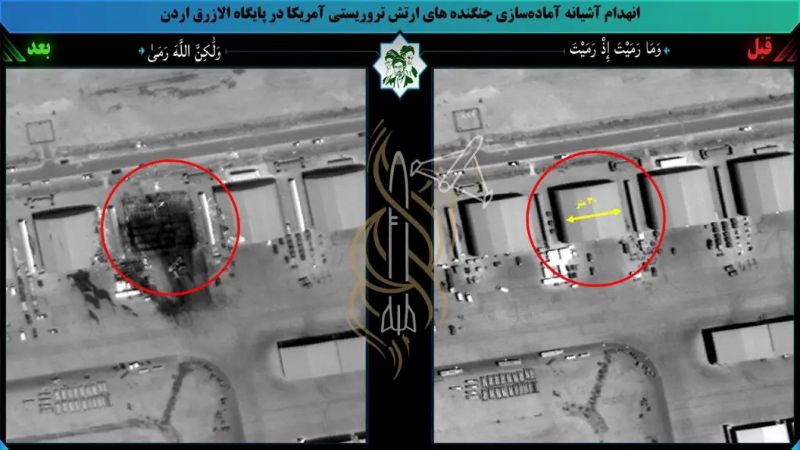
Iranian state media released satellite imagery afterward purporting to show destroyed MQ-9 Reaper airframes, a devastated officer housing block, and a burned-out fighter jet hangar, alongside the deaths of two American service members and one still missing.
Newly reviewed high-resolution commercial satellite imagery provides the clearest visual confirmation yet of the structural devastation inflicted by Iran’s ballistic missile barrage on the U.S.-utilized Muwaffaq Salti Air Base in Jordan.
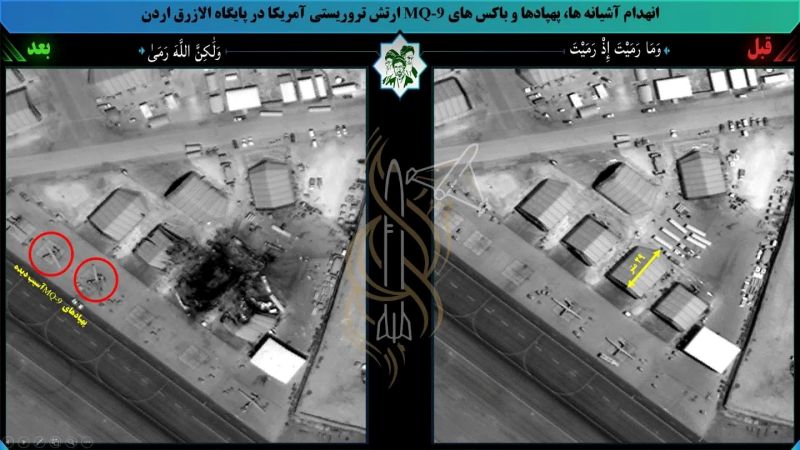
Muwaffaq Salti Air Base
One missile impact obliterated several hardened blast shelters on the flight line, structures specifically engineered to protect parked aircraft from exactly this category of precision-guided kinetic strike.
A separate warhead struck the shelter complex dedicated to housing the U.S. Air Force’s MQ-9A Reaper unmanned combat aerial vehicles, directly targeting America’s persistent ISR and strike-drone capability at its most vulnerable, static point.
Of that shelter complex, imagery analysis indicates one structure was destroyed outright, while two adjacent shelters sustained heavy structural damage consistent with proximate blast and fragmentation effects.
At least one MQ-9A Reaper positioned near the impacted shelters appears heavily damaged in the post-strike imagery, with analysts assessing that additional airframes nearby may have absorbed further, less visually conclusive damage.
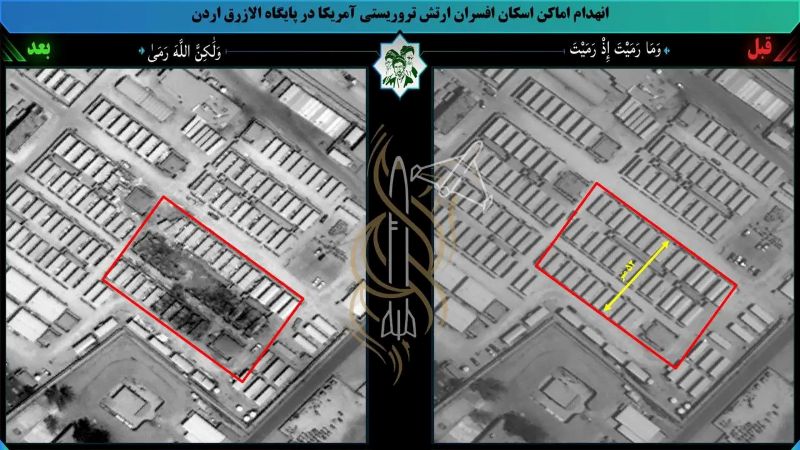
Two further missile impacts elsewhere on the base destroyed large aircraft maintenance hangars, expanding the strike’s effects beyond drone infrastructure into the base’s broader fixed-wing sustainment and repair capacity.
Taken together, the five confirmed impact points indicate a coordinated, multi-warhead salvo deliberately sequenced to strike blast shelters, Reaper-specific hangars, and maintenance infrastructure within the same engagement window.
This distribution of damage suggests Iranian targeteers possessed detailed, likely pre-existing intelligence on the precise layout of Muwaffaq Salti’s flight line, a level of targeting fidelity that raises fresh questions about Iranian ISR penetration of the base.
The New York Times reported on 20 July that Iran had struck American forces three separate times in the week preceding the fatal 17 July attack, damaging several helicopters and wounding dozens of troops the Pentagon never publicly disclosed.
Muwaffaq Salti was not an isolated target either, having already absorbed missile strikes against its drone infrastructure on 10 June, 9 July, and again on 12 July at the nearby Prince Hassan Air Base sharing the same hangar architecture.
Wikipedia’s running casualty tracker for the conflict independently confirms at least one MQ-9 Reaper destroyed on the ground in Jordan as early as 19 March, establishing a documented pattern stretching back to the war’s opening weeks.
By mid-June, senior Air Force officials were already describing catastrophic fleet-wide consequences, with the service’s active MQ-9 inventory falling from roughly one hundred sixty-five aircraft to around one hundred thirty-five within a single fiscal year.
Air Force Chief of Staff General Kenneth Wilsbach called the Reaper the “most valuable player” of Operation Epic Fury even as officials quietly moved to rebuild a fleet hemorrhaging airframes faster than production lines could replace them.
A single MQ-9 Reaper carries an estimated unit cost near thirty-two million US dollars, or roughly one hundred twenty-eight million Malaysian ringgit, meaning even a handful of hangared losses represents a substantial and recurring capability drain.
The 17 July Strike: Renewed Assault on Muwaffaq Salti’s Drone Hangars
Multiple Iranian ballistic missiles and one-way attack drones struck Muwaffaq Salti Air Base in the early morning hours between 17 and 18 July 2026, targeting the same drone-hangar zone Iranian forces had previously struck in June and July.
NASA’s Fire Information for Resource Management System recorded two distinct heat signatures on the base near 2:00 a.m. local time, with open-source analysts correlating one signature with personnel quarters and the other with hangar-adjacent infrastructure.
Iranian media subsequently released satellite imagery it said showed destroyed MQ-9 Reaper combat drones sitting inside collapsed or breached hangar structures, though the imagery’s resolution has not permitted independent, high-confidence battle-damage verification.
CENTCOM’s public statement on 18 July confirmed only personnel casualties, an omission consistent with a broader American pattern of declining to disclose specific equipment losses throughout the Reaper attrition campaign this year.
The strike followed a smaller, reportedly unsuccessful Iranian attempt on the same installation eight days earlier, when eight to ten ballistic missiles were launched at Muwaffaq Salti on 9 July and largely intercepted by combined air defenses.
That interception success likely forced Iranian planners to adjust their approach, shifting toward combined drone-and-missile salvos explicitly designed to saturate radar discrimination and exhaust interceptor magazines before warheads reached the hangar line.
Jordanian Armed Forces statements claimed a portion of the 17 July salvo was intercepted, though the confirmed heat signatures indicate at least some warheads penetrated the kingdom’s layered, American-supported missile defense architecture.
A separate incident on 18 July killed an additional American service member in Iraq during the controlled detonation of ordnance recovered from a downed Iranian drone, underscoring how unexploded munitions now generate risk well after any hangar strike concludes.
CENTCOM’s cumulative accounting through 19 July listed three American fatalities and one missing service member across the combined Jordan and Iraq incidents, a tally command officials indicated could still be revised upward.
The recurrence of hangar-zone targeting across three consecutive strike waves within six weeks demonstrates that Iranian mission planners had identified Muwaffaq Salti’s drone infrastructure as a fixed, repeatable, and high-value target set worth sustained investment.
Damage to the Muwaffaq Salti air base
A Documented Pattern: Iran’s Multi-Strike Campaign Against Reaper Infrastructure
Iran’s targeting of Reaper-associated hangars at Muwaffaq Salti and the neighboring Prince Hassan Air Base did not begin with the 17 July strike but stretches back through at least four distinct waves since March.
Wikipedia’s independently maintained tracker for the 2026 Iranian strikes on Jordan confirms one MQ-9 Reaper destroyed on the ground on 19 March, an early indicator that fixed drone basing had already become a priority Iranian objective.
A subsequent wave on 10 to 11 June saw the Islamic Revolutionary Guard Corps claim twelve ballistic missiles struck hardened hangars and a command-and-control center, while Jordan reported intercepting roughly five incoming missiles without significant confirmed damage.
The pattern intensified on 9 July, when the IRGC described a renewed salvo against Muwaffaq Salti as the “second phase” of its retaliation, followed just three days later by a strike against Prince Hassan Air Base’s shared hangar architecture.
Low-resolution Sentinel-2 satellite imagery captured at 0816 UTC on 12 July revealed a destroyed hangar alongside scorch marks and ground disturbances on the apron consistent with precision kinetic effects from incoming ballistic warheads.
Open-source analysts reviewing that imagery noted the visual cues supported Iranian assertions of successful hits on facilities built to shelter MQ-9 Reaper and MQ-4C Triton platforms, even without full internal battle-damage confirmation.
Prince Hassan Air Base by mid-2026 reportedly hosted F-15s, F-22s, F-35s, and MQ-9 Reaper drones simultaneously, representing one of the densest concentrations of advanced American airpower anywhere in the Levant theater.
A damaged Terminal High Altitude Area Defense-associated radar system in Jordan, reportedly requiring American replacement following earlier strikes, illustrated how single-component degradation can temporarily compromise an entire layered missile-defense network protecting these hangars.
Iran’s consistent prioritization of drone hangars over runway infrastructure signals a deliberate targeting logic aimed at eroding persistent overhead intelligence coverage rather than achieving a merely temporary, easily repaired reduction in sortie generation.
Four confirmed strike waves against the same hangar architecture within roughly four months represents a sustained, deliberately resourced campaign rather than opportunistic, improvised, or poorly coordinated Iranian targeting decisions against a fixed asset.
Confirmed Losses Versus Contested Claims: Reading the Satellite Evidence Carefully
Separating verified MQ-9 Reaper losses from contested Iranian and open-source claims requires distinguishing official American disclosures from satellite-derived inference, anonymous-source reporting, and adversary propaganda incentives that shape public perception of the war.
Israel says relations with Burnham’s UK are ‘frozen’
Story by Henry Bodkin •
Well you filthy jew bastards
STOP KILLING PEOPLE
Looks more like self inflicting blasts , from the inside, not from some fake cgi missile from a country that is a pretend enemy.
Patton’s warning: “We slaughtered the wrong pig”
e g defeated the wrong enemy”
When Germany surrendered in 1945, General George S. Patton did not celebrate. Instead, he issued a blunt warning: the real conflict was only beginning. As Soviet forces tightened their grip on Eastern Europe, Patton argued that the United States had conceded too much ground to Stalin. His outspoken views—clashing with Soviet commanders and unsettling even the jew Dwight D. Eisenhower—quickly turned America’s most aggressive battlefield general into a political liability. This episode explores Patton’s uneasy final months in Europe, his growing frustration with Allied policy, and how victory in WWII left him convinced that another war was already taking shape and that we should have let Germany and Russia fight it out
but he took us to war with our german friends, and fought for our russian enemies
this was the meaning of Hitlers ” revenge weapons”
Germany under the 4 year german agreement allowed in British experts to tour factories military sites etc, then we murdered Chamberlian and put in the drunken warmonger churchill
to then go to war on germany, and all for Rothschild