
Will Jones – The Daily Sceptic July 18, 2026
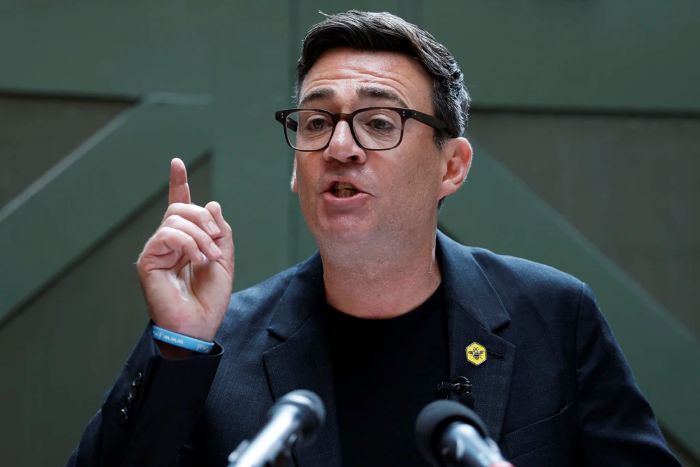
New Labour leader Andy Burnham has claimed that nationalisation – taking Britain back to the pre-Thatcher 1970s – will cure the country’s ills. He’s in for a very nasty shock, says Tim Wallace in the Telegraph. Here’s an excerpt.
Grieving families, unable to bury their dead as gravediggers downed tools. Factories forced into a three-day week after a strike by miners. Hospitals blockaded by protesting NHS workers, ending all but emergency care.
In the minds of some, these were Britain’s glory days, the pre-Thatcher 1970s for which Andy Burnham pines.
The new leader of the Labour Party and Britain’s next Prime Minister has lamented a “series of wrong turns in the 1980s” – his teenage years – which, he believes, sent the country on the path to ruin.
“Political power was centralised and economic power was privatised,” he said in his coronation speech as Labour leader on Friday.
“The country surrendered control of the essentials, housing, water, energy, transport and left people exposed to higher costs.”
He lumps the Thatcher years and everything that followed, Tory or Labour, as “four decades of the neoliberalism that began in the 1980s [which] have not been kind to the places that built our party”.
His solution is “control” – more state ownership, more diktats from politicians.
Yet a survey of the 1970s and the following years suggest that was hardly a paradise for most Britons.
It is no coincidence that the years before Thatcher’s privatisations began, and when close to one worker in every three was employed by the state, strikes were at their peak.
In an average month in the 1970s, more than one million working days were lost to industrial action – hence the extraordinary disruption to ordinary life in the “winter of discontent” and other painful episodes of that fraught decade.
The peak came in September of 1979, four months after Margaret Thatcher’s first great General Election victory, when workers downed tools for a total of more than 11 million days.
The combination of privatisations, limits on union power and a smaller state meant strikers were never again able to wreak such havoc on ordinary people’s lives again.
Even with the long miners’ strikes, the 1980s only saw 600,000 days lost to industrial action in a typical month. In the 1990s and subsequent decades, the figure was crushed to around 50,000.
Union tactics not only cut off businesses and families from the essentials like power and healthcare. The combination of strikes plus turmoil in oil markets resulted in catastrophic inflation.
Inflation peaked at 25% in 1975, more than twice the pace of the recent cost of living crisis that followed the pandemic lockdown.
Rising prices were more pervasive 50 years ago, too, staying in double digits for half the decade, and never falling below 5%.
Worth reading in full.
there isa big article in this months PedopPeople magazine
+they tear her to bits about criticising kids who are put in for sex changes
and she wanted psychiatrists to go back to counseling people with sexual problems
no wonder homosxuals hated her
Nationalism? What’s that? And burn ’em is doin’ it? LOL.
With more than 50% foreign shit I can’t begin to guess which “nation” he means. Does he think all the niggers and ragheads are gonna put on dangermouse t-shirts and eat fish and chips?
No. I would imagine, if the above is true at all, that he wants to set a match to the tinder so he can do a jewlensky and impose martial law for the run-up to the war.
I remember those days in 1975. I had a mortgage of £13,000 on my local authority ex-council house (about £14.00 a month). I could have stuck it out until inflation peaked at 100% – unlike most others. Had inflation peaked at 100%, there would have been wholesale riots!! 😒😢
Yahoo News UK reports Burnham is scrapping Starmer’s Digital ID. He says the effort and money needed putting into it can be better spent dealing with the cost of living crisis.
Regarding renationalisation, I’ve thought for years the first privatised utility to walk away from the business will be the water industry. Water is heavy and expensive to move around, and when the CEOs decide they’ve bilked all they can from asset sales (lots of land to sell) they’ll just dump it back in our laps–then when it’s clean again they’ll demand being compensated for the industry.
https://uk.news.yahoo.com/burnham-scrap-starmer-digital-id-200008482.html
ROTHSCHILD BBC IN HUGE BIAS ROW
BBC bias row explodes as 10-part Brexit series interviews just one Leave campaigner
Story by Jon King •
•A BBC bias row has erupted after a 10 part series on Brexit included just one Leave campaigner. Nineteen people spoke negatively about Britain’s exit from the European Union in the Radio 4 documentary, Politically: Ten Years After Brexit, according to a report. The BBC insisted the series was made in line with its editorial guidelines.
Campaign group, News-Watch, which monitors public service broadcaster impartiality, found the series ignored the benefits of Brexit.
People voted for Brexit to regain control of our borders and refuse migrant scroungers and regain our fishing grounds
both of which we never got
The only guest it said had defended the UK leaving the bloc was economist, Julian Jessop, from the Institute of Economic Affairs. News-Watch found at least three interviewees had links to pro-Remain organisations, but this was not shared with listeners.
This included Sam Lowe, who was a senior research fellow at the Centre for European Reform and Mujtaba Rahman, from Eurasia Group.
Listeners were told Sarah Main was a former director at the Campaign for Science and Engineering, but not informed the group said Brexit would damage UK science.
The BBC is anti British, and we paya licence for this shit ?
NO WAY
Natural monopolies should be under control that benefits the nation as a whole. These include such as water and railways. There were inefficiencies in publicly owned companies; these were to do with poor administration. Privatisation promised improved efficiency but with the appropriation of public assets (land). The bottom line was that under (Old) Labour there was poor admin, but under Thatcher there was appropriation for private gain.
This issue of to nationalise or not is about the division of land, labour, and capital returns unto the proper and just recipients. As always, lack of nuance is the greatest problem with a subject like nationalisation.
Feeble minds enjoy extreme positions; superior intellects are able to appreciate nuance…
he will be a follower of the zionists like all other before him .
Nationalisation, huh? The only xxxxs to be trusted less than corporate jackals are “government” jackals. And unless the very first step of “nationalisation” is to deport the orc rapefugees, gimme-grants, and invaders with extreme prejudice, Burnham can f*ck right off.
Then take a look at that obviously mendacious Tartuffe wanker in the photo at the top….I’d bet my teeth and my inheritance that he has raped a kid.
And to those in Britain, how does it feel to turn into France? With very few exceptions, your national football squad sure looks to have turned into another pan-African side. Anyone tuning in to the match yesterday would have said, “Whose that, Ghana?” The team representing England sure looked quite dark and had scant few actual natives….just like those cunts for France….
look flightradar24
seems new regulations ?
who wants fly from Istanbul or from Turk/Kazachstan
to Minsk now needs to fly northly around Moskau .
After viewing the final winning putt from Ryan Fox at ‘The Open’ on tv and scanning the spectators, you’d think England was returned to its original people- not one colored person anywhere in sight!
LOL..
Burn ’em, which is a damned good idea, other than being a living mouth breathing version of Mr Potato head…has to blather this sort of horseshit to keep the members happy and of course to calm the marks, or rather those that voted the belaboured farty into orifice..
you see it’s quite simple, burn ’em’s an everyman stand in, because that’s the feint.. he has to mouth the joo labour platitudes.. such as nationalization and welfare hikes and bike lanes for blind black lesbians in wheelchairs..because that’s the labore way.. bullshit them all as you plot and plan to steal everything not nailed down..
and murder the occupants..
“Nationalisation – taking Britain back to the pre-Thatcher 1970s – will cure the country’s ills.” That’s a really funny one, Andy “Burn-him” (too).
Nationalisation? What’s that supposed to be? And of whom? Step back in time (a lot further than when the Mad Cow disease had befallen “Britstain”. Dive into the Gildas and “revisit” the Batlle of Badon and one might find something like this:
“From that time, the citizens were sometimes victorious, sometimes the enemy, in order that the Lord, according to His wont, might try in this nation the Israel of today, whether it loves Him or not. This continued up to the year of the siege of Badon Hill (obsessionis Badonici montis), and of almost the last great slaughter inflicted upon the rascally crew”.
https://en.wikipedia.org/wiki/Battle_of_Badon
Well, those days “nationalised citizens” seem solely have become the enemies of the “Britstain Authority” unless one belongs to the “Nation of Israel” by cohencidence. and ……. surely no “Brit” can vote his way in or out of it!
Who or what are you really or have become Brits? A mix of rascals that only fights themselves but never the enemy? So what is it really Andy wants to Nationalise? What is already there since centuries?
Umbra !
France are know known as Africa-A these daze.
INKland = Africa -B.
It’s all scripted like the World FU-Cup.
to Nationalise or Not.
All that will happen is that taxes will rise, those who pay in will suffer. More so those on low incomes shackled to P.A.Y.G.
either way the rich will get richer.
DONE.
@ Umbra
“how does it feel to turn into France? With very few exceptions, your national football squad sure looks to have turned into another pan-African side.”
Yes, African teams are composed of Africans and European teams are becoming majority Africans. Is this really the World Cup anymore? Should be called the Africa Cup instead. https://www.youtube.com/watch?v=PDfvmRJnx-s
the boy stood on the burning deck
realising politics was a farce
he tried to avoid kier starmer
as he knew hed have his arse
RUPERT LOWE
the real UK leader in waiting
start deporting now
https://www.youtube.com/watch?v=AYteAAJpp_U
Andy (aka da nose) wont last longer than the previous guy.
@UB re “And to those in Britain, how does it feel to turn into France?”
I caught a few minutes of the France vs England game down at the local pub.
Initially I thought the TV was tuned into the wrong channel and was showing Nigeria vs Zambia by mistake.
It wasnt long before the THICK Brits around me went orgasmically ecstatic after some random Congoid put the ball in the net (in a obvioudly fixed game) who, i then deduced, must have represented “Ingerrlund”.
Needless to say, I beat a hasty retreat outta that place before the crowd got even more “excited”… and started banging each others butt- holes in celebration!
🙄🙄🙄
Andy wagging a finger. What a pompous little prick!
yeah, as Harry vox says, low IQ Burnhim puts on the kneepads & smokes Jew Dick
…yawn
Whether nationalization or privatization, still the same JWO scheme with two different faces. ZOG controls national govts. on one side and all the multi-national banking and corporate structure that are buying up hard assets through so called privatization/private equity on the other side. Regardless of the labels, power and wealth is being accumulated by ZOG. Just like false dichotomy of Democrat-Republican. You’re f***ed either way, despite the illusion of options.
@Simon Smith – spot on
Essential utilities should never be for-profit enterprises.
Thatcher took that which we already owned an sold it back to us (and others) to fund her entirely illusory wealth boom
Phones, Post Office, Railways, Gas, Electricity and arguably now a national ISP, belong in public ownership not private.
The troubles of the 1970s were caused, at least in part, by destabilisation agents like Arthur Scargill to set the stage for “saviour” Thatcher.
But lets not forget that the 1970’s was the last time in Britain that one man’s wage could buy a house and support a family.
Inflation is a lot worse for bankers than for ordinary people.
There are several homosexual magazines who have pics of underage boys
the killer of Ann Widdicombe had stacks of these vile mags
the authorities dont want it known that this was a heterophice murder
Nothwithstanding the inevitable nepotism, corruption and general incompetence, there can be little doubt that certain national assets should be state owned and run. It has been shown repeatedly that the foreign owned energy companies screw British users in order to subsidise their voters back home.