
The Cradle – May 7, 2026
Saudi Arabia and Kuwait suspended US access to their military sites in opposition to Washington’s so-called Project Freedom, according to a 6 May report by NBC News.
“Trump’s abrupt reversal on his plan to help ships go through the Strait of Hormuz came after [Saudi Arabia] suspended the US military’s ability to use its bases and airspace to carry out the operation,” two US officials told the US outlet.
EXCLUSIVE: Trump’s abrupt U-turn on a plan to reopen the Strait of Hormuz came after Saudi Arabia suspended U.S. access to its bases and airspace. https://t.co/ugxw2ilzpD
— NBC News (@NBCNews) May 7, 2026
The officials said Washington’s Persian Gulf allies were “surprised” by Trump’s announcement of Project Freedom over the weekend, which the US leader framed as a means of breaking Iran’s control over the Strait of Hormuz.
“In response, the Kingdom informed the US it would not allow the US military to fly aircraft from Prince Sultan Airbase southeast of Riyadh or fly through Saudi airspace to support the effort,” the sources added.
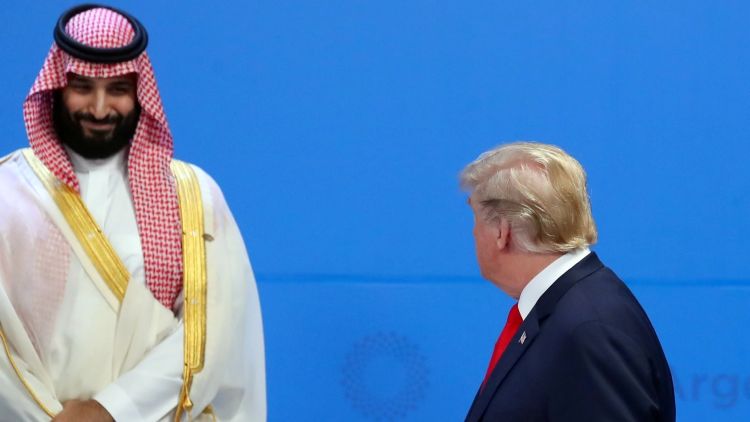
The report claims the issue remained unresolved even after a call between Trump and Saudi Crown Prince Mohammad bin Salman (MbS), highlighting Riyadh’s support for Pakistani-mediated diplomacy.
This forced Trump “to pause Project Freedom in order to restore US military access to the critical airspace.”
NBC News also reported that other Gulf states were “caught off guard” by the US scheme. Qatar was informed only after the US operation had begun, and Oman was notified only after Trump announced it.
“Because of geography, you need cooperation from regional partners to utilize their airspace along their borders,” an official stressed.
According to Drop Site News’s Ryan Grim, Kuwait also “cut off access, basing, and overflight (ABO)” to their western allies.
Saudi Arabia and Kuwait Both Cut U.S. Base Access, Forcing Pause of Project Freedom
Trump’s abrupt pause of “Project Freedom” came after backlash from key Gulf allies led by Saudi Arabia, for being blindsided by the operation’s announcement, according to NBC News. Drop Site’s…
— Drop Site (@DropSiteNews) May 7, 2026
During the US-Israeli bombing campaign against Iran, Persian Gulf states, especially Kuwait and Saudi Arabia, faced frequent Iranian retaliatory attacks, mainly because their bases and territory were used to launch strikes.
As a result, US bases in those countries suffered severe damage.
Trump announced Project Freedom on Sunday. It was described as an effort to divert stranded ships from the Strait of Hormuz.
A day later, two Iranian missiles were fired at a US warship near the Strait of Hormuz, while energy targets in the UAE came under attack.
Footage captures the moments after a drone caused a fire at an oil facility in Fujairah.
The UAE says Iran fired 15 missiles and four drones on Monday, while Iranian state media is indicating Iran wasn’t behind the attack. pic.twitter.com/G7SimR4JCS
— Al Jazeera Breaking News (@AJENews) May 4, 2026
Tehran confirmed the attack on the US vessel, but the country’s military denied striking the UAE.
On Tuesday, Trump paused the operation, allegedly at Pakistan’s request and due to “great progress” in negotiations.
The US has continued its illegal blockade of Iranian ports during the ceasefire and has imposed new sanctions. In response, Tehran has seized several vessels after Washington’s recent seizure of Iranian-linked ships.
The Islamic Republic is seeking long-term management of Hormuz without US involvement, but has said it is open to discussing a joint process involving regional states.
It also calls for a full ceasefire across West Asia and reparations for the damage caused by the US and Israel. Iran has vowed a “crushing” response if Trump renews the bombing campaign, which he has repeatedly threatened to launch.
US media reported this week that Tehran and Washington were getting close on a deal involving a halt to uranium enrichment. An Iranian official referred to the report as a US “wish list.”
A CNN data guru says more Americans believe in ghosts than believe in the Trump project. We should be cautious believing in these things because the samples are small and the extrapolation is huge. One old poll said 1 in 6 Americans believe unicorns were real but are now extinct, which I find hard to believe, but if more believe in ghosts than Trump then he’s really going down the pan.
https://uk.news.yahoo.com/cnn-data-guru-reveals-more-202752350.html
Those Saudi Arabs and friends are the same people as the rest of the so called Semites in the region. No different from each other, all related. All pretending to be enemies.
Eppy pedo files crypto fake j. drumpf aka the kkk rigger of the 2024 US election labeled (t)his second attack on Iran d.d. 28 February 2026 Operation Epic Fury ( a little surreal reading of this label shows his cover up of the Ep/stein files + his loyalty & addiction from the moment this insane loser from hell started breathing 14 June 1946 to1948 israhell…
1 June 2015 https://www.jns.org/israel-news/donald-trump-says-he-is-no-apprentice-when-it-comes-to-israel#.VdDqQrJVhBc= “The only [candidate] that’s going to give real support to Israel is me,” said the 69-year-old Trump. “The rest of them are all talk, no action. They’re politicians. I’ve been loyal to Israel from the day I was born. My father, Fred Trump, was loyal to Israel before me. The only one that’s going to give Israel the kind of support it needs is……”
After his Venezuela invasion of January ( for its oil) this year drumpf expected Iran to be a piece of cake….
6 May https://www.youtube.com/watch?v=JOhBrYk_ErE ‘drumpf Raped 13-Year-Old Girls? Lutnick Exposes drumpf’s Dirty Epst, Secrets| Ro Khanna’s Big Reveal / by OneIndia News
Secr. of commerce Nutlick exposes damaging details on drumpf/ ‘oversight committee members on secr, Lutnick deposition in Epst. investigation….
Ro Khanna slammed Howard Lutnick ( longtime nxt door neighbour of Epst. in manhaTTan/ gj) over his testimony tied to the growing controversy surrounding Jeffrey Epst, Khanna accused Lutnick of offering “contortions and lies,” even claiming that drumpf would fire him if he saw the full transcript & video of the explosive exchange’
7.25: ” Todays transcribed interview is part of the ongoing coverup/ the American people deserve to see of what’s taking place in there/ they deserve to see the sweat on the secr, ‘s brows as he struggles to answer basic questions about his lies to the American people”…’
6 May https://www.youtube.com/watch?v=4x4jjkBVRDM Lutnick, refusing to testify under oath and instead insisting on an informal transcribed interview/ not a deposition with no video recording/ where he repeatedly appeared to make false and misleading statements about his dealings with Epst. / by Ben Meidas Touch Meiselas…
Good that the top of the US military did not give him the nuke codes/ a MC Military Coup will do the necessary part II / he will via EO’s block the midterm or at least mobilise his ICE Gestapo to sabotage voters…or hacking voting computers via his buddy Musk…./ imv the US gives this insane demented idiot & his “cabinet” too much space…
5 May 2026 https://www.youtube.com/watch?v=MilcguGWHCA Jack Mercer*: Trump Caught Stealing $166 Billion — Supreme Court Orders Every Dollar Back / 12.34: ” The man who told voters he would make America wealthy by taxing foreign countries made American consumers pay more…”
comments/”” How is he not impeached?”/” It looked like AI, so I checked it out and confirmed real news, what about IRS when are we going to revisit their scam…”/”Kamala Harris ❗️* warned Americans what would happen if Trump was elected president and Maga went ahead and voted for him anyway. Now they’re finding out he doesn’t care about America or the American People.”
USA this is what you get with 45 47 9 11/ he smels like hell no amount of Eau de Colgne 4711 will help/ he is stealing you blind/ he shits in your face & you let him do it…..
16 August 2024 https://www.bitchute.com/video/LxtxCwG5uXiU/ by Demon Hunter/ 9.47: drumpf aka trump is jewish / family found in j. genealogy database….
❗️* https://thiswillhold.substack.com/p/ex-cia-whistleblower-the-nsa-audited “In December 2024, I was personally involved in an NSA‑authorized forensic audit of the 2024 election. Kamala Harris & Tim Walz won—by a wide margin. Trump lost dramatically. ,,,,” Adam Zarnowski/ ex-CIA agent and author of Jörmungandr…
16 Juni 2025 https://www.gregpalast.com/trump-lost-vote-suppression-won/ ❗️”Trump lost. That is/ if all legal voters were allowed to vote/ if all legal ballots were counted, Trump would have lost the states of Wisconsin, Michigan, Pennsylvania and Georgia. Vice-President Kamala Harris would have won the Presidency with 286 electoral votes.”
* Jack Mercer certainly does a good job with bringing this out / but he – and for that matter anyone- who who puts her/his hope on the November midterms will have to face – Eyes Wide Shut- the same music as in November 2024 / psycho pedo drumpf was selected by the hidden hand of the RotSchild bankers & co that founded 1948 israhell after their orchestration of WW I +II
Only an MC Military Coup will do/ and yes again another recent shutdown of the aipac bought & paid for congress/ too sick for words) / dump diablo pedo drumpf in a cuckoosnest facility/ in a straitjacket don´t let him continue to steal “the land of the brave” blind any longer & start WW III thats what his satanic overlords cq ventriloquists whispers this pathetic psycho diablo pedo ….
https://freemasonrywatch.org/washington.html The WH makes up the southern most tip of the goathead (baphomet) https://x.com/DonnieDarkened/status/1555596908407685126 This official Space Force Hat was sold on drumpf’s website in November, 2019. When inverted, it mirrors the image of Baphomet.
To put it in scientific street Latin: every potus is getting screwed by or gives a blowjob to baphomet the goat capo/ 1963 exception JFK he wanted to finish their 1913 FED & wanted to check the nuke arsenal in Dimona israhell …..
Anyway every body anywhere
h.a.n.d. have a nice day
CIA O