
The Cradle – April 23, 2026
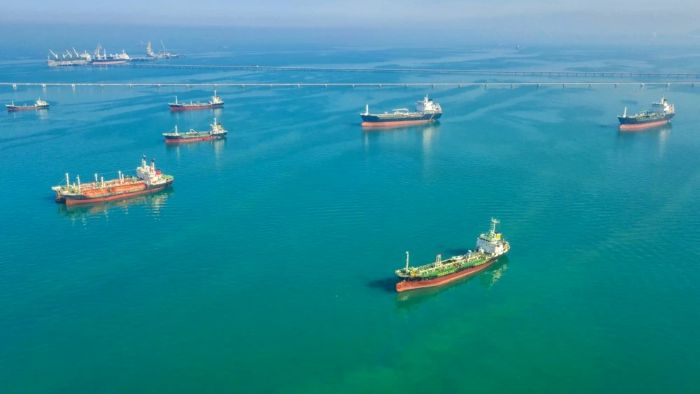
Iran shipped an estimated 10.7 million barrels of oil to China during the first half of April, despite a US naval blockade, according to data from Kpler reported by CNN on 23 April.
The firm estimated flows at about 985,000 barrels per day (bpd), noting that tanker activity in Iranian loading zones “continues” and has not been interrupted.
Iranian oil flow continues through Hormuz despite US naval blockade
——
An estimated 10.7 million barrels of Iranian crude exports passed through the Strait of Hormuz between 13 and 21 April, despite what analysts described as a US Navy blockade in the wider maritime area,… pic.twitter.com/1qiWZKNSj4— The Cradle (@TheCradleMedia) April 23, 2026
Kpler said the blockade has “disrupted the oil machine, but it has not broken it,” pointing to intact loading infrastructure and steady cargo movement toward China.
Tankers remain positioned at Iranian ports, while storage at the Jask export terminal – which allows shipments to bypass the Strait of Hormuz – reached a record 5.8 million barrels.
A Chinese-owned tanker, Rich Starry, has completed its transit through the Strait of Hormuz despite the U.S. blockade, according to Kpler data.
The vessel, flying a Malawi flag, departed Sharjah in the UAE fully loaded and is heading toward China. It had turned back the previous… https://t.co/TvmB9CFwAH
— Drop Site (@DropSiteNews) April 14, 2026
Vortexa reported that 10.7 million barrels of crude passed through the Strait of Hormuz between 13 and 21 April, including 35 transits involving Iran-linked or sanctioned vessels.
The firm added that US enforcement operates across a broader maritime zone rather than the strait itself, complicating but not halting traffic.
UPDATE: Analytics firm Vortexa reports 34 tanker movements involving Iran-linked vessels in the Gulf, including 10.7 million barrels of crude oil transported over the past week. #Energy #Shipping
— ZettaWire (@ZettaWire) April 22, 2026
Separately, Iranian media, citing Chinese tracking data, reported that 14 vessels crossed the Strait of Hormuz within 24 hours on 21 April, including three oil tankers.
Taken together, the data shows that while US measures have increased pressure on Iran’s oil exports, flows have continued at scale, supported by alternative export routes and sustained tanker activity.
US Central Command (CENTCOM) said it redirected 31 vessels and seized or boarded others as part of enforcement operations, even as overall shipping activity persists.
U.S. forces have directed 31 vessels to turn around or return to port as part of the U.S. blockade against Iran. pic.twitter.com/lG5ACEt7LR
— U.S. Central Command (@CENTCOM) April 23, 2026
Iran’s UN ambassador Amir Saeid Iravani demanded on 22 April that the US lift its naval blockade on Iranian ports before any negotiations can resume, rejecting US President Donald Trump’s unilateral extension of the two-week ceasefire.
Iravani said the blockade violates the truce and warned that while Tehran is open to talks if Washington seeks a political solution, it is also prepared for escalation if necessary.
Iranian officials dismissed the extension as “meaningless,” with senior advisor Mahdi Mohammadi calling it a “ploy to buy time for a surprise attack.”
Meanwhile, Iran has begun collecting transit fees from ships passing through the Strait of Hormuz, with a senior parliamentary official confirming on 23 April that the country has received its first revenues from the system.
Iran’s second deputy parliament speaker Hajibabaei announced Wednesday that the first revenues collected from Strait of Hormuz transit tolls have been deposited into the Central Bank of Iran, according to Mehr News Agency — marking the first public confirmation that Iran’s… pic.twitter.com/qURuWTpzbk
— Drop Site (@DropSiteNews) April 23, 2026
The move comes as Tehran maintains tight control over the waterway, allowing only a limited number of approved vessels to pass while rejecting US demands to reopen the strait or scale back its nuclear program.
Iranian officials said the policy will remain in place as long as the US blockade on its ports continues, even as the disruption adds pressure to global markets.
The Weekly News
1.2M Followers
Muslim candidates poised to make local election breakthroughs
Story by Amy Gibbons • 8h •
Muslim and pro-Palestine British candidates campaigning on “divisive” issues could win seats across 30 councils at the local elections, a think tank has said.
The “sectarian wave” follows a rise in political campaigning that prioritises war crimes and genocides over local issues, according to new analysis by the Henry Jackson Society (HJS). the think tank predicts that 171 “migrant ” candidates across 31 councils could be elected next month, mainly in areas with large Muslim communities.
Since 1945 when importing in foreign nationals first began, the public has been waring of this, but did the government listen ?
no they didnt
They only acknowledged recently that Multiculturalism and blue sjy thinking was a total failure
and the country was damaged beyond repair through it.
It comes amid concerns that international issues are being “imported” into town halls as pro-Palestinian activists urge voters to use their ballots on May 7 to protest against the “genocide” in Gaza.
The government has been supportive of Israels attacks on its neighbours, and this awful racist crime must be stopped
Birmingham, Bradford, Blackburn, Bury and Tower Hamlets, in London, are expected to elect a significant proportion of independent Muslim and pro-Palestine candidates. the think tank predicts that 171 “migrant” candidates across 31 councils could be elected next month, mainly in areas with large Muslim communities.
British people are now a minority in their own country, most towns and cities arealmost totally migrant
You were warned and told repeatedly this would happen
so many folk now say
” we should have voted National Front or BNP”
I used to think nuclear power was risky but for modern society it’s the only thing that can replace fossil fuel power. Solar power has its place on the small scale, as in households can use it in similar ways it’s used in caravans and RVs for light and small appliances, but it won’t power a country, nor an industry, nor a large box store or supermarket and probably not even a large business. It can have a place in our homes but politicians are lying when they say it can then be scaled up from there.
Translation:
US is Full of Bluff and Bluster BullSh*te
A surprise attack?
Bwhaahhahaahaha
Iran woud be able to sniff out any growing and potential threats in a heartbeat .
Perhaps the next ( and possibly last business ) to conclude would Iran say F*ck it ….and that any US ships in the area exit asap or start sinking them……..on the logic being that once this TACO nuisance is removed …the USA is even more impotent, humiliated and toothless and more importantly the Kikes go down with them.
Iran is patient so far, but that cannot go on forever…..there has to be a quick and decisive ” logical conclusion ” to this fruitless and meaningless war.
PS Iran may “spare” US Navy …. the value in that being US goes elsewhere with it’s posturing like say Taiwan vs China etc.
@ RAH
dont forget the US submarines , they lure
like sharks everywhere . only russians, chinese,
maybe indians may spot them .