

Defence Security Asia – April 10, 2026
The loss of 24 MQ-9 Reaper drones worth approximately US$720 million (RM2.74 billion) in only six weeks marks the most severe American unmanned aircraft attrition event since large-scale drone warfare emerged.
The accelerated losses, including eight additional Reapers destroyed since April 1 according to CBS, indicate that the U.S.-Israel campaign against Iran is encountering an unexpectedly resilient and technologically adaptive defensive environment.
Two American officials reportedly acknowledged that the expanding losses reflect the increasing difficulty of sustaining intelligence, surveillance and reconnaissance operations inside heavily contested Iranian airspace.
The officials reportedly stated that eight MQ-9 Reapers were lost during April alone, bringing total losses since February 28 to 24 aircraft from an estimated American fleet of roughly 300.
That attrition rate means the United States has effectively lost approximately eight percent of its entire MQ-9 inventory during a single regional conflict lasting barely six weeks.
The growing losses are strategically significant because the MQ-9 Reaper has long represented the backbone of America’s persistent airborne surveillance architecture across the Middle East, North Africa and Central Asia.
The disappearance of so many aircraft within weeks is therefore beginning to undermine the operational credibility of one of Washington’s most heavily relied-upon intelligence collection platforms.
Iran’s apparent ability to repeatedly detect, track and destroy Reapers also suggests that its integrated air-defence network remains far more intact than previously assumed.
If the current pace continues, the Pentagon could soon face growing pressure to reduce MQ-9 sorties or divert additional assets from other global theatres.
Such a redeployment would impose wider strategic consequences because American drone fleets remain heavily committed across the Red Sea, Indo-Pacific and Eastern European security environments.
The losses are also likely to intensify debate inside Washington regarding whether existing unmanned aircraft concepts remain viable against peer-level adversaries equipped with modern air defences.
More importantly, the attrition may already be reshaping regional perceptions by demonstrating that Iran can impose meaningful operational costs on a technologically superior coalition.
Why the MQ-9 Reaper Is Suddenly Vulnerable
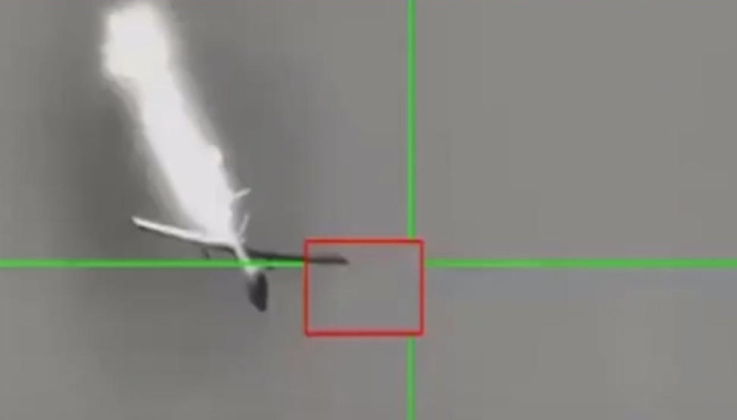
A US MQ-9 Reaper drone shot down over Iran. Click to enlarge
The MQ-9 Reaper was originally designed for permissive counterinsurgency environments where adversaries possessed neither integrated radar coverage nor sophisticated long-range surface-to-air missile capabilities.
During campaigns against insurgent organisations in Iraq, Afghanistan, Syria and Somalia, the aircraft operated above lightly defended territory where American commanders could assume uninterrupted electromagnetic and air superiority.
Iran presents a fundamentally different operational environment because its layered air-defence architecture combines long-range missile batteries, mobile medium-range interceptors, passive sensors and electronic warfare systems.
That network reportedly includes domestically produced Bavar-373 and Khordad-series systems alongside Russian-designed air-defence components capable of tracking slow, predictable and non-stealthy aerial targets.
Unlike fifth-generation combat aircraft, the MQ-9 possesses a large radar signature, limited manoeuvrability and a cruising speed insufficient for evading modern missile engagement envelopes.
Its operational profile also requires prolonged loitering above designated surveillance areas, creating predictable flight patterns that allow Iranian radar operators additional time for target identification and interception.
The Reaper’s satellite communications links and remote-control architecture further increase vulnerability because Iranian electronic warfare units can attempt jamming, signal disruption and data-link interference.
Several analysts now believe some American drone losses may have resulted from combined electronic attack and missile engagement rather than direct kinetic interception alone.
Iran’s Air-Defence Network Is Becoming a Strategic Deterrent
The accelerating drone losses suggest Iran’s air-defence network has evolved from a symbolic defensive shield into a functioning anti-access and area-denial architecture.
Iranian military planners have spent years dispersing radar stations, missile batteries and electronic warfare units across mountainous terrain, hardened facilities and underground military complexes.
That distributed posture complicates American targeting because destroying one radar or missile site no longer creates the operational collapse previously expected during conventional suppression campaigns.
Iran’s defence concept instead relies on overlapping engagement zones, redundant sensors and mobile launchers capable of relocating rapidly after detecting hostile aircraft.
The reported destruction of two MQ-9 Reapers near Isfahan highlighted the strategic importance of central Iran, where critical missile, nuclear and command facilities remain heavily protected.
Iranian state media has repeatedly claimed higher numbers of American drone shootdowns, although those figures remain impossible to verify independently and exceed the currently reported American estimate.
Nevertheless, even the lower figure acknowledged by American officials still demonstrates that Iran’s air-defence network is imposing meaningful costs on U.S. military operations.
The resulting psychological effect matters almost as much as the physical losses because repeated interceptions can deter additional surveillance flights and constrain American strategic decision-making.
The Financial and Industrial Cost of Losing 24 Reapers
Each MQ-9 Reaper costs approximately US$30 million, meaning the confirmed losses already total roughly US$720 million or approximately RM2.74 billion using prevailing conversion rates.
That figure excludes the additional expense of ground control stations, satellite bandwidth, munitions, maintenance equipment, contractor support and trained personnel supporting each aircraft deployment.
The wider logistical burden becomes more significant because the United States must now replace destroyed aircraft while simultaneously maintaining drone operations across multiple global theatres.
The U.S. military currently operates around 300 MQ-9 Reapers, meaning the confirmed losses represent one of the largest proportional reductions ever experienced by the fleet.
Replacing 24 aircraft would require General Atomics Aeronautical Systems to increase production at a time when American defence manufacturers already face supply-chain constraints.
The attrition also risks disrupting U.S. operations elsewhere because MQ-9 fleets remain heavily tasked supporting maritime surveillance, counterterrorism and border-monitoring missions worldwide.
From an industrial perspective, the conflict may ultimately accelerate demand for more survivable unmanned aircraft incorporating stealth shaping, electronic protection and autonomous operating capabilities.
The present losses therefore represent not merely battlefield attrition, but also a warning that current American drone procurement assumptions may no longer match modern operational realities.
The Pentagon’s Calculated Gamble on “Expendable” Aircraft
American military planners have historically regarded the MQ-9 Reaper as an expendable platform because unmanned aircraft can be lost without risking pilots or triggering domestic political backlash.
That assumption helped justify using Reapers aggressively inside increasingly dangerous airspace, particularly when commanders required persistent surveillance over high-value Iranian targets.
However, the current rate of attrition suggests that the Pentagon may have underestimated the cumulative strategic and financial consequences of repeated unmanned aircraft losses.
Destroying a drone may not create the same political shock as losing a fighter pilot, yet sustained losses can still degrade intelligence coverage and operational tempo.
The MQ-9 remains central to identifying missile launchers, monitoring Iranian force movements and supporting precision-strike planning across the wider theatre.
Every lost Reaper therefore reduces the density of American surveillance coverage, creating larger intelligence gaps precisely when battlefield conditions are becoming increasingly volatile.
The United States may consequently face a difficult choice between accepting continued losses or reducing surveillance flights over heavily defended Iranian territory.
Either option carries strategic consequences because diminished reconnaissance could weaken American targeting effectiveness while continued drone losses would further strengthen Iran’s deterrence narrative.
What the Reaper Losses Reveal About the Future of Drone Warfare
The conflict is increasingly demonstrating that large, slow and non-stealthy drones may no longer survive inside airspace defended by modern integrated military networks.
For more than two decades, Western militaries assumed unmanned aircraft would provide inexpensive and persistent intelligence collection against almost any adversary.
The Iranian campaign now challenges that assumption by revealing how rapidly relatively affordable air-defence systems can impose disproportionate costs on expensive surveillance platforms.
That trend carries implications far beyond the Middle East because potential conflicts involving China, Russia or North Korea would likely expose similar vulnerabilities.
Chinese and Russian integrated air-defence systems possess even longer detection ranges, denser radar coverage and more advanced electronic warfare capabilities than those currently fielded by Iran.
Military planners across NATO and the Indo-Pacific are therefore likely studying the MQ-9 losses closely for lessons regarding survivability, force posture and future procurement priorities.
The likely result will be growing investment in stealthier drones, collaborative swarming systems, stand-off surveillance platforms and artificial-intelligence-enabled mission autonomy.
The destruction of 24 MQ-9 Reapers may therefore become remembered not merely as an expensive wartime setback, but as the moment the era of uncontested drone dominance finally ended.
Strategic Implications for the U.S.-Iran Conflict
The continuing drone losses are occurring at a particularly sensitive moment because diplomatic efforts, ceasefire discussions and military escalation remain simultaneously active.
Repeated American reconnaissance failures could encourage Iran to believe its defensive posture is successfully limiting the operational reach of U.S. and Israeli forces.
That perception could harden Tehran’s negotiating position by convincing Iranian leaders that continued resistance imposes rising costs on their adversaries without equivalent domestic consequence
Conversely, the United States may respond by expanding manned aircraft operations, increasing stand-off missile strikes or prioritising attacks against Iranian radar and missile sites.
Any intensified campaign against Iranian air-defence infrastructure would likely broaden the conflict because those systems protect nuclear, military and political assets considered strategically indispensable.
The emerging pattern therefore suggests that the MQ-9 losses are not an isolated technical issue, but a central indicator of changing force balances within the broader regional confrontation.
The operational lesson for Washington is that surveillance superiority can no longer be assumed when confronting a peer-level adversary equipped with layered defensive capabilities.
The geopolitical lesson for every regional military is even clearer: relatively inexpensive integrated defences can now challenge technologically superior powers and reshape the future character of war.
Netanyahu faces domestic backlash over enticing in Hamas on october 7 and
the two-week ceasefire deal
Story by Maira Butt
Benjamin Netanyahu is facing significant domestic backlash in Israel over the Pakistan-brokered two-week ceasefire deal with Iran, with critics accusing him of presiding over “the worst political disaster in history”.
Nutenyahus threats to Pakistan, is very foolish and Pakistan is backed by China
Opposition leaders, including opposition leader Yair Lapid and former prime minister Naftali Bennett, have accused the Israeli Prime Minister of “arrogance, negligence and lack of strategic planning”, which has failed to achieve war goals, even carpet bombing and starving the population have just brought world anger
There is growing international outcry regarding ongoing Israeli strikes on Gaza and Lebanon, which have killed 1,700 people, including 130 children, and displaced over a million.
Despite the ceasefire with Iran, Mr Nutanyahu and the White House say the truce does not apply to Lebanon, where Israel continues attacks and bombing the people
Spain, France, the UK, and the EU have urged for the ceasefire to be extended to Lebanon, with some questioning whether Israel’s actions constitute mass murder
Israels claim to the land also extends to Iran and Turkey
when Greville Janner made the statement back in the day
that Homosexuality would be legalised, incest down graded and pedophilia called COS or child oriented sexually” and a non crime
I worked in the field and thought no way
But its here now, and when Leon Brittan was caught at Elm house boy brothel;
Margaret Hodge rana campaign to say Elm House Barnabus house and the west lynn childrens home scandals was all a huge hoax, she was assisted by Peter mandelson and esther rantzen
Greville Janner had said paedophilia was legal in israel
and now israel ruled the UK we had to legalise it too
Margaret Hodge ( oppenhiemer) was childrens minister
she wanted peter tatchell head of the pedophile info
exchange to be given a safe labour seat as an MP
Remember homosexuality was only legalised
to hide up the peadophiles
Maybe the electromagnetic spectrum is reaching its end for further developing some modern weaponry? It will always have its place in the civilian world because of its many uses, but just as in WWI and early WWII the dark nights at sea could hide the surface raiding of the U-boats, until the security of the dark ended with the invention of radar. Later on infrared could also see in the dark, both systems ironically operating in their own place along the electromagnetic spectrum.
So maybe surveillance drones that can be overtaken remotely then captured are coming to an end, though attack drones may be used for a long time as they can swarm. But as remote-control can be hacked and secure codes are only safe until broken, maybe surveillance-drone tech is nearing its useful end against tech-savvy opponents, even if they can still fly unimpeded anywhere else.
I don’t know if anyone has followed the “return to the moon” or not, but the original Apollo programme was funded on a cost-plus basis. The idea being the contractors would be guaranteed a profit no matter what the cost of the materials. Cost-plus allows argument for national interest and security; it would “unpatriotic” to question the accounts in any detailed fashion.
There is a parallel between Apollo-Artemis and Vietnam-Iran of course. War is cost-plus. Indeed, there are many interests other than just Greater Israel beating the war drum. I mean would this piece of technology cost $720 million dollars, or would a few million dollars of it have been spent on expensive toilet seats, vending machines, or maybe hygiene and security that isn’t necessary? So many pigs have got their snouts in the trough. The efficacy of the weaponry is secondary…
I don’t respect anyone in the jewnited states military, not since Vietnam when the poor slobs in that one were literally forced to participate in that shit show – but certainly not the post 9/11 species fighting FOR the wicked reprobates who attacked them, but the ones I respect the least and find to be utterly loathsome are the drone “pilots”. Those craven c*nts, sitting in an office in some sewer like Tampa, in gaming chairs getting their raisin sized balls massaged while they jack-off a toy joystick…and bomb the typically innocent in some country that was never a threat to you. Those cocksuckers deserve to get the ever living piss beaten out of them, get their own hands stuffed up their asses, then hanged.
“Each MQ-9 Reaper costs approximately US$30 million, meaning the confirmed losses already total roughly US$720 million or approximately RM2.74 billion using prevailing conversion rates.”
But what does it matter when USRAEL have the reserve currency. Just borrow more money and the world will pay. THE DOLLAR NEEDS TO GO AWAY AND NEITHER SHOULD THE EURO OR ANY ROTHSCHILD CONTROLLED CURRENCY REPLACE IT
reply to Ellis C Taylor: “Netanyahu faces domestic backlash — Opposition leaders, including opposition leader Yair Lapid and former prime minister Naftali Bennett, have accused the Israeli Prime Minister …… … ” . And, ? so what? They are just other politicians seeking attention and potential votes. What would they have done differently? Would they have ensured the situation was less messy? How exactly would they do that? It’s nonsense. Forget israel and forget “the jews”. If israel is in a war with HAMAS or with Hezbollah, then in ANY war you fight each other and smash each other and aim to cause so much pain and damage on the opponent until, either there is some kind of stalemate, or one side eventually wins. War is not pretty. War is ugly and painful and it has always been the case. It is childish to pretend otherwise. War is not “humane”, and there are only certain legal limits in order to try and minimize the suffering of civilians who are not involved in combat activities. But even this is not always obtainable. Look how the British and Americans utterly destroyed German industries, civilian infrastructure and obliterated entire German cities in order to try and weaken and defeat the German war effort and overcome them. Regardless of who was right or wrong, each side tries to do what it can in order to win, and it is always ugly for all those involved. Any politician that pretends he could have arranged a prettier war is just being childish and taking advantage of social tensions and public discontent. If there is no settlement or if BOTH SIDES don’t learn to live with each other then conflict will continue.