
X.com — March 20, 2026
BREAKING Essex police have TURNED OFF their live facial recognition cameras as they were catching too many black people
They have also admitted that it was EXTREMELY rare the cameras would pick somebody up who WASN’T on the watchlist.
They put up cameras to catch bad… pic.twitter.com/Ph8TgZ9qvC
— BRITAIN IS BROKEN (@BROKENBRITAIN0) March 20, 2026
The following Guardian report on the same topic infers that the facial recognition system somehow has a racial bias.
Not that those involved in crime are more likely to be Black but that the system that flags this must be racially biased.
Remember, this is from the same media that spent over a decade glossing over the racial element in grooming gangs.
Now they are trying to tell us that facial recognition technology (that we oppose anyway), is “racist” because it identifies too many potential Black criminals. Ed.
Essex police pause facial recognition camera use after study finds racial bias
Robert Booth and Mark Wilding – The Guardian March 20, 2026
Essex police have paused the use of live facial recognition (LFR) technology after a study found cameras were significantly more likely to target black people than people of other ethnicities.
The move to suspend use of the AI-enabled systems was revealed by the Information Commissioner’s Office (ICO), which regulates the use of the technology deployed so far by at least 13 police forces in London, south and north Wales, Leicestershire, Northamptonshire, Hampshire, Bedfordshire, Suffolk, Greater Manchester, West Yorkshire, Surrey and Sussex.
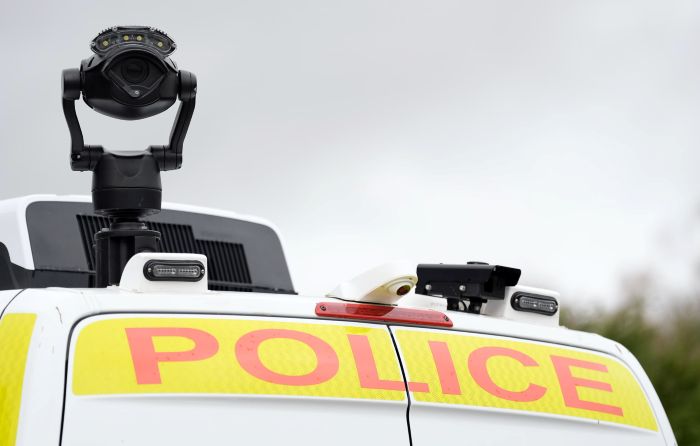
The ICO said Essex police had paused LFR deployments “after identifying potential accuracy and bias risks” and warned other forces to have mitigations in place. LFR systems are either mounted to fixed locations or deployed in vans. In January, the home secretary, Shabana Mahmood, announced the number of LFR vans would increase five-fold, with 50 available to every police force in England and Wales.
Essex commissioned University of Cambridge academics to conduct a study, which involved 188 actors walking past cameras being actively deployed from marked police vans in Chelmsford. The results were published last week and showed about half of the people on a watchlist were correctly identified and incorrect identifications were extremely rare, but the system was more likely to correctly identify men than women and it was “statistically significantly more likely to correctly identify black participants than participants from other ethnic groups”.
This “raises questions about fairness that require continued monitoring”, the report concluded. One of its authors, Dr Matt Bland, a criminologist, told the Guardian and Liberty Investigates: “If you’re an offender passing facial recognition cameras which are set up as they have been in Essex, the chances of being identified as being on a police watchlist are greater if you’re black. To me, that warrants further investigation.”
“, Dr Matt Bland, a criminologist, told the Guardian and Liberty Investigates: “If you’re an offender passing facial recognition cameras which are set up as they have been in Essex, the chances of being identified as being on a police watchlist are greater if you’re black. To me, that warrants further investigation.””
Ha! Bland by name and bland by nature. It just can’t accept that negros are more prone to criminal behaviour. Europe is dead – as per the Kalergi plan.
In short, you’re f*cked. First of all, how on earth do you have a “home secretary” named Shabana Mahmood? Then there’s “Dr” Matt Bland exhibiting signs of a combination of syndromes, Stockholm and battered wife, as he spouts the snivelry of how a f*cking machine using facial recognition algorithms “raises questions about fairness that require continued monitoring”. That mewling cucked limp-wrist needs to understand that catching criminals isn’t about “fairness”, it’s about the f*cking truth. Bland should be publicly horsewhipped and his head dipped in a bucket of pig shit.
And the truth is that blacks commit exponentially more crimes than whites. Statistical study after statistical study has relentlessly shown that….or just listen to a police radio for a day or two and hear it for yourself.
umbra@ well said 100% thanks
Hey..
Can’t make this shite up !!!!
What about people with dark tans?
Just storm the cop shops, the City of London jew pedophiles, the pedo royal palace etc. all the enemy ratholes and and hang the filth by the balls , lift them up on pitchforks etc. make sure the judeo-masonic filth and scum die in agony.