
Defense Security Asia – March 4, 2026
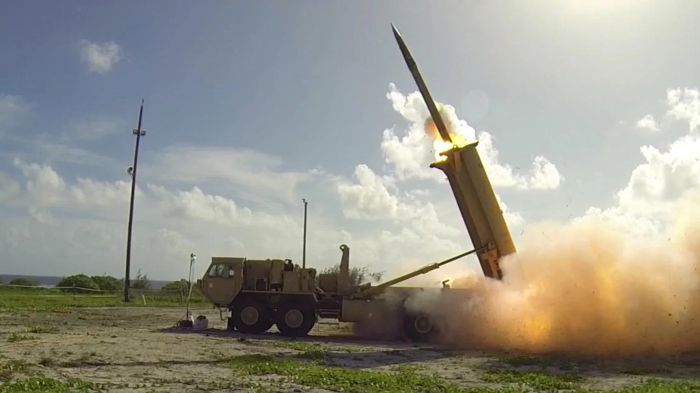
The destruction of a second United States Terminal High Altitude Area Defense (THAAD) system in West Asia, alongside its dedicated radar in the United Arab Emirates and a US$1.1 billion (RM4.18 billion) early warning radar in Qatar, signals a systemic fracture in Washington’s layered missile defence architecture across the Gulf.
In an official statement, the Islamic Revolutionary Guard Corps (IRGC) declared that its Aerospace Force executed precision strikes that rendered the second THAAD battery “out of operational orbit,” while confirming the prior elimination of the associated radar at Al Ruwais base in the UAE, fundamentally degrading theatre-level ballistic missile interception capacity.
The IRGC further asserted that with the destruction of these high-value defensive nodes, “the missile hand of the Islamic Republic of Iran has been opened for successful target hits,” a declaration that reframes the regional deterrence equation and introduces a compressed decision-making cycle for US Central Command and Gulf security planners.
These claims follow the Qatari Ministry of Defence’s rare public confirmation that a US-operated AN/FPS-132 Block 5 Upgraded Early Warning Radar (UEWR), installed in 2013 at a cost of approximately US$1.1 billion (RM4.18 billion), was destroyed in a separate Iranian strike, underscoring both technical vulnerability and political exposure.
Collectively, the reported neutralisation of a second THAAD battery, its ground-based radar in the UAE, and the AN/FPS-132 Block 5 UEWR in Qatar constitutes a sequential dismantling of the United States’ integrated air and missile defence (IAMD) network in the Gulf, with cascading implications for force posture, logistics resilience, and strategic signalling.
Collapse of Layered Missile Defence Architecture in the Gulf
The removal of a second THAAD battery from the operational picture materially degrades the United States’ terminal-phase ballistic missile interception layer, reducing redundancy and constraining engagement envelopes designed to protect high-value assets and allied population centres.
THAAD, engineered to intercept short- and medium-range ballistic missiles during their terminal descent, forms a critical upper-tier component of Washington’s theatre missile defence strategy, and its elimination shifts interception burdens onto remaining assets with narrower coverage and reduced engagement timelines.
The reported destruction of the dedicated THAAD radar at Al Ruwais base in the UAE compounds this degradation, as the radar provides long-range tracking and fire-control quality data necessary for precise interceptor cueing and engagement sequencing.
Without its radar node, even a rapidly deployed replacement launcher would remain tactically blind, unable to generate accurate track data, thereby rendering the battery functionally inert within the broader IAMD architecture.
The IRGC’s sequencing—first degrading long-range early warning in Qatar, then targeting theatre-level radar in the UAE, followed by the interceptor battery itself—suggests a deliberate operational design aimed at collapsing multiple defensive layers in a cascading manner.
Such sequencing implies advanced target intelligence, persistent surveillance, and calibrated strike planning that prioritised sensor nodes before kinetic interceptors, reflecting a systems-level approach to dismantling missile defence rather than symbolic attacks.
If the IRGC’s claim of total operational loss is accurate, the United States now faces a theatre-level gap in high-altitude interception coverage across critical Gulf sectors, compressing warning-to-intercept timelines and increasing the probability of successful missile penetration.
This structural weakening of layered defence forces Gulf-based commanders to reconsider force dispersion, hardened infrastructure utilisation, and aircraft generation cycles at key installations, including those hosting rotational US combat aircraft and logistics hubs.
The psychological dimension is equally significant, as THAAD’s presence has long served as a visible deterrent signal of American commitment and technological superiority, and its reported destruction challenges that perception among allies and adversaries alike.
Strategically, the erosion of the THAAD layer recalibrates the regional balance by increasing the operational freedom of Iranian ballistic and cruise missile units, potentially enabling more assertive targeting doctrines under reduced interception risk.
AN/FPS-132 Block 5 UEWR: Loss of Billion-Ringgit Early Warning Backbone
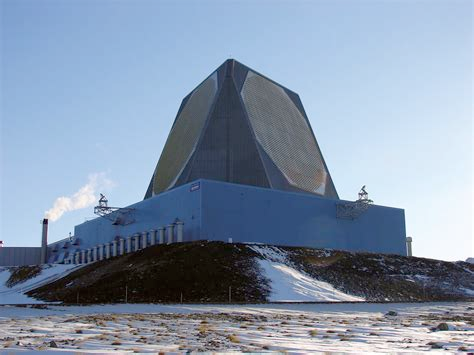
AN/FPS-132
The destruction of the AN/FPS-132 Block 5 Upgraded Early Warning Radar in Qatar removes a cornerstone of the United States’ long-range ballistic missile detection network in the Gulf, compressing strategic warning timelines across the region.
Installed in 2013 at an estimated cost of US$1.1 billion, equivalent to RM4.18 billion at an exchange rate of USD1 = RM3.8, the radar represented one of the most expensive single pieces of US military hardware deployed in West Asia.
With a detection range reportedly extending up to 5,000 kilometres, the AN/FPS-132 Block 5 UEWR provided early tracking of ballistic missile launches, feeding real-time data into US Central Command’s missile defence network to enable layered engagement planning.
Its destruction eliminates a critical upstream sensor that previously afforded commanders precious minutes to activate interceptors, scramble aircraft, or move personnel into hardened shelters, thereby shortening response windows to potentially seconds.
The Qatari Ministry of Defence’s public confirmation of the radar’s loss is strategically consequential, as host-nation acknowledgment underscores the scale of damage and signals that concealment of vulnerability was untenable.
From a force posture perspective, the loss of the UEWR disrupts the sensor-to-shooter chain, complicating data fusion and reducing the accuracy of threat prediction models across multiple Gulf states interconnected within the IAMD framework.
The radar’s removal also degrades missile defence cueing for adjacent systems, including THAAD and other interceptors reliant on upstream tracking data for optimal engagement geometry and battle management sequencing.
Financially, the destruction of a RM4.18 billion asset imposes not only replacement costs but also significant logistical burdens, as deploying a comparable early warning system under active threat conditions requires secure transport corridors and hardened installation timelines.
Strategically, the elimination of this long-range sensor node weakens regional deterrence by signalling that even the most expensive and technologically advanced American surveillance assets are susceptible to precision strike penetration.
The broader implication is a contraction of strategic depth for Gulf-based US forces, as the absence of extended warning time increases vulnerability to saturation attacks and constrains escalation management options.
IRGC Precision Strike Doctrine and Missile Penetration Capability
The IRGC’s claim that its Aerospace Force executed pinpoint strikes against hardened and defended assets suggests maturation in precision-guided missile capabilities, particularly in terminal guidance and target discrimination.
Achieving direct hits on a THAAD battery and its associated radar implies effective integration of intelligence, surveillance, and reconnaissance data with precision strike platforms, enabling engagement of high-value, semi-mobile targets.
The reported destruction of multiple sensor and interceptor nodes across different Gulf states indicates operational reach, cross-border targeting confidence, and coordinated strike planning beyond isolated tactical engagements.
Such capability may involve advanced terminal guidance packages, potentially supported by electronic warfare measures designed to suppress or confuse defensive countermeasures prior to impact.
The cumulative targeting of early warning radar, theatre radar, and interceptor battery reflects a doctrinal emphasis on dismantling defensive networks at their most critical nodes rather than engaging peripheral assets.
If confirmed, this level of precision suggests that Iranian missile planners have moved beyond massed, area-effect salvos toward calibrated, high-confidence strikes intended to achieve catastrophic kills on strategic systems.
The IRGC’s framing that the system was taken “out of operational orbit” indicates total loss of functionality, implying destruction of radar arrays, fire-control components, and launcher readiness rather than superficial structural damage.
From a military-technical perspective, neutralising sensor nodes first reduces the probability of successful interception, increasing the lethality of subsequent missile waves against infrastructure, airbases, and naval facilities.
This shift toward systematic network degradation introduces a new operational calculus for US planners, who must now consider the survivability of integrated defence architecture under precision-guided threat conditions.
Strategically, the IRGC’s demonstrated ability to locate and destroy advanced American systems reinforces Tehran’s deterrence narrative and may embolden future missile planning under a perception of reduced defensive constraint.
Strategic Signalling, Deterrence Erosion and Force Posture Recalibration
who was it said ” the americans are just burger eating surrender monkeys ”
Firm admits supplying water unfit for human consumption after parasite outbreak
Story by Liam Doyle • 11h
water company has admitted to supplying parasite-contaminated water to its customers homes in what an MP has branded
an “awful event” that left some people hospitalised and hundreds sick with vomiting and diarrhoea.
South West Water Ltd claimed the safe drinking water was ok for one third the people, but government piling in millions of migrants
meant standards had to drop and water was taken from the same rivers effluent was being discharged into
They pleaded guilty to an offence under s70(1) of the Water Industry Act 1991 to supplying water unfit for human consumption during a hearing at Exeter Magistrates’ Court. The firm was being prosecuted by the Drinking Water Inspectorate (DWI) following a 2024 incident in and around Brixham, Devon, that hospitalised four and led to more than 140 confirmed cases of people infected with the cryptosporidium parasite.
About 17,000 households and businesses in the area were issued with a “boil water” notice, some lasting as long as eight weeks, as case reports emerged, and the firm now faces a fine following the “extremely high-profile” incident.
Investigations continue with the huge outbreak of prostate cancers from cleaning chemicals put into the water
USA DOWN ! ISRAHELL DOWN ! GO
BOTH TO HELL ! where you belong .
There was no need for Persian Gulf Arab states to have had any of this. Silly buggers fell for America’s protection racket. Perhaps they will politely ask the Americans, to get lost.
Now I learn the US is removing THAAD missiles from South Korea and Taiwan and Japan to defend Zionstan. China must be wondering if now is the time for China to kick the Yanks out of the East Pacific and South China Sea.
America only good for a four week Blitzkrieg, then they run out of ammunition.
Looks like a ‘Great Reset’ is coming. Not the one the Empire of Epstein had in mind. Iran declaring only ships bound for China will be able to pass. And if they are loaded with Iranian oil, and Gulf state oil and gas. The US will not be best pleased…
Cyclops America is being blinded.
And on second thoughts I believe China is on the Western side of the Pacific in East Asia.
The price of fuel shouldn’t be going up for Americans, because America has oil enough for themselves. Concessions should be made for the American people. But I suppose greedy American oil companies don’t operate like that…
In this video from Daniel Davis there is some very interesting footage from 13m 45s which shows Iranian missiles just coming up out of the ground. Obviously the silos are cleverly covered and camouflaged to not betray their presence to satellites or drones, but it’s still an amazing engineering feat to launch through the concealment without damaging the missiles or disrupting their flight.
https://www.youtube.com/watch?v=vrdmv0I_1yY
4 March https://www.youtube.com/watch?v=bjEik1lX9mE ‘US hit hard/ 2 BN Wiped out/ Loses Jets, Radars, Sat Equipment Amid Iran War/ the scale of the losses/ the strategic implications how Iran’s strikes appear aimed at targeting America’s radar/ communication & missile defense backbone in the region/ by TOI
comments/ ” Iran is not a Venezuelan fishing boat”/ “American tax for killing children women and old men”/ ” Not only taxpayers $ but also the US is losing big in international prestige, credibility, trust, debts, inflation…..”/” This is the start of end of US and its arrogance.”/”US dollar has become toilet paper ‼️🤪”/” You can print USD, you can’t print assets (jets, radars, bases…)”*/ “Had to laugh when I heard that a Kuwaiti fighter pilot shot down 3 F15 fighter planes/ He has earned the right to be called Top Gun”
“US is losing billions of taxpayers money, the Americans should protest against this wastage of money that can be used for the elderly, the sick, the homeless.”/”How many school children could have been fed by such an amount of money”
*((( 1 July 2025 https://www.jpmorgan.com/insights/global-research/currencies/de-dollarization ‘In short, de-dollarization entails a significant reduction in the use of dollars in world trade and financial transactions, decreasing national, institutional and corporate demand for the greenback.’
10 April 2022 https://www.youtube.com/watch?v=VzgcjGlO6rs Cyrus Janssen/ 1.33 : Chinese Renminbi becomes key world reserve currency?/ currently a 125 countries around the world count China as their biggest world trade partner….”)))
4 March https://www.youtube.com/watch?v=skcPc9HDLBU ‘Iran is not interested in negotiating with Trump’ – Iranian professor Mohammad Marandi/1.42: “When these Arab regimes in the Persian Gulf
give the US military bases to use against Iran…. they can’t have their cake & eat it too / they can’t participate in aggression against Iran allongside 🎯 this Epstein coalition”
Anyway every body anywhere
h.a.n.d. havea nice day
CIA O
Good riddance!