
Introduction – Feb 12, 2026
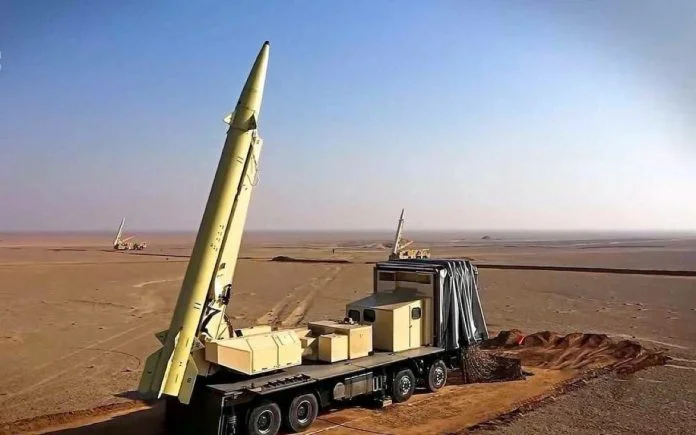
The following report makes a critical omission. While the build-up of US arms and equipment in Europe and the Middle East, is impressive enough, the following fails to take into account the fact that Russia and China have rearmed Iran since the 12-Day War in June.
Of course apart from the Su-35s, which will only be delivered later this year, much of this is still secret. But from some reports we can conclude that new Russian and Chinese weapons shipped to Iran include new missiles, new air defence systems, radars and electronic warfare systems.
Of course, this has all been cloaked in secrecy. So while the US and Israel are preparing to deliver some heavy blows that they hope will topple the Ayatollah, they could find some nasty surprises are waiting for them. Ed

F-35A above and F-15EX below.
Specialised U.S. Air Defence Suppression Unit Redeploys F-35A Stealth Fighters to Britain as Conflict with Iran Looms
Military Watch Magazine – Feb 12, 2026
The U.S. Air Force has redeployed half dozen F–35A fifth generation fighters to RAF Lakenheath in the United Kingdom on February 9, according to flight tracking data, representing one of the latest developments in a more than month long surge in the U.S. military presence in Europe and the Middle East. The fighters were deployed by the Vermont Air National Guard’s 158th Fighter Wing, and departed Burlington Air National Guard base on the morning of February 9 accompanied by three KC–135 Stratotankers which provided refuelling support. Six other F–35s from the same squadron have also redeployed to Spain, after having briefly been temporarily based at newly restored facilities in Puerto Rico. U.S. Marine Corps F-35C fighters have already been deployed to the Middle East onboard the nuclear powered supercarrier USS Abraham Lincoln.
The 158th Fighter Wing is a specialised air defence suppression unit, which is a capability that is expected to be particularly highly valued in the event of conflict with Iran, much as it was with Venezuela, as both countries lack significantly fleets of modern fighter aircraft and rely heavily on ground-based air defences to counter modern air power. Developed in the post-Cold War years, when ground-based air defences were seen to pose a greater challenge to Western Bloc air dominance than enemy combat aviation, the F-35 is already heavily specialised in air defence suppression operations, with its unique passive sensor array, combined with world leading stealth capabilities and a powerful electronic warfare suite, making it well suited for such roles. Nevertheless, there remain differences between units in how they are equipped and how they train, depending on their specialisation.
The Iranian ground-based air defence network is among the most formidable in the Middle East, although it was largely disabled from the ground during prior U.S. and Israeli attacks in June 2025 due to the effective use of operatives on the ground to attack key systems before air strikes commenced. As a result, Israeli sources reported that not a single surface-to-air missile was fired throughout the entire campaign. Should Iran have succeeded in more effectively securing itself internally, its air defences may pose a significantly greater challenge in the event of future hostilities. U.S. Air Force F-35s have meanwhile been impeded by extreme delays bringing their capabilities to the Block 4 standard, without which they lack access to any air-to-surface missiles, including the AGM-88G anti-radiation missile which is the best suited weapon designed for the aircraft for air defence suppression operations.
Israeli Air Force officers have indicated that F-35s participating in attacks on Iran in June 2025 primarily served as intelligence collection platforms, sharing data with fourth generation fighters to increase situational awareness, while F-15s and F-16s which could carry air-to-ground missiles bore responsibility for kinetic attacks. It remains highly possible that U.S. Air Force F-35As and Marine Corps F-35Cs would similarly be replied on to support other aircraft, such as EA-18Gs which do deploy the AGM-88, rather than directly launching kinetic attacks. Although Iran currently lacks a modern fighter fleet, leaked Russian government documents in late 2025 showed that Russia is scheduled to deliver 48 Su-35 fighters to re-equip the country’s air force, amounting to half of all 96 Su-35s ever built for export. The Russian long range fighters’ ability to complement ground-based assets with elevated sensors and more offensive potential having the potential to seriously complicate possible attack plans. With the Su-35s scheduled to enter service in 2026, the U.S. retains a window during which Iranian air defences will remain more vulnerable.
Uncle Sam snaps his fingers..
the Bwitish yapping poodle jumps to attention! 😏
An Iranian’s Assessment of The Coming Conflagration ~ White pride will save the world from ZOG ~ RAGECAST 599: TOLERANCE IS DEAD
https://grizzom.blogspot.com/2026/02/ragecast-599-iranians-assessment-of.html
Special Thanks to مقداد وفائی