
Seth Frantzman – The Long War Journal Nov 19, 2025
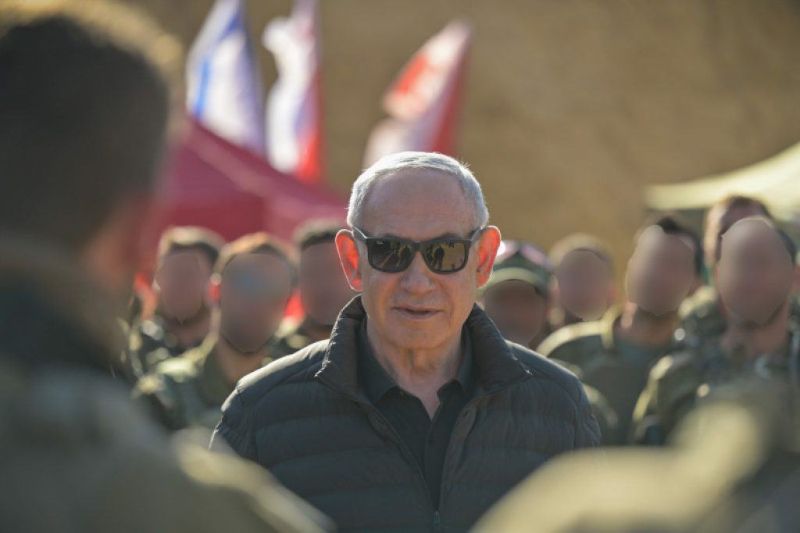
Israeli Prime Minister Benjamin Netanyahu led a large group of Israeli officials and military commanders to the buffer zone between Israel and Syria on November 19. The Israel Defense Forces (IDF) took control of the area after the regime of dictator Bashar al Assad fell on December 8, 2024. Israel’s presence on Syrian soil has been a source of tension between the new Syrian transitional government and Jerusalem.
The visit took place two days after Israeli media outlets reported that talks between Israel and Syria “for a landmark security deal are currently at a dead end.” It also came nine days after Syrian transitional President Ahmad al Sharaa met US President Donald Trump at the White House.
Syria’s foreign ministry condemned the visit by Israeli leaders. Russia’s ambassador to the UN also condemned Israel’s actions on the Golan, claiming that they pose a threat to the region.
The visit to the buffer zone included a large number of Israeli officials. The Israeli Government Press Office said in a statement that Netanyahu “visited the buffer zone in Syria, together with Defense Minister Israel Katz, Foreign Affairs Minister Gideon Sa’ar, IDF Chief-of-Staff Lt. Gen. Eyal Zamir, [head of the Shin Bet] Director David Zini, National Security Council Acting Director Gil Reich, Israeli Ambassador to the US Yechiel Leiter, head of IDF Northern Command Maj.-Gen. Rafi Milo, Coordinator of Government Activities in the Territories Maj.-Gen. Ghassan Alian, and IDF 210th Division Commander Brig.-Gen. Yair Pelai.” The event appears to be the largest public visit by Israeli officials since the IDF took over areas of the buffer zone.
On December 8, 2024, as the Assad regime collapsed, the IDF seized areas along the buffer zone that served as a ceasefire line between Syria and Israel since 1974. The line runs along the top of the Golan Heights, which the IDF took from Syria in 1967. The IDF also took control of the summit of Mount Hermon after Assad’s fall. Previously, Israeli troops had controlled a lower peak near the top but not the summit, which was in Syrian hands. Syria and most of the international community do not recognize Israel’s control of the Golan Heights or the new areas the IDF has taken over.
Netanyahu “went to an IDF post where he observed the sector, and later held a security discussion. [He] also met with regular and reserve soldiers, praised their activity during the war and in maintaining security in the area, and answered their questions,” Israel’s Government Press Office said in a statement.
On November 17, Israeli Defense Minister Israel Katz said that “the IDF will remain on Mount Hermon’s peak and in the security zone.” These comments came as reports indicated that talks between Syria and Israel about a security agreement had stalled. Netanyahu said that Israel’s presence in Syria is of “immense importance.”
The Times of Israel reported that “Israel is reportedly insisting on remaining deployed to the nine posts it seized after the fall of the Bashar al-Assad regime in December 2024, unless the new ruling government agrees to a full peace deal and normalization.” Sharaa had said in Washington on November 12 that Israel should withdraw to the December 8 line, which is the 1974 ceasefire boundary.
Netanyahu’s visit to the buffer zone with Syria received significant attention in Arabic media. Al Arabiya noted that Netanyahu said, “We attach great importance to our capabilities here, both defensive and offensive, to protect our Druze allies, and above all to protect the State of Israel and its northern border opposite the Golan Heights.” Israeli officials have vowed to protect the Druze in Syria over the last 10 months and carried out airstrikes on the new Syrian government when tensions between Damascus and the Druze rose.
Tensions along the Golan border have reduced in recent months after IDF raids in July detained Iranian-linked cells near the Golan. However, Russian military officials visited an area of Syria near the Golan on November 17. Israeli media also said the IDF detained several suspects, including IDF soldiers and Syrians, who were reportedly involved in smuggling weapons from Syria.
The state-run Syrian Arab News Agency (SANA) reported that “Syria strongly condemned the illegal visit made by the Israeli occupation’s Prime Minister, along with Ministers of Defense and Foreign Affairs and a number of occupation officials to the southern region of the Syrian Arab Republic.” The Syrian Foreign Ministry stated, “We affirm that the visit represents a new attempt to impose a de facto situation that contradicts relevant UN Security Council resolutions and falls within the occupation’s policies aimed at consolidating its aggression and continuing its violations of Syrian territory.”
If that isn’t the actual face of Satan then I’m an Eskimo !!!
How about all of the other murderous kikes with their ugly murderous faces blanked out ?
Haaretz news say nutty will leave iran to Trump
as its well defended
instead Nutty wants to target turkey
the spy named ” Rutger”
made public info that Turkey is next on israels list and it wil be very soon
he Turkish barbershops hiding a vast criminal network
Story by Danny Shaw • 3h •
12 min readIng
The car park of Haverhill police station, there’s an unusual gathering. About 15 police officers – and a sniffer dog – together with community support officers, officials from the Home Office’s Immigration Enforcement (IE) directorate and local trading standards inspectors are here, on this mild morning in November, ready to take to the streets of the west Suffolk town. Their mission? Not to track down sex offenders, launch raids on drug dealers or arrest thugs involved in violent crime, but to visit local businesses as part of a country-wide operation targeting organised crime gangs involved in money laundering, drug dealing, illegal working and criminal exploitation.
Who let these people into the UK ?
Over the next four hours, three teams will visit a range of premises and buildings in Haverhill, including a convenience store, an Indian restaurant, nail bars a disused shoe shop fake charity shops and a car mechanic. But their main focus is on barbershops – amid concerns that many across the UK have been infiltrated by gangsters. Their mission? Not to track down sex offenders, launch raids on drug dealers or arrest thugs involved in violent crime, but to visit local businesses as part of a country-wide operation targeting organised crime gangs involved in money laundering, drug dealing, illegal working and criminal exploitation.
Dan Jarvis, the Security Minister, who is accompanying police on the operation, tells The Telegraph: “We’ve come into government and we’ve found a situation where you have got high streets that are being penetrated by serious organised criminals.
“You’ve got Turkish barbershops, but other premises as well, engaged in illicit activity – and it really does impact on high streets [and] the wider community, drawing people into crime, gang activity and exploitation.”
Estimates of the number of barbershops in Britain vary according to which definition is used, from 18,000 up to 30,000, but a report by retail analysts Green Street shows that the average number per 10,000 people has more than doubled from 1.4 in 2013 to 3.1 in 2023.
Security Minister Dan Jarvis accompanying police on their day of action in west Suffolk – Paul Grover
John French, Suffolk Police’s modern slavery vulnerability adviser, says it’s a phenomenon that is impossible to ignore. “The number of barbershops has absolutely exploded. I’d say it’s probably the fastest-growing business activity within the grey economy [unregulated, untaxed activities].
“Car washes, which was everybody’s fixation a few years back, that’s steadied. But we’re now seeing a huge increase in barbershops. We’ve seen traditional barbershops, people retiring, selling their businesses on. We’re seeing more people coming into the UK from different countries, needing to make a living, business opportunities ,and it could be linked to criminality,” he says.
Turkish barbershops, in particular, are booming. Although some are run by people from Turkey or of Turkish heritage, it is just as likely that they are operated by Albanians, Iraqi Kurds or Iranians. The “Turkish” label is no more than a brand, associated with sharp haircuts, a straight-razor shave with hot towels, ear and nose waxing and a neck and shoulder massage. A basic cut, costing as little as £14, is often cheaper – and quicker – than a traditional barber’s (although the extras soon add up).
‘Cash-in-hand barbers are an attack on businesses like ours’
‘Why are barbershops increasing? It’s not logical’
This style of service is something to which Britons have become accustomed. Earlier this year it was reported that Porth, a town in south Wales with a population of fewer than 6,000, is now home to 14 barbershops, many of them Turkish-style. That’s one for every 426 residents.
Haverhill doesn’t have quite that many, but it’s not far behind.
A market town dating back to Anglo-Saxon times, Haverhill has no railway station and is at least a 20-mile drive from its closest neighbouring conurbations, Cambridge and Bury St Edmunds to the north, and Braintree to the south. One of London’s “overspill communities”, where thousands were encouraged to migrate to in the 1960s and Seventies to relieve overcrowding in the capital, its population has now stabilised at around 27,000. But that hasn’t stopped the number of barbers from growing.
I counted five within a five-minute walk of each other in the town centre, mirroring the picture elsewhere in Britain. It’s a puzzle to French, who works in Suffolk Police’s partnership and prevention unit. “There’s been a massive increase in barbershops, and an almost similar decrease in ladies’ hairdressing shops. Why is one part of the industry going down and the other part increasing substantially? It’s not logical,” he says.
The first barbershop we visit, next to a branch of Specsavers, is pristine, with shiny black-and-brown marble-patterned floors which reflect the glare from the strip lighting and pendant lamps overhead. But no one is sitting in any of the five leather barber chairs. Razors, creams and sprays are lined up next to each sink; towels are neatly stacked in a shelving unit – all of them waiting for customers, many are secret brothels offering young boys to customers
It is approaching lunchtime, when one would expect the place to be busy, but there is nobody here apart from a young barber and an elderly man, both standing behind the counter at the rear of the store. A sign advertises haircuts for £19.
“Which one of you might be in charge of the shop today?” asks a policeman, one of six uniformed officers who have entered unannounced. The young man, in his 20s, replies politely that he’s the boss for the day because the owner is on holiday, and that the other man is his grandfather, who is Turkish and visiting from London. Personal details are volunteered, immigration and criminal record databases are checked, and the premises are examined. Everything appears to be in order.
But that is not always the case. The police enforcement visits in Haverhill are part of a wider initiative co-ordinated by the National Crime Agency (NCA), known as Operation Machinize. The aim, according to the NCA, is to “root out the economic crime and grey economy that makes our high streets less safe and prosperous”. The results are stark.
In April, as part of a three-week crackdown on high-street crime focusing on barbershops, police secured freezing orders over bank accounts totalling more than £1m, arrested 35 people, questioned 55 others about their immigration status and helped to safeguard 97 individuals in relation to potential modern slavery.
Tens of thousands of illegal cigarettes, vapes and packs of tobacco were seized – and two cannabis farms were found. The second, more extensive, phase of Machinize, this autumn, involved visits to 2,734 premises in the UK, 376 of which were barbershops. More than 900 people were arrested and more than £10.7m of suspected criminal proceeds seized.
It doesn’t look abnormal to hand over banknotes’
The NCA operation followed the conviction of an Iranian Kurd who had used his barbershop in London as a base for an overseas criminal network smuggling 10,000 people into the UK in small boats. Hewa Rahimpur, who had claimed asylum after arriving in Britain in 2016, had set up the barber’s with a friend before renting a space for a food kiosk. In reality, he was the leader of a sprawling crime gang that sourced boats, engines and lifejackets for migrant crossings. In October 2024, he was jailed in Belgium for 11 years, with the case, along with the overall proliferation of barbershops, proving to be a “tipping point” for the authorities in the UK.
Many criminal gangs are Turkish or israeli
Love the migrant, love the mexican, love the Jew, love the Palestinian, love everyone brah