
Dr Niall McCrae – The Daily Sceptic Nov 7, 2025
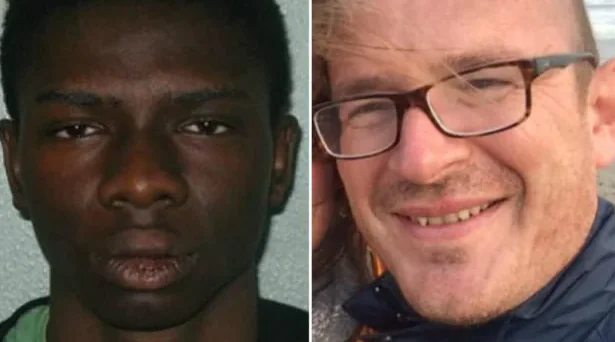
With a spring in his step, senior lecturer Jeroen Ensink left his home in Holloway, London, to send cards to his friends and family, announcing the arrival of his baby daughter. Seconds later his life was over. A young black male (the relevance of which will soon be clear) suddenly pounced on him, and in a state of frenzy savagely stabbed his random victim. Femi Nandap, a psychiatric patient, was arrested and sent to a high-security institution.
We can only imagine the trauma for Ensink’s wife. Originally from the Netherlands, Ensink had lectured for seven years at the London School of Hygiene and Tropical Medicine, where he was an expert on sanitation and water management. He had led a large study to improve water supply and prevent cholera in Congo and other undeveloped parts of Africa. Ironically, he was murdered by an African migrant.
Having spent most of my career in mental health, I know of dozens of incidents of homicide by psychotic men and women, their targets often unknown to them. Victims were in the wrong place at the wrong time – it could be you or yours next time. But I was particularly affected by Ensink’s killing back in 2015, not only because I was also a lecturer and a citizen taking my chances in the streets of London, but due to the response when I used his case in a lecture to mental health nursing students.
Lecturing at King’s College London for 10 years, I worked with two distinct groups of learners. Of gradually declining proportion were white middle-class students, many of whom were doing the postgraduate mental health nursing course as a stepping-stone into clinical psychology. The other group, of increasing number over the years, was from Nigeria. The former were of progressive outlook, with a few ‘social justice warriors’ among them; typically they excelled academically and used psychological jargon. The latter were not, on average, as intellectual, but I appreciated their common sense whenever their white peers were virtue-signalling their woke (as we now call it) ideology.
This division was very apparent when I used the Dutch lecturer’s case as an example of the consequences of systemic or individual failure in psychiatric care. On my Power Point screen was a Daily Mail report of the incident, which showed two photographs – one of Ensink and the other of his killer. I have never forgotten this experience, because it showed everything that is amiss with white middle class ‘values’ and why incidents such as that on a train at Huntingdon last weekend recur with no lessons really learned.
The topic of the lecture was assessing and managing risk – a priority for practitioners. My emphasis was on students understanding that their focus should not only be the patient but also public safety: care in the community requires eternal vigilance, and it is better to err on the side of caution than to face a coroner’s court. By referring to Ensink, a tragedy that had occurred a few months earlier, I intended that students would feel for the unfortunate deceased and bereaved, and be motivated to learn how danger can be reduced by safe practice.
Instead, I was criticised by some white students. In their view I was reinforcing racial stereotypes by presenting a white victim and black perpetrator. I had also committed the cardinal offence of using a Daily Mail report. They railed against the politically incorrect message on the screen and briefly turned the lecture into a media studies course. The Nigerian students, meanwhile, did not see any problem with my training material: they know the violence of their homeland and would not pretend otherwise. They probably regarded the white students as well-intended but naïve. But I feared for the near future of such students, who appeared so indoctrinated on institutional racism that they might, as registered mental health nurses, put such sensitivity before safety. And the lack of emotional reaction to the tragic death was astounding – similar to the behaviour of H.G. Wells’s Eloi when one of them is taken by the Morlocks.
I was reminded of this experience by an outstanding article on Daily Sceptic following the multiple stabbings by a black male on a high-speed train. Retired police officer Paul Birch recounted a litany of violent and fatal attacks by psychotic black men. The latest incident involved Anthony Williams, who was charged with 11 attempted murders including 10 on the train at Huntingdon and another, earlier on the same day, against a passenger on the Docklands Light Railway.
According to Birch, the carnage continues because professions and the political establishment are more concerned with race equality than preventing homicide. The Mental Health Act is a vital instrument to keep dangerously disturbed persons off our streets, he writes:
When I was a police constable in London, I was involved in the sectioning of a number of people under the Mental Health Act. On each occasion, it was the informed decision of the duty office (an inspector) and the officers on the ground that the individual in question posed a physical risk to either themselves or members of the public. Nearly all were black men, and nearly all were known to psychiatric services.
He concluded, rightly, that “progressive dogma should have no place in decision-making where psychotic individuals are concerned”. I hope that those students of mine, if they are practising today, have learned ‘safety first’. But Birch’s catalogue suggests that incidents happen and are soon forgotten as society soon reverts to the pretence that psychotic black men can be trusted with knives because it would be racist to suggest otherwise.
As a Workers of England trade union officer I represented, unsuccessfully, a NHS worker who was dismissed for social media posts following the murder of three young girls in Southport by the crazed son of Rwandan immigrants. About four days after the horrific event, the chief executive of the NHS trust had issued a message that I felt was worse than anything posted by our member. She called for staff to give extra support to colleagues of minority ethnic groups, who were already exposed to enduring racism but were likely to be targeted in the atmosphere of protests and riots. Not a single mention was made of the three victims.
Warped middle-class ideology is a danger to us all.
Dr Niall McCrae is a registered nurse who was on the editorial board member of Journal of Advanced Nursing.
The Daily Sceptic depends on your donations. Please DONATE
the government and the BBC constantly play the race card
this murder is one of 30 black murders of white folk
since the stephen lawrence thing
we get it rammed down our throats almost daily about small time drug dealer stephen lawrence
so why the anomalie ?
there is a sliding scale agenda to gradually hand the country over to migrants
look at the racist TV adverts no white men
the zio government is our enemy
peter james
Starmer reportedly facing plots to oust him as PM
Story by David Lynch • Labour MPs are plotting to oust Sir Keir Starmer, reports suggest, even as the prime minister has welcomed rebellious backbenchers back into the fold.
The new intake of Labour parliamentarians are among those said to be discussing the mechanics of a future coup, according to the i Paper.
It comes amid despair about the party’s poll ratings and discontent that the government may break Labour’s manifesto promise not to raise income tax to pat the current migrant bill of £40 billion
At the same time, Labour has restored the whip to four MPs who led the charge in rebelling against the Government’s plans to stop benefits
to certain categories
Neil Duncan-Jordan, Chris Hinchliff, Brian Leishman and Rachael Maskell had the whip suspended in July.
They are all understood to have returned to the Parliamentary Labour Party after discussions with chief whip Jonathan Reynolds on Friday.
The people have 4 demands
Stop importing poeple into the UK
stop supporting israeli terrorism
stop shitting on your people
stop being a racist poofter
Any race that is not concerned about it’s own survival not worth saving. It’s no different here in Ireland where the injected masses just love their negros. Well let them enjoy their negro nirvana is what I say.
schitzophrenia levels very high among black people
https://www.renegadetribune.com/racism-fears-is-the-uk-failing-to-section-dangerous-african-caribbean-schizophrenics/#comment-365273
Mental health issues my White Celtic/Anglo-Saxon ass. Bullshit! He’s an effing ape savage. It’s in their DNA. They are actually animals. There is nothing remotely human about the African savages. There is nothing compatible between blacks and Whites. Nothing!!!!!! They are not compatible within any civilized society. Just ask the Japanese people where their Marxist leadership is allowing them into Japan.
If anyone doesn’t like my attitude. Oh well, tough shite.
“I beez habbing mental heff issues”. No, nigger, you’re just an animal savage.
White liberals R worse than ni99ers
Are they psychotic black males or racist black males.
It seems when POC’s and in particular muslim terrorists are arrested for their acts the defense is always a mental illness.
kikes brought the nogs in to break down white society…the more psychos the better for their satanic takeover.
First smash & cleanse UK of (((untermensch))) then all the turdworld they shat into our country
thaats not malanin…just they shite showing thru..
John, “You are a rapist”
Peter, “Oh please no. what did you call me? I can’t stand it”
John, “I said you are a rapist”
Peter, “Oh, that’s ok, thank God for that, I thought you said I was a racist”
They call them shitskins.A fitting name for the scum ZWOG is bringing in to our countries.
migrant sex offenders let out of jail over past decade have raped more than 500 times
Story by Matthew davis • 4h •
this equates to almost one rape per week on average being carried out by a repeat offender, highlighting a potential issue in the Government’s plans to free space in the nation’s overcrowded prisons by releasing more migrant prisoners. The official records showed 71 incidents of rape or attempted rape were carried out last year by men who had a similar conviction on their record.
Three of these offenders already had two rape convictions to their name, while the remaining 68 had one on their record. During the past decade three men sentenced for rape had three previous convictions against their name for the same crime. Another 1,291 men convicted of rape already had a different sex offence on their records, while 2,157 other men convicted on a rape charge had a previous conviction for violence.
Read more: Nigel Farage explodes over grooming gang ‘cover up’
Kevin Moore, a retired Detective Chief Superintendent and former Head of CID at Sussex Police, said: “These figures are appalling. The government through the Home Office and Criminal Justice department need to act swiftly to put this issue right. Rape is one of the most serious and violent of all crimes and there is a major public safety issue here where offenders are being released far too early from their original sentences for similar crimes allowing them to reoffend.
“There needs to be far stronger risk assessments conducted by parole boards prior to such individuals being considered for release. Even if they are then released, very strong restrictions need to be incorporated into their release licences and these rigorous monitored by the probation service.”
A Government spokesperson said: “We remain resolute in our mission to halve violence against women and girls. We are strengthening notification requirements for sex offenders and recruiting 1,300 probation officers by March next year to ensure that sex offenders receive robust supervision and the public is protected.”
I never saw those apeface in south+latin america .
there were black thiefs but not with those hate faces .
I could better socialize with them than the white
class hirarchy . those were more false than any hiding
black thief . latin blacks + mulattos were joyful dancing
living under the SUN . with the other mixed + their
culture + behaviour was more spanish christian than
african barbarism . sorry you british got imported the
worst surely by wish of Rothschild who is to blame .
This is not new apart from the present day scale of things.
Mrs Jellyby in Dickens Bleak House, a white woman who was so occupied by her philanthropic labours for the African negro in Africa, that she neglected her own children.
Are white people inevitably this stupid? If this were so mother nature would never have suffered whitey to have succeeded in emerging from the struggles of pre history into the civilisation which has permitted the current egalitarian insanity to prevail.
B3tter 2 giv3 this niggah a matching pa!r of concrete b00ts & throw him of a plane ‘bove th3 atlant-hic…
Abject snivelry and “political correctness” are malignant cancers on white society. Political correctness is the enemy of freedom and the enemy of truth, and any advocates of it should be mocked mercilessly…if not lobotomized by way of a claw hammer or hatchet.
After the mindlessly savage attack and brutal murder, the nigger orc street simian was “sent to a high-security institution”, at the expense of the tax-paying working stiffs, while what he deserved was to be flogged in the street, force-fed wads of dog shit, and hanged with his pants around his ankles and a pig’s head protruding from his asshole.
And those water wells that the victim, Jeroen Ensink, and his team dug in Africa for the generation after generation of less-than-worthless, mentally and socially retarded Africunts? The dumber than dog shit males of the tribes are back to urinating in them.
White people had better wake the f*ck up.
I don’t think this has made national news…
“A man has been charged with attempted murder after a woman was stabbed in the neck in Birmingham city centre.
West Midlands Police says Djeison Rafael, a black British national, also faces charges related to two further assaults and possession of a blade.”
https://news.sky.com/story/djeison-rafael-man-charged-with-attempted-murder-after-woman-stabbed-in-the-neck-in-centre-of-birmingham-13467064