
Aero News Journal – Oct 5, 2025
In a stunning revelation that has sent shockwaves through the global defense community, a leaked Russian document has exposed Iran’s ambitious order for 48 advanced Su-35 fighter jets, marking a pivotal escalation in Tehran’s military modernization efforts. Surfacing on social media platforms just days ago, the confidential paperwork from Russia’s state-owned KRET corporation, responsible for avionics and radio-electronic equipment, details the allocation of specialized RF systems for these supermaneuverable multirole aircraft destined for the Islamic Republic. This Su-35 fighter jet deal, long whispered about in intelligence circles, confirms what analysts have suspected since initial negotiations in 2022: Iran is not merely bolstering its arsenal but fundamentally reshaping its aerial capabilities amid escalating regional threats. The documents, which include precise quantities and export specifications, underscore the depth of Iran-Russia military-technical cooperation, forged in the fires of mutual sanctions and shared adversaries. For Iran, whose air force has languished with pre-1979 U.S.-era relics like F-4 Phantoms and F-14 Tomcats, this acquisition represents a quantum leap, potentially injecting cutting-edge thrust-vectoring technology and long-range strike prowess into a fleet desperate for relevance. As the world grapples with the implications of this Iran Su-35 order, questions swirl about delivery timelines, integration challenges, and the broader geopolitical ripple effects in the volatile Middle East.
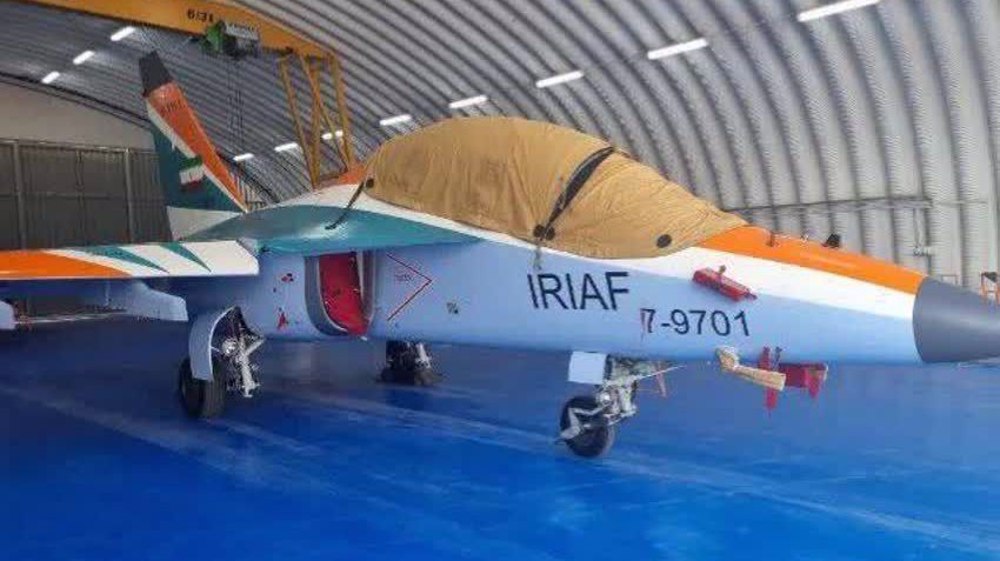
One of the YAK-130 trainers already delivered to Tehran in Iranian Air Force colours. Click to enlarge
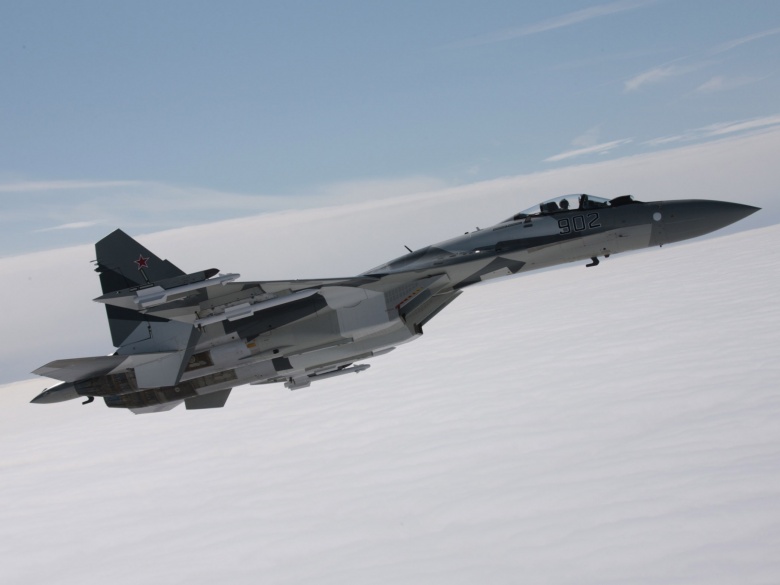
At the heart of this Iran Su-35 fighter order lies the jet’s formidable specifications, a testament to Sukhoi’s engineering that could tilt the scales in any future aerial showdown. The Su-35S, with its twin AL-41F1S engines delivering 32,000 pounds of thrust each, achieves Mach 2.25 speeds and a 3,600-kilometer combat radius, outpacing Iran’s current workhorses by orders of magnitude. Its crown jewel, the Irbis-E passive electronically scanned array radar, detects stealthy targets at 400 kilometers and tracks 30 simultaneously, arming pilots with R-77 missiles for beyond-visual-range dominance or KAB-500 glide bombs for precision ground strikes. Thrust-vectoring nozzles enable Pugachev’s Cobra maneuvers, turning dogfights into ballets of evasion, while integrated electronic warfare suites jam enemy locks like a digital smokescreen. For Iran’s pilots, many trained on Soviet relics since the Iran-Iraq War, this influx promises not just hardware but a doctrinal overhaul, shifting from defensive attrition to offensive interdiction. Imagine squadrons of these beasts patrolling the Strait of Hormuz, their supercruise capabilities shadowing U.S. carrier groups or Israeli F-35s with impunity. Yet, integration hurdles loom: Iran’s limited infrastructure means retrofitting bases like Isfahan or Hamadan for these behemoths, plus intensive pilot retraining, already underway in Russia since 2022. The leaked docs hint at technology transfers, too, fueling speculation of local assembly lines that could swell the fleet to 72 units, blending Russian avionics with Iranian ingenuity for a hybrid “Persian Flanker.”
This bombshell disclosure of Iran’s Su-35 acquisition via Russian documents arrives at a powder-keg moment, amplifying fears of a destabilized Middle East where Tehran edges closer to air parity with foes like Israel and Saudi Arabia. The June 2025 Iran-Israel clash exposed Tehran’s vulnerabilities raw: Israeli strikes gutted S-300 batteries and exposed the ineffectiveness of F-5 swarms against fifth-gen stealth. Enter the Su-35 as a great equalizer, potentially deterring Tel Aviv’s impunity while emboldening proxies like Hezbollah with air cover. Western hawks decry it as a proliferation nightmare, invoking CAATSA sanctions on any enablers, but Moscow’s defiance, fresh off a 20-year strategic pact with Tehran, signals indifference. For global markets, it’s a boon for arms-watchers: expect stock surges in defense firms as NATO recalibrates. Yet, beyond bravado, this deal whispers of fragility; Russia’s own Su-35 losses in Ukraine (over a dozen downed) question the platform’s invincibility, and Iran’s economy, battered by oil bans, strains under the $2 billion tab. As the documents circulate, one truth endures: in the great game of aerial supremacy, Iran’s bold bet on Russian fighter jets isn’t just procurement, it’s a declaration of intent, redrawing fault lines from the Persian Gulf to the Black Sea. Whether these 48 Flankers soar as saviors or sink under sanctions remains the skies’ next thriller.
Hey Iran, don’t get 48 or 72 make it a 100 and really F..k those Kike vermin up good, real good. Saying from NZ. Tod Dem Juden to all Yid scum.
This sale also demonstrates that far from being under pressure in Ukraine, Russia has enough inventory that these aircraft can go to an ally.