
Peter Aitken – Newsweek June 22, 2025
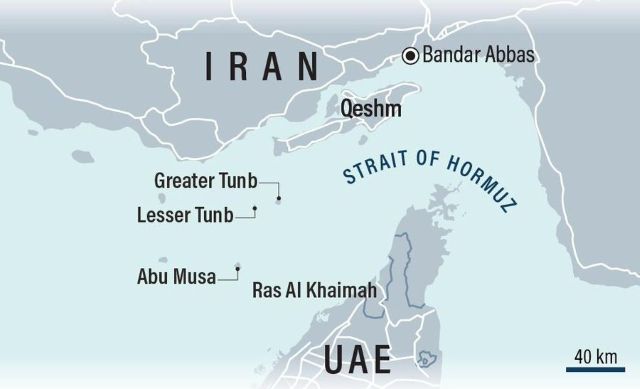
Following U.S. strikes on Iranian nuclear facilities on Saturday, the Iranian Parliament has voted in support of closing the Strait of Hormuz, one of the world’s most critical oil transit chokepoints, according to media reports.
Any final decision on retaliation, however, will rest with the country’s Supreme National Security Council and leader Ayatollah Ali Khamenei. The parliament vote merely advises him of the option to pursue.
Newsweek has reached out to the White House by email on Sunday morning for comment.
Why It Matters
The U.S. strikes on three Iranian nuclear sites—dubbed “Operation Midnight Hammer”—in Isfahan, Fordow and Natanz marks the first direct involvement of America in the escalating crises between Iran and Israel.
The action has received backlash, with many citing the lack of congressional approval for the military move.
The Strait of Hormuz is a narrow waterway connecting the Persian Gulf to the Gulf of Oman and the Arabian Sea. At its narrowest point, the strait is about 21 miles wide, with two shipping lanes that are 2 miles wide in each direction.
Around 20 percent of global oil trade passes through the Strait. Some experts have said that if Iran were to cut off access to the Strait, it could spike oil prices by 30 to 50 percent immediately, with gas prices likewise rising by as much as $5 per gallon.
During the Iran-Iraq War in the 1980s, Iran targeted oil tankers and oil loading facilities. These actions did not fully block the Strait but caused sharp increases in shipping insurance premiums and delayed maritime traffic.
What To Know
Iran has long held that it can shut down the Strait of Hormuz, which it has held onto as a last resort for escalation. “Closing” the Strait would mean making it impossible to navigate, with the Iranian Navy possibly laying down mines in the water to deter ships or the military shooting missiles to harass tankers.
“The Parliament has reached the conclusion that the Strait of Hormuz should be closed, but the final decision in this regard lies with the Supreme National Security Council,” Revolutionary Guards Commander Ismail Kowsari, member of the National Security Commission of the Parliament, announced on Sunday, according to Al Arabiya and the Jerusalem Post.
The vote took place Sunday following “Operation Midnight Hammer,” in which seven B-2 stealth bombers flew into Iran and dropped 14 Massive Ordinance Penetrator (MOP) bombs on two of Iran’s nuclear sites, including the Fordow site. A third site was hit with Tomahawk submarine-launched cruise missiles.
President Donald Trump said the sites had been obliterated by the U.S. operation, which included 125 aircraft overall in an operation that took 25 minutes to complete. However, Trump’s Joint Chiefs of Staff Chairman General Dan Caine said Sunday that it will take some time to assess the full extent of damage to the sites.
The MOP bombs used to hit the sites had never been deployed in a combat scenario prior to Saturday’s strikes.
What People Are Saying
Spencer Hakimian, founder of Tolou Capital Management, wrote on X, formerly Twitter, on Saturday: “There are close to 50 large oil tankers scrambling to leave the Strait of Hormuz right now. Looks like the oil industry is expecting the Strait to be blockaded in the coming days.”
President Donald Trump wrote on Truth Social on Saturday evening: “ANY RETALIATION BY IRAN AGAINST THE UNITED STATES OF AMERICA WILL BE MET WITH FORCE FAR GREATER THAN WHAT WAS WITNESSED TONIGHT. THANK YOU! DONALD J. TRUMP, PRESIDENT OF THE UNITED STATES.”
What Happens Next?
Khamenei will need to approve any final action that would see a “closure” of the Strait, which can happen as soon as Sunday now that the parliament has approved such measures.
It was interesting to hear Colonel MacGregor admit to George Galloway “We are the threat. We and that other little country Israel.”
https://www.youtube.com/watch?v=1tdeP4up5To
((( Newsweek ))) — ha ha ha jewsweek more like — for goyim consumption of course 🙂
Interesting how all these phony staged conflicts & wars strangely benefit the anti oil objectives of the WEF.
That is great for commerce.it will make consumer prices skyrocket.causing even more inflation.swfqw. Just like the seventies sahudi oil embargo caused a massive increase in oil prices, benefiting the sahudis and usrael.the rule is ,once prices go up,they never come down.
FFS WTF is SWFQW? WCPWIOIF?Oh and I’m sure all of this is theatre to expose nice jewish people as the worlds most persistent mass murderers.
Or if you like my last statement above would be….
ISAOTISTENJPATWMPMM
Allah shallah yacoum
Shalom
FFS
Popular etymology derives “Hormuz”, being the Middle Persian pronunciation of the Zoroastrian god Ahuramazda. The wealth of Hormuz attracted raids so often that the inhabitants sought refuge off the mainland and initially moved to the island of Qeshm. In the medieval period, the kingdom was well known as an international emporium controlling both sides of the Persian Gulf and much of the coastal area of the Arabian Sea.[5]. In the early 15th century, Hormuz was one the kingdoms that was visited by the Chinese expeditionary fleet commanded by Admiral Zheng He during the Ming treasure voyages and was the final destination of the fleet during the fourth voyage.
Being known as an international emporium and well known in Europe as a commercial hub, its success in fact led to its fame, prompting the Portuguese to launch attacks on it and conquer it in the early 16th century
MATT PETGRAVE on June 23, 2025 at 6:23 pm
‘FFS WTF is SWFQW?’ This shows you are a newbie .a simple search would have saved you from embarrassment.
To the Satanist, I am not a newbie, anyone that can’t write out a full sentence due to american laziness does not deserve to be on any information boards.
Information Boards is a clue, we provide information, it is not a quiz show expecting people to google/search everything, again, information not puzzles.
Nico X at 1:19 pm mentions the anti-oil Movement, and the people who look like a bunch of twats called Just Stop Oil, obviously have Establishment backing