
Ben Caspit – Al Monitor Jan 3, 2024
Israel’s military command on Thursday revealed details of a clandestine operation carried out in Syria four months ago to destroy an Iranian-built missile production facility.
Describing the Sept. 8 operation as daring and heroic, the army also unveiled body camera footage recorded by the commando force, which included more than 100 fighters of the Israeli air force’s Shaldag unit. The facility, located some 200 kilometers (125 miles) northeast of Israel’s border with Syria, would have been capable of producing as many as 300 precision long-range missiles that Iran and its proxies could fire on Israel.
Excavations for the facility’s construction began in 2017, placing the plant deep underground in order to avoid detection and aerial bombing. The Military Intelligence Directorate and the Mossad have been monitoring the site ever since. Military observers say the ground operation that destroyed the facility attests to Israel’s growing willingness to carry out operations at great distances.
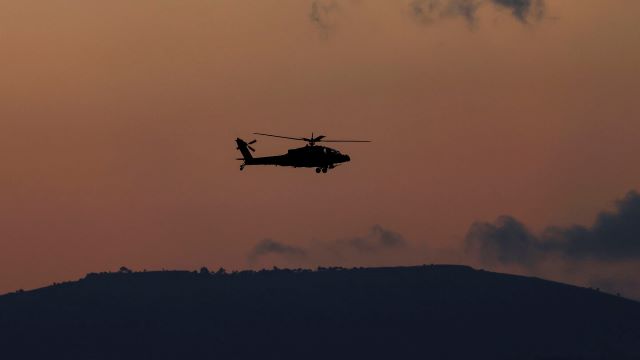
The operation was preceded by airstrikes that killed most of the 30 Syrian fighters guarding the secret facility. The commandos landed in helicopters that also carried field hospital facilities. They located the heavy-duty mixers used to produce rocket fuel as well as eight rocket engines in varying stages of construction. The bombs dropped on the site, the explosives used by the commandos and the weapons destroyed in the facility shook the area.
A prelude to attacking Iran?
The Israeli military censors division decided to share details of the raid, which was reported in foreign media in mid-September, comes as Israel is working to convince the incoming Trump administration about the need to strike Iran sometime this year.
The increasing talk in Israel about a strike on Iran’s nuclear facilities comes as Tehran recalibrates its own strategy on the eve of Donald Trump’s presidency. The regime in Tehran is limping after Israel’s severe blows to Hamas and Hezbollah in Gaza and Lebanon, and after an Oct. 26 aerial raid that damaged Iran’s aerial defenses and the collapse of the Syrian regime that had provided it a foothold in the region. Many researchers concur that Tehran is deciding whether to start rehabilitating its proxies, air defense systems and missile production capabilities or to charge ahead toward production of a nuclear bomb.
Axios correspondent Barak Ravid reported Thursday that President Joe Biden and his advisers held an emergency discussion on the issue, including a possible US attack on Iran if intelligence predicts an Iranian nuclear breakout in the coming weeks.
Israel-Lebanon ceasefire crumbling?
On Thursday evening, Israel’s air force carried out a series of strikes on Lebanese territory after Israeli intelligence services identified rocket launchers primed to fire at Israel in violation of the Nov. 26 ceasefire that ended the 13-month Hezbollah-Israel war.
“We are not going to relax the enforcement of the ceasefire,” a senior Israeli security source told Al-Monitor on condition of anonymity. “Hezbollah is trying to rehabilitate itself and is violating the ceasefires with increasing frequency.”
The ceasefire deal calls for Israeli troops to pull out of southern Lebanon within 60 days, but increasing violations on the part of Hezbollah are calling this deadline into question.
“It should be clear that we will not allow Hezbollah to regain strength in southern Lebanon. The previous situation in which Israel ignored what Hezbollah built on the border will not be repeated, even if it causes the ceasefire to collapse. Only Hezbollah has something to lose. The Israeli military is prepared and ready for any scenario,” said the security source.
While the multi-front war that Israel has waged since Hamas’ assault Oct. 7, 2023, has died down, the situation is far from stable.
“The ceasefire in Lebanon can collapse. We hope it won’t happen, but it’s a possibility,” a senior Israeli political source told Al-Monitor on condition of anonymity, adding, “The war with the Houthis also continues.”
Overnight Thursday, the Houthis launched yet another ballistic missile at Israel, sending hundreds of thousands of Israelis running to bomb shelters. The Israeli military also continues to operate in Gaza against Hamas’ efforts to regroup.
Despite Trump’s Dec. 3 statement, “We will stop entering into foreign wars that the United States has engaged in unnecessarily,” the continued instability will not be easily resolved.
An associate of Prime Minister Benjamin Netanyahu told Al-Monitor that the premier was doing all he can to calm the water ahead of the Jan. 20 inauguration, but added that some things were not in his control.
There are reports of progress in the past 24 hours in talks on a deal for the release of Israeli hostages held by Hamas in Gaza that would also entail Israel pausing operations against Hamas for a time. Netanyahu approved another Israeli delegation to Doha for another round of talks Thursday amid reports that a breakthrough between the two sides is beginning to emerge.
“Such breakthroughs have been made many times in the past,” a senior Israeli diplomatic official told Al-Monitor on condition of anonymity. “Each time it ends in disappointment. This time, the disappointment will be not only for the families of the abductees, but also for President Trump’s people. We’ll do everything we can to avoid this. It’s time for our brothers and sisters to come home.”
More BS surrounds this fiction of Iran , those guys are the same people you find in Israel, they are the same, and only pretend to be enemies. All this is leading to a fake war involving Iran, where more guns get bought and sold, more planes get paid for by taxpayers, and the looting continues. It’s very Orwellian, along with whoever the writer of this article is. Pushing the fakery and fear.
nearer to you my goal .
Only problem is Iran is governed by Donmeh–thus everything is being coordinated between Israel & Iran. Or as some Israeli-Jew revealed in 60 Minutes interview the ‘Pager Plot’ : ‘The world is our stage. We make like Truman Show. Everything is controlled by us behind the scenes.’
Just like Nico X has been saying all along.
The Truman Show (1998) must go on.
@JFC Fuller
yes, strange that nico hasn’t been offered a columnist post on TTS or any other site. i’ve learned more from him than anyone else.