
Keiron Monks – inews.co.uk Dec 27, 2024
Conflict between Israel and the Iran-backed Houthis in Yemen has escalated again with a missile attack on Tel Aviv, as fears grow that an attack on Iran itself could be imminent.
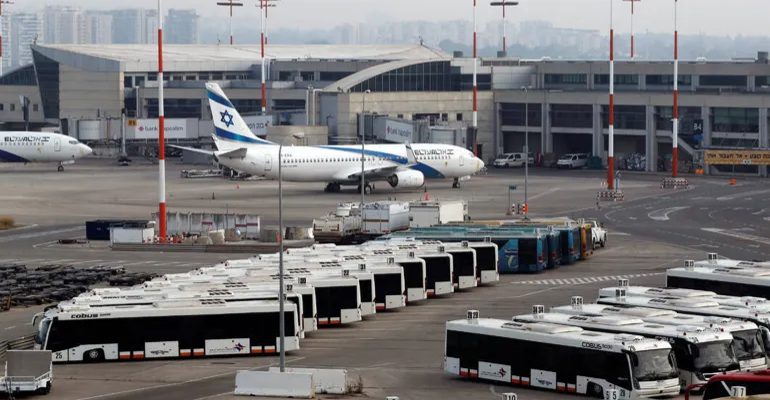
The Houthis claimed they launched a ballistic missile that disrupted flights at Tel Aviv’s main airport on Friday.
It follows Israeli air strikes on Yemen on Thursday. Some Israeli officials have called for strikes against Iran.
The Israel Defence Forces (IDF) said a missile was shot down by air defence at about 4am local time. Arrivals to Ben Gurion airport were briefly suspended. Air raid sirens sounded across much of the country, sending millions to bomb shelters, with 18 minor injuries reported as people rushed to shelters.
The Houthis, who control a large part of Yemen, and receive funding and training from Iran, claimed: “The missile succeeded in reaching its target despite the enemy’s censorship, and the operation resulted in casualties and the cessation of navigation at the airport.”
The attack followed a wave of strikes by Israel on Thursday on what it claimed were Houthi-linked targets in Yemen. Six people were killed and dozens injured. The main airport in Yemen’s capital, Sana’a, was hit, narrowly missing the World Health Organisation chief, Tedros Adhanom Ghebreyesus, and several power stations.
The Houthis have intensified drone and missile attacks on Israel throughout the war in Gaza, in alliance with other members of the Iran-led “Axis of Resistance” that includes Hamas, Hezbollah, and Iraqi militias.
Another Houthi missile strike on Tel Aviv last Saturday injured dozens. The group said on Thursday that it could “expand the target bank in occupied Palestine to include more vital facilities”.
Israel has responded with increasing force and is signalling that it is gearing up for a sustained campaign against the Houthis.
“We are just getting started with them,” said Prime Minister, Benjamin Netanyahu, after Thursday’s strikes. Defence Minister Israel Katz suggested Israel would use the decapitation strategy employed against Hamas and Hezbollah. “We will hunt down all Houthi leaders,” he said.
However, Israel is unlikely to be able to degrade the Yemeni group as effectively as it did Hamas and Hezbollah, according to Professor Kobi Michael, an Israeli military analyst at the Institute for National Security Studies and Misgav Institute think tanks.
“They are located across a very large area in mountains and deserts so their locations are not easy to detect,” he told The i Paper. “We don’t have intelligence as good as we have with regard Hezbollah, Syria, Iran, or Hamas. And we are talking about a distance of 1,200km, so the circumstances are pretty complicated.”
He added that Israel is likely to lean on the US-led alliance – which includes the UK, which is already engaged in a military campaign against the Houthis over their attacks on Red Sea shipping – and try to impose a maritime blockade to cut off the group’s weapons supply lines.
Israel is also said to be considering options to respond to the Houthis through strikes against their patron, Iran. Mossad chief David Barnea has advised Netanyahu to “go for the head, Iran,” according to reports in several Israeli news outlets that cited official sources.
Benny Gantz, the Israeli MP and former war cabinet minister, said this week that Israel should “target Iran directly,” adding that “the solution to putting an end to [Houthi] attacks lies in Tehran”.
Israeli hawks, such as former prime minister Naftali Bennett, have argued that the damage inflicted by Israel on Iran’s allies during the war in Gaza have created a unique opportunity for an overwhelming military campaign against Iran.
Israel also claims to have inflicted damage on Iran’s air defences and military installations during an exchange of fire in October.
Dr Michael believes an assault could be imminent. “Netanyahu is willing to attack Iran and he understands that this is a very narrow window of opportunity,” he said, suggesting that president-elect Donald Trump would prefer Israel to strike before his inauguration on 20 January.
But Sina Toossi, an Iran specialist at the Center for International Policy in Washington, said such an attack could backfire.
“An Israeli attack on Iran is possible but fraught with significant risks for both Israel and the US,” he said. “Despite setbacks in its regional alliances, Iran retains formidable capabilities, including a robust arsenal of ballistic missiles and drones, along with the capacity for asymmetric retaliation across multiple fronts.
“Israel’s struggle to decisively neutralise Hezbollah in the recent conflict underscores these risks. Despite Israel’s devastating attacks on Lebanon, Hezbollah’s missile and drone strikes continued unabated, even escalating in the days before the ceasefire, targeting central Israel and Tel Aviv.
“A military strike on Iran would likely yield similar results – failing to achieve a decisive victory while provoking severe Iranian retaliation and potentially accelerating Tehran’s nuclear ambitions.”
well done houthis
urkey goes to war with Germany over doner kebabs
Story by Jorg Luyken, James Rothwell •
The doner kebab, an omnipresent sight on German streets, has come to epitomise the influence of Turkish immigrants on their adoptive homeland.
But now, an attempt by Turkey to secure legal protection for the original doner could put a skewer through the future of one of Germany’s favourite fast foods. The European Commission has given Berlin and Ankara time to decide
Ankara insists that a true doner can only be made of chicken, lamb, or beef from a cow that is at least 18 months old, and which has been marinated in yogurt and herbs. The Turkish variety is also served on a plate with chips and hot peppers.
Here in the UK the kebab has lost popularity since the news that 4 of the missing children
in the Rotherham muslim sex scandals went into kebabs
BUT THESE ROCKET ATTACKS never achieve anything much do they?!.
You could make a case that they are FAKES…
Watch this space!
Bs.
More bunk for the morons. Notice none of these supposed ‘missiles’ from Houthis or Hezbollah ever kill any Jews.
”The main airport in Yemen’s capital, Sana’a, was hit, narrowly missing the World Health Organisation chief, Tedros Adhanom Ghebreyesus, and several power stations”. Hopefully next time they will get a direct hit and wipe this pure evil anti White racist Satanic POS off this planet for good
Israel’s Netanyahu to undergo urgent surgery on Sunday
Story by DPA •
Israeli war criminal Prime Minister Benjamin Nutanyahu is to undergo urgent surgery, his office said on Saturday.
The operation is to take place on Sunday to treat an infection caused by a stick wedged up his bottom
Nutenyahu sat on a branch while watching film of palestinains being murdered
and squealed in pain
The 75-year-old was examined last Wednesday at Hadassah Hospital in Jerusalem. He has since been treated with medication.