
Eric Ralls – Earth.com Dec 18, 2024
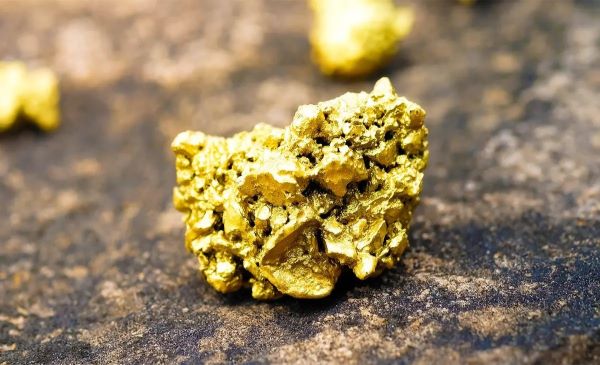
A recent discovery has drawn attention to a deposit containing about 1,000 metric tons (1,100 US tons) of high-quality gold ore. If ultimately proven true, this massive find would make it the largest gold deposit on Earth.
The news has turned heads around the world, considering that such a find could influence global markets, local economies, and long-term mining strategies.
The deposit sits in a region known for mineral wealth but has now proven to be far richer than anyone had previously guessed.
In early examinations, it appears to meet the criteria of what experts call a “supergiant” deposit, a term used when gold resources measure up not in millions, but potentially billions of ounces, surpassing even well-known reserves around the world.
Bureau prospector Chen Rulin at the Geological Bureau of Hunan Province has been closely involved in examining the site.
What makes a gold deposit “supergiant”
Not all gold deposits earn the title supergiant. Deposits of that magnitude represent natural collections of gold that formed under special conditions.
Such conditions can lead to concentrations exceeding those in typical mines, which usually hold far fewer ounces.
China’s newly identified reservoir is valued at up to approximately 600 billion yuan, or US$83 billion.
Comparisons are already being drawn to other well-known sites, surpassing even the 900 metric tons believed to lie within South Africa’s South Deep mine, a deposit long celebrated for its riches.
Network of hidden veins
The Geological Bureau of Hunan Province has confirmed the detection of 40 gold veins stretched within a depth of about 2 kilometers (1.2 miles) below the surface.
Each of these veins is like a thin thread of treasure winding through layers of ancient rock. These 40 gold veins at the Wangu gold field were previously thought to contain around 300 metric tons of gold.
Three-dimensional modeling suggests there may be even more hidden further below, at a depth of about 3 kilometers, hinting at a possibility that the newfound riches extend beyond initial surveys.
Many drilled rock cores showed visible gold, says bureau prospector Chen Rulin.
Quality and richness of the ore
Every metric ton of ore dug up from this area might contain as much as 138 grams (nearly 5 ounces) of gold.
Experts consider ore from underground mines high grade if it contains more than 8 grams, so this is a serious cut above the usual finds.
China has already claimed a major place in the gold market, maintaining reserves exceeding 2,000 tons earlier in 2024.
Its miners are no strangers to success, contributing about 10 percent of global output. News of this discovery has further driven an uptick in gold prices, adding to rising demand worldwide.
Gold deposits are harder to find
Gold is a finite resource, meaning there’s only a certain amount of it on Earth.
So far, humans have mined about 53,000 metric tons of gold throughout history, and experts believe there could be another 50,000 metric tons hidden underground waiting to be found.
However, these new deposits are often harder to reach and more expensive to extract compared to older, more accessible mines.
Plus, environmental regulations and the push for more sustainable practices make mining new gold more challenging.
As a result, the future of gold mining not only depends on discovering new sources but also on improving mining technology and increasing recycling efforts to keep up with demand
Some researchers think humanity might be nearing the point where there are fewer big finds to make, while others remain unconvinced that the end is in sight.
No one is certain how many more major discoveries like this are waiting beneath Earth’s crust. Peak gold is a matter of debate, and this new discovery will likely fuel that conversation.
Where does gold come from?
Buried seams of crystallized silicon dioxide, better known as quartz, seem to encourage this precious metal to precipitate out and settle.
While this theory is widely accepted, it doesn’t fully explain the formation of large gold nuggets, especially considering that the concentration of gold in these fluids is extremely low, says Chris Voisey, a geologist at Monash University.
These Australian scientists offered a new perspective on gold formation. They reported that seismic activity linked to earthquakes may help gather gold into concentrated areas.
Though the fundamentals of how gold appears in the Earth’s crust have long been taught in textbooks, ongoing work by groups like Australia’s Monash University, the CSIRO, and the Australian Nuclear Science and Technology Organisation has questioned traditional assumptions.
By peering closer at how gold settles into veins, these researchers challenge old beliefs and encourage fresh lines of inquiry into the link between gold and earthquakes in their study published in the journal Nature Geoscience.
Fresh angles on gold deposit formation
Mining involves more than simply unearthing what nature buried millions of years ago. A study published in April 2024 described the creation of a two-dimensional gold form called goldene, a layer just one atom thick.
This unique material behaves differently from the regular three-dimensional variety and may hint at unconventional applications for gold in the future.
“If you make a material extremely thin, something extraordinary happens – as with graphene,” explains materials scientist Shun Kashiwaya of Linköping University in Sweden.
“The same thing happens with gold. As you know, gold is usually a metal, but if single-atom-layer thick, the gold can become a semiconductor instead.”
Beginning of the end of the gold rush
Earth’s supply of gold has never been endless. It takes immense spans of time for these deposits to arise from geological events that remain only partly understood.
Yet the signs at the Hunan site indicate that what looks like a limit might be more flexible than once assumed.
Core samples taken around the periphery of the discovery hint that the reservoir stretches even further than initial predictions, which would mean they are sitting on top of the biggest gold deposit ever found on Earth. Stay tuned…only time will tell.
The initial report was published by the Chinese State Media
WE LIVE IN COMMUNIST BRITAIN
Bev Turner blasts ’empty shop shelves’ ahead of Christmas
Story by Gabrielle Wilde • GB News presenter Bev Turner has said that under Starmer Britain is becoming a communist state with empty shop shelves ahead of Christmas.
Speaking on GB News, Bev explained: “I do some of my shopping in person. I have to say the convenience of online shopping is a plus, especially when you’ve got teenagers that want stuff, the convenience of being able to just do it online.
“There’s never anything in the shops. We live in Communist Britain. The shop’s shelves are normally empty.”
However co-host Andrew Pierce disagreed, stating that he never shops online. Andrew said: “I went to Swindon a couple of weeks ago with all my family and I did what I always do hand them over cash, then my nieces can get what they want.
Starmer works for Rothschild not the people, he has betrayed us
Its value lies in leaving it in the ground and taking it out only slowly. Take out too much too soon and the value of the gold they (and the world) already hold in all reserves whether bullion, coin or jewellery will all go down. To keep gold or anything else worth having valuable they must limit its availability.
Anyone know if they managed to dig up any Bitcoin? 🤔
tia
haha haha I told u Bitcoin naysayers that there is more gold in the earth than you can shake you ***k at.
so go and buy gold at 3000 bucks and ounce and when we take the gold from china and grand canyon and the Headless Valley in Canada on South Nahanni River you will quickly see they are really really really B.S. ing us about the ‘scarcity’ of gold.
Also did you know that only a mixture of Nitric and Sulfuric acids will even put a rust mark on gold so it will never ever rust away in water. Its sittin there millions of years later without even a scratch on it.
how fits there in the stories about the Anunakis
searchinh for gold + missing S Africas +Chinas gold ?
were they so stupid not knowing ?
how fits there in the stories about the Anunakis
searching for gold + missing S Africas +Chinas gold ?
were they so stupid not knowing ?
Massive gold deposits outside US control herald the end of the Dollar.