
Introduction – Sept 29, 2024
Until recently the WSJ had been entirely supportive of the West’s backing for Ukraine in its war with Russia. However, a Wall Street Journal editorial suggests that something has changed in Washington’s plans for Ukraine.
Put this together with Trump’s pledge to bring the war to an end should he win in November, and it seems likely that U.S. is contemplating cutting its military support for Kiev.
There are multiple reasons for this. The most obvious being that Russia has been steadily gaining the upper hand in the conflict. To make matters worse, the West simply cannot keep up with Russia’s military/industrial output, which has been on a war footing and now surpasses the West’s production capacity.
There may be another more pressing reason for the West to have reconsidered its support for Ukraine.
That is the looming prospect of a wider conflict in the Middle East, as Iran considers retaliating against Israel for the recent killing of Hezbollah leader Nasrallah.
The simple fact is that the West cannot afford to wage two wars at once, even if proxies are doing most of the fighting. Hence, we suspect that the West is considering reducing its support for Ukraine as Iran and its allies contemplate launching retaliatory strikes on Israel.
If that happens Netanyahu will demand full support from the West, which will come in the form of missile defence systems, radars and the like. Provided by the U.S., Britain, France and Germany.
Initially, at least, there may not be many Western ground forces involved but the prospect of Western military involvement to defend Israel is now a very real possibility. Ed.
Biden broke his word to Congress – WSJ
RT.com – Sept 29, 2024
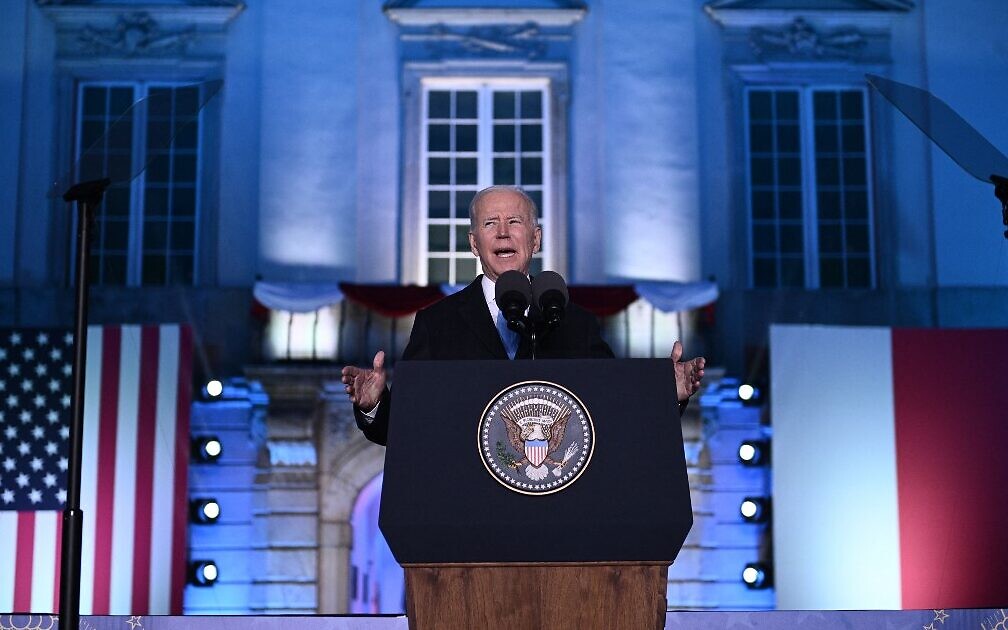
US President Joe Biden has not been honest with the American public about his administration’s plan for Ukraine, the Wall Street Journal’s editorial board wrote in an article on Friday.
Despite Biden styling himself a supporter of Ukraine’s freedom in his speech to the UN General Assembly this week, he refuses to level with Congress and the American public about his strategy to achieve victory, the editorial stated.
In April, lawmakers passed a nearly $61 billion supplemental budget for Ukraine, after months of wrangling between Democrats and Republicans. One of the conditions stipulated was that the Biden administration articulate a strategy regarding US support for Ukraine within 45 days of the budget’s enactment, and quarterly moving forward.
“Biden knew this commitment was necessary to get aid through Congress, and he signed the bill,” WSJ observed.
Despite this, the strategy was submitted “months after the congressionally-mandated deadline,” the newspaper said, citing a press release from GOP lawmakers. “Also, and this is typical of the Biden stonewall: The document is entirely classified,” WSJ wrote, adding that congressmen want the strategy made available to the American public.
”Don’t count on the Administration following this order before Nov. 5, if it ever does,” the board said.
“A public release might mean that Vice President Kamala Harris would have to explain her own thinking on the war before the election. As long as she doesn’t, and the Administration covers it up, Ms. Harris co-owns Mr. Biden’s record of muddled half measures.”
The Biden administration announced a further $8 billion in military aid for Kiev on Thursday, reserving the remainder of a large Congressionally-approved allocation set to expire by the end of September. This came right after Ukrainian leader Vladimir Zelensky visited the US to pitch what he termed his “victory plan” to his biggest sponsor.
According to several Western media sources, Kiev’s wishes are now increasingly clashing with those of its backers in the West. Its allies have also so far denied its ever-more urgent demands to allow the use of Western-supplied arms to strike deep into Russian territory.
Meanwhile, Zelensky has rejected any possibility of compromise with Russia and ruled out negotiations. Ukrainian officials have suggested that escalating the conflict could force Russia to settle on Kiev’s terms.
Moscow views the conflict as a de facto proxy war and has warned that if Kiev is given permission to use Western long-range weapons, any such attack will be viewed as an act of war.
“…it seems likely that U.S. is contemplating cutting its military support for Kiev…”
The U.S. should cut military and other ties with the illegal entity, “isra-hell”.
When Rothschilds Communism took Russia in 1917
its main enemies were the UK and america
But when Adolf Hitler took the German economy away from the
Jewbankers and made a success of it
suddenly Russian communism was no longer an enemy
so after the 3 jew owned countries of Russia Uk and USA
had destroyed Germany, things went back to Russia being the main enemy.
This proves the farce that the cold war was nonsense, one jew owned country would not fight another one.
But in 1991 Russian communism collapsed and a more open system operated
must that was previously hidden to us became visible, such as Churchill
being under the command of Rothschild and Stalin, also the UFO files
from the USA and UK, which were previously denied were thrown open
exposing a mass of documents.
One of Rothschild’s top agents was Sir Anthony Blunt, whose job was to spy on the Royal family, his closeness to the Queens mother is enlightening
The Russian royal family the Romanovs refused to allow Rothschild banking
so he had them murdered, the Queens Mother lived in fear of this happening in the UK so secretly supported Hitler standing up to Communism.
Blunt knew this and gently blackmailed the royals for Rothschild.
Secret documents were sent by train in the diplomatic bag to Sandringham
Blunt had a talented seam stress specially trained to cut the sowing threads on the bottom of the bag, remove and read the contents photograph them and then she would sew it back before it reached its destination, every one of the UKs wartime secrets were known to Rothschild and his communists, before it even reached the desks of our own people
Its strange to think the new russia has more freedoms than we do in the UK
As we witness now the UKs slide into totalitarian communism, prepare yourself for what is to come
Yes..Yes…it’s terrible..
Bribe’em has broken his word…tut tut…
…of course everyone expected this demented and criminal paragon of virtue…this diddling ice cream connoisseur and child sniffer…
..that had a gerrymandered election seemingly stolen to insert a fake rainbow junta, clown show, chimps tea-party… for the zillionaires of zion that own the yankee asylum.. and troon show…
to be open and transparent and truthful about his criminal dealings. perfidy and malfeasance….
I’m sure the ‘electorate’ feel quite betrayed by him.. as he fucks them all sideways to Sunday..
Yes indeed…it’s unforgivable..
America may face terrorist acts from the Azov Brigades on the US mainland if it hangs Ukraine out to dry after all it promised (and all it has done), to then drop them at the last hurdle in support of Israel. This also risks Azov returning to their original ideology of hating Jews and especially now Israel.
Maybe Russia should be hurt for supporting China, which depends on the West while pretending we do not exist, and for supporting Islam, which depends on Christians, again while pretending we do not exist
superfluous corrupt SKUNK !
The Bidens are absolute trash…..the scum of the earth enabled by the crypto jews within the USA GOVERNMENT…..going back years….like the Bush Family.Where do the Kennedys fit into this shit show??.
Anyway Biden (Marrano Catholic) and Kamala atr BOTHE run by Jews Inc and have damaged the US….the millions of low life illegal immigrants are going to be a huge problem UNLESS Trump acts quickly to remove them……trouble is it is doubtful Trump will do any thing except to pretend to act on it……wait and see….both candidates are asking for money….This is after all America so expect a lot of the donated money to be siphoned off.
(See the “missing millions” stolen by the crypto jew Bob Geldof….the estimates of his current wealth go between 70 and 100 million.).Charities are ideal for grand theft…..which is why extremely wealthy individuals are often connected to them….including Richard Starky AKA Ringo Starr.The crypto jew Paul McCartney wife is jewish and Paul often pops down to the local temple for some Synagogging….needless to say McCartney will be donating shitloads of cash to the fanatics in the West Bank.
If Iran directly attacks the US, what will the 50 million illegals, many Muslim, plus the 4.5 million Muslim legals, do? Die cheerfully for Allah, or join the fight against American Jews, Christians, agnostics and atheists?
n the USA Amazon is taking over the nations health
it advertises that for 29 dollars each visit
you can get treatment for Sinus tummy troubles STDs etc
Tesco in the UK are gearing up to do similar
The NHS you paid in for all your life, dental care etc
has now gone, thanks to exploitation by migrants