
Introduction – July 31, 2024
I don’t know enough about the murder of these three little girls to warrant commenting on it. However, the media’s reporting on their murder immediately made suspicious.
A17-year-old is alleged to have stabbed to death three young girls in Southport, northern England. There is only one suspect and despite blanket coverage the media haven’t named him.
Why, I wondered, were the authorities in conjunction with the media shielding his identity?
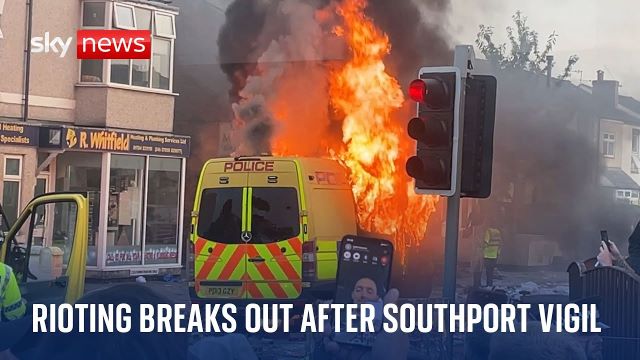
The next day rioting reportedly erupted near the scene of the crime. This only reinforced my suspicions that key details about the crime were being concealed.
This was further underlined by media coverage, like the following Guardian report. Readers will note that it fails to name the suspect or expand on his identity, beyond stating his age and the fact that he’s a local.
The following Guardian report does however contain a number of key words and phrases that signify we are being lied to.
First and foremost, the unrest is reportedly being stirred by:
- “far-right activists … “
- “fake news websites” (like this one. Ed?)
- and “conspiracy theorists”
This is all topped off with calls for tighter control of the internet, particularly “alternative news websites”, (like this one? Ed.).
Why, I wondered? What are the authorities together with their lackeys in the media so eager to conceal?
A hint came when it was revealed that rioting erupted outside a local mosque. Now I am not blaming Islam but like Saddam Hussein’s Weapons of Mass Destruction, which for a while were a staple of the mainstream media (MSM), this episode illustrates how the MSM is being used to manipulate public opinion. Ed.
Misinformation about Southport attack suspect spreads on social media
Benn Quinn – The Guardian July 31, 2024
A flood of misinformation about the Southport attack has been spread on numerous social media platforms by sources ranging from far-right activists to fake news websites and conspiracy theorists.
On Tuesday afternoon, the home secretary, Yvette Cooper, urged the public to avoid “unhelpful” speculation about the attack, which left three children dead, saying social media companies “need to take some responsibility” for the content being shared on their sites.
“Above all, this is about young children,” she said. “This is about children and their families who will be grieving, and the many other children who were involved yesterday who will be facing great trauma as well.”
The only details released about the suspect by police are that he is a 17-year-old from the village of Banks in Lancashire, who was born in Cardiff.
But on Tuesday night a protest by hundreds of far-right activists, believed to be supporters of the English Defence League, saw missiles thrown at police and a local mosque attacked.
The incident became the latest to raise questions about the policing of content by social media companies, and official watchdogs, and whether the law is fit is for purpose.
A prominent British conspiracy theorist had earlier been filming at the crime scene. A YouTube video where he calls for emergency military rule and mass deportations received 30,000 views in the two hours after it was posted on Tuesday.
The ‘“source’” for the false name of the attacker appears to be a website seen by the Guardian calling itself Channel 3 Now, which mixes potentially AI-generated US and UK news content and is styled like a mainstream American network news channel. It did not reply to requests for comment from the Guardian or provide details of who owns or runs it
The name and other false claims about the suspect were being shared by influencers on platforms such as TikTok. One such video, also seen by the Guardian, from a self-styled social media influencer and Reform UK supporter who goes by the name of brucesrandomness, had been viewed nearly 800,000 times.
The same influencer posted a subsequent video in which he apologised for “probably incorrectly” naming the suspect after seeing “some headlines over the internet” and acting out of anger. He has been approached for comment, as has TikTok.
However, more established far-right actors and disseminators of conspiracy theories who found new supporters during the Covid-19 pandemic have been quick to seize on the attack.
Tommy Robinson – who is believed to be somewhere in Europe after leaving the UK on Sunday night on the eve of his scheduled appearance at the high court in alleged contempt of court proceedings – has been exploiting the deaths of the children to push an anti-immigration narrative on channels including the X account that Elon Musk recently restored to him.
In a reflection of how that narrative was finding traction on this occasion beyond the usual followers of Robinson, whose real name is Stephen Yaxley-Lennon, the entrepreneur Duncan Bannatyne tweeted to his own 677,000 followers that “maybe he [Tommy Robinson] was right all along”.
The former BBC star later deleted the reference after being contacted by the Guardian, and a spokesperson said: “Duncan is very upset at the Southport attacks, which he has expressed on X.”
However, another Bannatyne tweet remained online in which he retweeted a claim by the Robinson ally Laurence Fox that police were suppressing details, and asked: “What information are they suppressing?”
Dr Rod Dacombe, the head of the department of political economy at King’s College London and an expert in conspiracy theories, said individual social media users had been important in spreading a lot of the misinformation but fake media sites had added a veneer of credibility, often with blatant falsehoods.
“For some people these alternative media sites are really important. They give them something to share, and look superficially like conventional news sites, although they don’t engage in standard journalistic practices and sometimes just speculate wildly,” he said.
As well as the site which appears to have been the source for the false name, Dacombe cited the Unity News Network, a British conspiracy theory website headed by a former Conservative and Labour councillor, which has also jumped on the attack.
“It’s much more participatory with a nightly news programme format where he interacts with conversations and engages with callers,” he added.
“These are sites that are really important for a small but deeply engaged group of people, but events like this mean that a lot of their misinformation is being shared much more widely than they would otherwise have been.
“It’s also the case that there is little to regulate or filter what is going on. It really does feel like the wild west.”
north west not north east
“Above all, this is about young children”
Which is why people want to know who the KILLER is.
The American media is trying to bury it. The wife checked the television about four hours ago and she said there was nothing.
I don’t mean nothing about the attacker, I mean nothing AT ALL. In the US this is a non-story, only those of us who gave up on the lying press years ago are following it. Since my family extends to nearby Canada I checked there, and where it is being reported it mirrors what the UK press is doing. Logically.
But news of the Southport fires is getting around anyway. My feelings are oddly hopeful — seeing white rioters is a hopeful sign in some ways.
Does the Saxon learn to hate? At least he’s learning to wake up. Result!
I heard the alleged killer was from Uganda, or some such place.
Starmer is a Nazi, and he’s a page from mass murderer Blair’s instruction manual. Remember how Blair’s period in No10 saw the interduction of around 9000, to 12,000 new laws directed at sheeple control. Not one of these new laws applied to bankers.
When Starmer was director of the Public Prosecutions Service, he was highly selective on who got prosecuted. Starmer didn’t touch Savile, and there are many others, including the very lite touch with the first phone hacking case where the judge just locked the case down and gave them two years, so Murdoch got off Scott free, and later paid off his victims.
I said it would happen, and now we see the Labour Nazis take the UK Nazi police state to another level. I’ve also said this site could be shut down.
Similar playbook, they are not very imaginative…
Riots erupt in Dublin after children stabbed
https://www.reuters.com/world/europe/least-three-children-taken-hospital-after-dublin-stabbing-rte-2023-11-23/
SHIT FOR BRAINS
southport was just waiting to happen
when tony blair told a pack of lies to get the people of iraq bombed
most of the public knew if you bombs peoples homes and country
killing their families etc you do NOT invite them to come live in your country
common sense tells you this
but politicians dont have any do they
so our government sends bombs and torture equipment to israel
even tho israel snipers have killed 9000 children
there had to be a backlash even those with the brains of a footballer could see this coming
UK politicians = shit for brains
The best ‘coverage’ of this was by Jim Davidson,
He covered it quite well, simplistic, factual.
No more needs to be said.
The pO lice still don;t get it, They should be shoulder to shoulder with the People against this invasion of people who hates us.
as it happens, I hate them..
For people who like to stir racial divisions the establishment is really quite afraid of it when it happens outside of their mischief. Ordo ab Chao my ass.
TURKEY CANT STAND BY AS ISRAEL COMMITS GENOCIDE
The prime minister of Turkey, Tayyip Erdogan, expressed outrage over the “parody of The Last Supper” by Leonardo da Vinci, which took place during the opening ceremony of the Olympic Games. According to aa.com.tr, the head of the Turkish state wishes to contact Pope Francis concerning this issue. Turkish and israeli officials unleashed insulting barbs at one another on Sunday and Monday after Erdogan said in a speech on Sunday that “there is no reason” that Turkey could not act, noting military interventions made in the past in other countries. Turkish officials quoted Erdogan in a speech on Sunday that “there is no reason” that Turkey could not act on israeli terrorism, noting military interventions made in the past in other countries. Turkish communities are held in hight regard in the UK, for being peaceful and integrating wel The British public are firmly behind palestines right to defend itself but warns israel ” do not push Erdogen too far “
Myself and three friends knew it was a black African we just debated which country
Three small children were murdered.
They are now trying to change the narrative to make it about far right politics.
SOUTHPORT IMMIGRATION TO BLAME
Bev Turner feels Britons are “angry” after days of violence across Britain, citing “years of unfettered immigration”. The GB News star was reacting to chaos sparked by a crazed knife attack in Southport and fear struck into Southend locals as a machete fight broke out on the seafront, this just weeks after the report on the Rochdale child rapes by migrants
Bev criticised the mayhem in Southport, but said it’s reflective of a growing sentiment across the country.
“Our own citizens are angry”, she said about the people in Southport who voiced their frustration at Keir Starmer as he paid his respects to the three children killed at a Taylor Swift-themed dance class in the town. They aren’t just angry at Starmer and Blair. but all politicians who imported in all these folk since 1945 They are angry at feeling their identity, their lives, their Britishness, their homes and jobs and their safety on British streets has been compromised by what they see as unfettered immigration for all these years, people across the Uk and ireland want them sent home
Signs That the Media is Lying to You:
“Hi.. we’re The BBC/Sky News/Channel 4/The Guardian/Telegraph/Daily Mirror/Sun etc etc are we’re here to keep you informed…”
ZWOG is covering it up because the killer is some wog animal. How convenient the MSM (Marxist Semitic Media) invented this bogus news story the next day about the ‘Hamas leader’ being killed– to push the killing of 3 white kids by some wog beast out of the major news headlines & public consciousness..
What Needs to Be Done:
https://www.youtube.com/watch?v=196h-nUrNB4
The best sign is watching their lips. If they’re moving their lying.
The murder of 3 white children by imported blacks and mudbrids is a great tragedy – and the political scum who imported them – who carried out the Jew agenda – should be hunted down and EXTERMINATED WITH EXTREME PREJUDICE.
Take note – the cops protect the politicians from retribution – the cops are your enemy. If the English did not have cops – they could deport/kill the black invaders, etc.
The only way out is to vote white nationalist leaders, not for street shitters.
Here in Oregon, I sometimes watch DW News, a German news broadcast is shithole Amerika – and they have this dark black ethiopian reading the news. Makes no sense.
Rishi in charge of UK makes no sense.
I often say Mexico is for Mexicans, thanks for visiting, now get the fuck out.
Question:
WTF is going on ???
Duly note how , globally, “knives” are the currently the weapons of choice, (as opposed to guns.)
OR…Are there actual attacks..or simply False Flags ?
IMHO this is “DEEP STATE” ….the agenda is to rile up the Public, then round up and arrest the Public, so if they react ?….then more proof of ” White Racism” thus another free pass to DEEP STATE to continue with its anti – White agenda.
In other words…….yet another TRAP !!!
Colin Jordan predicted it all in 1959–long before Enoch Powell:
https://www.youtube.com/watch?v=aGi_wIWRYys
This was organized. A drugged up patsy of the intelligence services. They are banking on riots so they can bring in Marshall law. Then the military men who have come over the channel in dinghies will patrol. All those white vaccinated zombies will be content watching the TV at home.
This was organized. A drugged up pharmaceutical patsy of the intelligence services. They are banking on riots so they can bring in Marshall law. Then the military men who have come over the channel in dinghies will patrol. All those white vaccinated zombies will be content watching the TV at home.
The perp is from Rwanda….
A wog kills 3 white kids. ZWOG strikes again.
“All that is necessary for Jews, wogs & scum to triumph, is for white men to do nothing.” –Nico X
The REAL Enemy Of Britain is and has been since at least 1945
a. Russia
b. China
c. Britain’s ‘Bought & Paid For’ Treasonous “Political Class”
(Here’s a HINT to help you solve this brain-teaser: It’s NOT Russia… OR China!)
The first thing that needs to be established is: Did the murders really happen?
I don’t follow mainstream news very closely at all. For those who do, would anyone care to provide the best evidence available on this.
If anyone on here has contacts with the British Movement (BM) or any other fascist-nazi oriented type group like CI8 in the UK give them this message from Nico X:
“If they want to become the future rulers of England, they must adopt & publicly profess ‘The Book of the Law’ as the new Aryan religion. Otherwise the Jews & wogs will remain in power & the white man will be mongrelized out of existence.” Nico also said he can be their spiritual guru to guide them in the new faith. Only Nico X has shown us the key to victory.
93
I doubt very much that Laurence Fox is a Tommy Robinson ally.
notice putintard peter comes out supporting his commie russians and chinks
WOGS OUT NOW!
WOGS OUT NOW!
What an appalling article!
Instead of focussing on witness testimony or seeking to interview the families involved or following leads to determine the identity of the perpetrator and thereby, to try to discern what his motives might be, the Guardian has opportuned the murder of children to misdirect its readership and reframe the horror as a “far right” aggrandizement of a human tragedy. It’s sickeningly dishonest and pungently suspicious; insinuating of a constructed narrative that’s been primed but is, as yet, gestating, before it’s unabashedly deployed against us. We should expect more of the falsified “far right” diatribe in the months to come.
I understand Simon’s caution. After all, we are not yet availed of an official narrative, even. It is behoving upon us to reserve judgement for now, until we should know that the murderer was otherwise than a first generation Rwandan muslim, who was either radicalized into jihad or was clinicly insane.
Apologies for spelling “clinically” incorrectly.
Watching the ITV news tonight, the bias was immediately apparent.
The murders were downplayed as much as they dared and no comment at all was made with regard to the identity of the attacker. Instead focus switched rapidly to the so-called ‘Far Right riot’. There then followed a lengthy item (far longer then the actual murder report) about ‘persecuted muslims’.
Poor fock white pricks next month you all will be cheering on the Muslims and black when they kicking a ball around and forget about the supposed 3 little kids that have been killed cus you focking dumb focks
Get these wogs out of my country.
if only we listened to aleister crowley we would be living in an all white england now
I hardly dared monitor the msm, knowing they would side strongly with the murdering invader and blame the British, and attack them for not being merely sad
I’ve also heard it was a dindu nuffin from Rwanda but I haven’t seen his ugly mug yet. But I assume he has a flat nose and big thick lips.
i agree with violet: get these fuc*ing wogs out of my country
DULY NOTE …
……how fast Trumps’ alleged assassin was ID’d asap as a Young White Kid…almost immeditately, without any actual evidence…it simply followed a scripted narrative
OMG if it was a NON White…..look out.!!!..they’d still be looking ?!?
Regardless…..whether these cases are real or not…simply go Cui Bono???..
….the key is how the Public reacts..often herded into a mainstream conclusion.
In this case..many Americans feel their saviour Donald Trump was saved by JeeZoos Dadda “God”.
That’s the Cui Bono for the Deep State..
As a brother of a mother who was a dance mum I sympathize with the loss and ask the question has Britian got talent?
All I’ll say is this, what other dance mothers did to my sister deserved straight out strangling.
Not the kids.
Anyway a cold hard reality is bleeding out is better than drowning the end of life heart attack is softer.
As for the British government and its voice the MSM watch your back.
so who is to blame for this ?
who imported in these people ?
who went and bombed their country ?
who gave these folk ” positive discrimination ”
who made our people second class citizens in their own country ?
who betrayed the very people who pay their wages ?
who forced all UK people to have the jew-jab yet imported in milions
of migrants and did not force them ?
who turned both our political parties into communist racists ?
Rothschilds dream in 1930s cambridge is here now
what did you do to stop it ?
fake news ? see this
THE FIVE DANCING ISRAELIS
The man accused of being the main plotter in al Qaida’s September 11 attacks in 2001 has agreed to plead guilty, the US Defence Department said.
after 183 water boarding sessions
Khalid Sheikh Mohammed and two accomplices, Walid Bin Attash and Mustafa al-Hawsawi, are expected to enter the pleas at the military commission at Guantanamo Bay, Cuba, as soon as next weekending Pentagon officials declined to immediately release the terms of the plea bargain. The New York Times, citing unidentified Pentagon officials, said the terms included the men’s longstanding condition that they be spared risk of the death penalty.
Defence lawyers have requested the men receive life sentences in exchange for the guilty pleas, according to letters from the federal government received by relatives of some of the nearly 3,000 people killed outright on the morning of September 11.The US agreement with the men to enter into a plea agreement comes more than 16 years after their prosecution began for al Qaida’s attack, and over 20 years after militants flew commandeered commercial airliners into buildings.
The attack killed nearly 3,000 people and triggered years of US wars against militant extremist groups that reshaped Middle Eastern countries. Terry Strada, national chairwoman of a group of families of victims called 9/11 Families United, had been at Manhattan federal court for a hearing on one of many civil lawsuits when she heard news of the plea agreement. She said many families just wanted to see the guilty men punished The now defunct Conspiracy news interviewed on air one of the five dancing israelis who were filming the attack on the twin towers, due to public pressure the interview was played twice more, they said it was a Mossad attack to bring in the USA who promised to take out 7 middle east countries Israel did not like, the attack had nothing to do with Saddham Husein or the sheik Mohammed Authorities captured Mohammed in 2003. Mohammed was subjected to waterboarding 183 times while in CIA custody before coming to Guantanamo, along with other torture and coercive questioning. Torture has been seen as totally unreliable as under extreme pain folk have admitted to the craziest things, in the Witcraft trails they claimed they flew about on broomsticks went to banquets with the devil and implicated everyone even family members to make the torture stop Israel did 9 11 and the 7 7 bombing in Londo no doubt about it
after the 2nd worldwar the queen called out the
Common Wealth empire loosing her colonies .
now you english get all the Common Wealth
since you all want to be british and not english.
welsh, irish, scottish (only the scottish want stay
scottish) . the word british is only to devide you !
so you got the british indians, pakistanies, jamaicans
and all the others . ITS ALL MAKEBELIEVE !
and the jews are the most british ?
@ YUKON JACK
DW is jewish+ masonry manipulated like all other
BRD media : its not german . BRD is a jewalliied
artificial colony construct like Puerto Rico (but
they have more rights than germans ) . what happens
in france england, ire race-religion related will soon
also be here in BRD . I have no friends in this BRD.
live like an eremit . I better can talk to a palestinian
or turk than with my judaized brainpissed countrymen .
if a new party or press grows in BRD they first have to
make their kowtau at Jad Vashem . just now jewasslicker
inminister has forbidden Compact alternative magazin.
only the beginning . I mostly go on foreign sites . BRD sites
are too much censorship + control .
I thought that we might have to wait until his conviction before the murderer was named. However, just six days away from his eighteenth birthday and a criminal trial pending, Axel Rudakubana, will be convicted and sentenced as an adult.
The name and the scant biographical data so far released, doesn’t leave us any much the wiser about the killer’s motives. We know that his parents are Rwandan refugees but we haven’t been told when they arrived in Britain, nor any political and/ or religious affiliations that they may have.
I suspect that upon learning of the perpetrator’s Rwandan ethnicity, a good many people will presume that the family, Rudakabana were among the two million Tutsis displaced during the Rwandan civil war in 1994. At least, anyway, that was my initial guess. However, I looked up the origin of the surname, Rudakabana on line, only to discover that it is a Bantu Hutu surname.
It is a lesser known fact of the Rwandan Civil War, that the Tutsis regained control of the government of the country in 1996. An avenger’s fury was then unleashed and millions of Hutus fled into Zaire to evade retribution. The Tutsi led government launched an offensive against the Hutus in eastern Zaire (now part of the Democratic Republic of Congo) instigating the First Congo War, a bloodbath that accounted for a quarter of a million dead, mostly Hutus.
It is my speculation, therefore, that Axel Rudakabana’s parents were Hutu refugees of the First Congo War, which would make their date of arrival in England around 1997 – 1998.
Prior to the Rwandan Civil War, the muslim population of the country amounted to just 2% of its citizens. Islam has grown rapidly in the post civil war period and may now tally to as much as 10% of the population. Most Rwandans are still (nominally) Christian. The probability is that Rudakabana isn’t a muslim but we cannot yet discount the possibility that he had been proselytized into radical Islam.
I think that’s less likely however, than the probability that Rudakabana’s family were involved in the massacre of Tutsis during the civil war. The boy, Axel Rudakabana seems to have inherited his parents’ murderous genes and was no doubt regaled while growing up with stories of the Hutu’s heroic subjugation of their enemies.
Lest we forget, the Hutu had no qualms whatsoever about murdering civilians, including women and children and did not spare schools, hospitals or churches in their bloodlust. As many as 800,000 Tutsis were indiscriminately butchered, in the course of just one year. Over 250,000 Tutsi women were raped.
Somehow in his psychopathy, Axel Rudakubana was emulating his parents’ genocidal achievements.
I heard on the radio that the defendant appearing in court smiled at the journalists and then pulled his jumper over his head for the duration….
VERY SUSPICIOUS THAT HE SHOULD BE ALLOWED TO DO THIS.
I’m reminded of part of Richard Hall’s material regarding the court appearance of the guy who supposedly killed that Labour MP…Hall suggesting that it wasn’t even the guy possibly framed for the case.
And on the subject of Richard Hall, the establishment have been able to take the best British investigative REAL journalist out of the game to a large degree with their persecution I would think. Hopefully there’ll be other picking up the ball and running with it.
the jews and wogs gotta go
Check out Andrew Johnson’s latest YouTube bulletin, Simon. There are now reasons to believe that Richard D Hall might get a fair trial, after all.