
Colin Todhunter – Off-Guardian Oct 16, 2023
The modern food system is responsible for making swathes of humanity ill, causing unnecessary suffering and sending many people to an early grave. It is part of a grotesque food-pharma conveyor belt that results in massive profits for the dominant agrifood and pharmaceuticals corporations.
Much of the modern food system has been shaped by big agribusiness concerns like Monsanto (now Bayer) and Cargill, giant food companies like Nestle, Pepsico and Kellog’s and, more recently, institutional investors like BlackRock, Vanguard and State Street.
For the likes of BlackRock, which invests in both food and pharma, fuelling a system increasingly based on ultra processed food (UPF) with its cheap and unhealthy ingredients is a sure-fire money spinner.
Toxic junk
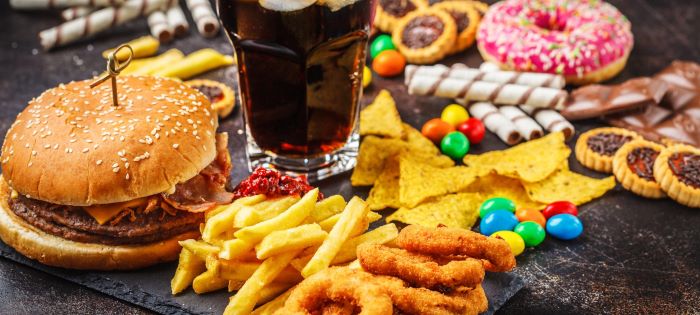
Consider that fast food is consumed by 85 million US citizens each day. Several chains are the primary suppliers of many school lunches. Some 30 million school meals are served to children each day. For millions of underprivileged children in the US, these meals are their only access to nutrition.
In 2022, Moms Across America (MAA) and Children’s Health Defense (CHD) commissioned the testing of school lunches and found that 5.3 per cent contained carcinogenic, endocrine-disrupting and liver disease-causing glyphosate; 74 per cent contained at least one of 29 harmful pesticides; four veterinary drugs and hormones were found in nine of the 43 meals tested; and all of the lunches contained heavy metals at levels up to 6,293 times higher than the US Environmental Protection Agency’s maximum levels allowed in drinking water. Moreover, the majority of the meals were abysmally low in nutrients.
As a follow up, MAA, a non-profit organisation, with support from CHD and the Centner Academy, recently decided to have the top ten most popular fast-food brand meals extensively tested for 104 of the most commonly used veterinary drugs and hormones.
The Health Research Institute tested 42 fast-food meals from 21 locations nationwide. The top ten brands tested were McDonald’s, Starbucks, Chick-fil-A, TacoBell, Wendy’s, Dunkin’ Donuts, Burger King, Subway, Domino’s and Chipotle.
Collectively, these companies’ annual gross sales are $134,308,000,000.
Three veterinary drugs and hormones were found in ten fast food samples tested. One sample from Chick-fil-A contained a contraceptive and antiparasitic called Nicarbazin, which has been prohibited.
Some 60 per cent of the samples contained the antibiotic Monesin, which is not approved by the US Food and Drug Administration for human use and has been shown to cause severe harm when consumed by humans.
40 per cent contained the antibiotic Narasin. MAA says that animal studies show this substance causes anorexia, diarrhoea, dyspnea, depression, ataxia, recumbency and death, among other things.
Monensin and Narasin are antibiotic ionophores, toxic to horses and dogs at extremely low levels, leaving their hind legs dysfunctional. Ionophores cause weight gain in beef and dairy cattle and are therefore widely used but also “cause acute cardiac rhabdomyocyte degeneration and necrosis”, according to a 2017 paper published in Reproductive and Developmental Toxicology (Second Edition).
For many years, ionophores have also been used to control coccidiosis in poultry. However, misuse of ionophores can cause toxicity with significant clinical symptoms. Studies show that ionophore toxicity mainly affects myocardial and skeletal muscle cells.
Only Chipotle and Subway had no detectable levels of veterinary drugs and hormones.
Following these findings, MAA has expressed grave concern about the dangers faced by people, especially children, who are unknowingly eating unprescribed antibiotic ionophores. The non-profit asks: are the side effects of these ionophores in dogs and horses, leaving their hind legs dysfunctional, related to millions of US citizens presenting with restless leg syndrome and neuropathy? These conditions were unknown in most humans just a generation or two ago.
A concerning contraceptive (for geese and pigeons), an antiparasitic called Nicarbazin, prohibited after many years of use, was found in Chick fil-A sandwich samples.
The executive director of MAA, Zen Honeycutt, concludes:
The impact of millions of Americans, especially children and young adults, consuming a known animal contraceptive daily is concerning. With infertility problems on the rise, the reproductive health of this generation is front and center for us, in light of these results.”
MAA says that it is not uncommon for millions of US citizens to consume fast food for breakfast, lunch or dinner, or all three meals, every day. School lunches are often provided by fast-food suppliers and typically are the only meals underprivileged children receive and a major component of the food consumed by most children.
Exposure to hormones from consuming concentrated animal feeding operations (CAFOs) livestock could be linked to the early onset of puberty, miscarriages, increasing incidence of twin births and reproductive problems. These hormones have been linked to cancers, such as breast and uterine, reproductive issues and developmental problems in children.
So, how can it be that food – something that is supposed to nourish and sustain life – has now become so toxic?
Corporate influence
One answer lies in the influence of a relative handful of food conglomerates, which shape food policy and dominate the market.
For instance, recent studies have linked UPFs such as ice-cream, fizzy drinks and ready meals to poor health, including an increased risk of cancer, weight gain and heart disease. Global consumption of the products is soaring and UPFs now make up more than half the average diet in the UK and US.
In late September, however, a media briefing in London suggested consumers should not be too concerned about UPFs. After the event, The Guardian newspaper reported that three out of five scientists on the expert panel for the briefing who suggested UPFs are being unfairly demonised had ties to the world’s largest manufacturers of the products.
The briefing generated various positive media headlines on UPFs, including “Ultra-processed foods as good as homemade fare, say experts” and “Ultra-processed foods can sometimes be better for you, experts claim”.
It was reported by The Guardian that three of the five scientific experts on the panel had either received financial support for research from UPF manufacturers or hold key positions with organisations that are funded by them. The manufacturers include Nestlé, Mondelēz, Coca-Cola, PepsiCo, Unilever and General Mills.
Professor Janet Cade (University of Leeds) told the briefing that most research suggesting a link between UPFs and poor health cannot show cause and effect, adding that processing can help to preserve nutrients. Cade is the chair of the advisory committee of the British Nutrition Foundation, whose corporate members include McDonald’s, British Sugar and Mars. It is funded by companies including Nestlé, Mondelēz and Coca-Cola.
Professor Pete Wilde (Quadram Institute) also defended UPFs, comparing then favourably with homemade items. Wilde has received support for his research from Unilever, Mondelēz and Nestlé.
Professor Ciarán Forde (Wageningen University in the Netherlands) told the briefing that advice to avoid UPF “risks demonising foods that are nutritionally beneficial”. Forde was previously employed by Nestlé and has received financial support for research from companies including PepsiCo and General Mills.
Despite what industry-backed scientists may say, increased consumption of UPFs was associated with more than 10 per cent of all-cause premature, preventable deaths in Brazil in 2019, according to a 2022 published peer-reviewed study in the American Journal of Preventive Medicine.
In high-income countries, such as the US, Canada, the UK and Australia, UPFs account for more than half of total calorific intake. Brazilians consume far less of these products than countries with high incomes. This means the impact would be even higher in richer nations.
In a 2016 report by the research and campaign group Corporate Europe Observatory (CEO), it was noted that obesity rates were rising fastest among lowest socio-economic groups. That is because energy-dense foods of poor nutritional value are cheaper than more nutritious foods.
At the time, key trade associations, companies and lobby groups related to sugary food and drinks were together spending an estimated €21.3 million annually to lobby the EU.
One of the best-known industry front groups with global influence is the International Life Sciences Institute (ILSI). In January 2019, two papers by Harvard Professor Susan Greenhalgh in the BMJ and in the Journal of Public Health Policy revealed ILSI’s influence on the Chinese government concerning issues related to obesity.
A 2017 media report noted that ILSI-India was being actively consulted by India’s apex policy-formulating body – Niti Aayog. ILSI-India’s board of trustees was dominated by food and beverage companies. ILSI’s expanding influence coincides with India’s mounting rates of obesity, cardiovascular disease and diabetes.
In 2020, a study published in Public Health Nutrition revealed details about which companies fund the group.
ILSI North America’s draft 2016 IRS form 990 shows a $317,827 contribution from PepsiCo, contributions greater than $200,000 from Mars, Coca-Cola and Mondelez and contributions greater than $100,000 from General Mills, Nestle, Kellogg, Hershey, Kraft, Dr. Pepper Snapple Group, Starbucks Coffee, Cargill, Unilever and Campbell Soup.
Professor Janet Cade told the recent media briefing in London that people rely on processed foods for a wide number of reasons; if they were removed, this would require a huge change in the food supply. She added that this would be unachievable for most people and potentially result in further stigmatisation and guilt for those who rely on processed foods, promoting further inequalities in disadvantaged groups.
While part of the solution lies in tackling poverty and reliance on junk food, the focus must be on challenging the power wielded by a small group of food corporations and redirecting the massive subsidies poured into the agrifood system that ensure massive corporate profit while fuelling bad food, poor health and food insecurity.
A healthier food regime centred on human need rather than corporate profit is required. This would entail strengthening local markets, prioritising short supply chains from farm to fork and supporting independent smallholder organic agriculturalists (incentivised to grow a more diverse range of nutrient-dense crops) and small-scale retailers.
Saying that eradicating UPFs would result in denying the poor access to cheap, affordable food is like saying let them eat poison.
Given the scale of the problem, change cannot be achieved overnight. However, a long food movement (leading up to 2045) could transform the food system, a strategy set out in a 2021 report by the International Panel of Experts on Sustainable Food Systems and ETC Group.
More people should be getting on board with this and promoting it at media briefings. But that might result in biting the hand that feeds.
—
Colin Todhunter specialises in development, food and agriculture and is a Research Associate of the Centre for Research on Globalization in Montreal. You can read his “mini e-book”, Food, Dependency and Dispossession: Cultivating Resistance, here.
Support Off-Guardian:
No, it’s an unseen made up unicorn bug called a virus.
Its quite simple: Avoid all foods made with or that state on the packaging: ‘Made with bioengineered ingredients’ or are produced with high fructose corn syrup, artificial sweeteners (aspartame etc) & colors (i.e. red #40). If you follow these basic guidelines you’ll be alright.
As long as we have CORPORATIONS which have a license to murder for profit, this will not change.
Allowing corporate charters for PROFIT rather than the public good has caused the fall of the republic.
The founders fought the revolutionary war over corporate for profit charters (East India Tea company which used to be A&P grocery)
Yes the food is poison.Many decades ago when i was in the prison camps for kids, i was a top athlete and recall reacting to processed food sold in the cafeteria(symptoms including but not limited to muscle spasms, tight muscles, pain, bloating, dizziness, extreme fatigue, depression and sometimes anxiety)…my reactions were probably made worse by the vaccine damage that nearly cost me my life as an infant…it may leave the blood brain barrier open and make the damage caused by food additives more discernible…since the long ago, i have read that they are adding increasing amounts of additives in the foods by the decade.
Yes there are pesticides in the food but the one thing they DO NOT ever seem to talk about is the EXCITOTOXINS IN THE FOODS.
I have watched in a laboratory, a brain neuron treated with Free Glutamate repeatedly rapidly fired until it died…
Much like the vaccines it hits your nervous system and destroys it.
Yes there are alot of industry paid “fact checkers” who will tell you it is GENERALLY RECOGNIZED AS SAFE AND HAS BEEN EXTENSIVELY TESTED…as in most of these corrupted industry run trials-Aspartame was used as the placebo so they could claim the same reaction rate as placebo.
((for those who do not know, people who react to Free Gutamates usually react to Aspartame.)
So you wonder why the autism and ADD? all you MAY have to do is open the blood brain barrier with a vaccine and then stack the foods with excitootoxins and viola’! destroy people’s minds and brains and create a mental health care epidemic…the added bonus is you also get a population in CHRONIC PAIN..imagine all the spine surgeries and pain pills you can sell…
YES the majority do NOT REACT THAT STRONGLY to the foods, but that does not mean that the damage is not being done to them as well…they just do not notice it.
Since the corporations have created a cesspool that is worse than any jungle on the planet where you have to run through mazes daily to exhaustion (most people) are too tired taking care of their kids and keeping house after the “job” to actually cook proper meals-this makes convenience foods a necessity whereby big corporations can take waste products- add excitotoxins- which are flavor enhancers, and get you and your family to literally eat garbage.
If you want to know about Glutamate Read Dr.Russell L. Blaylock’s “Excitotoxins: the Taste that KIlls”, or “In Bad Taste”, Debbie Angelsey
https://www.msgmyth.com/
Jack Samuels Truth in Labeling
https://truthinlabeling.org/about.html
And i am sure there are others
BTW free glutamates makes the foods addictive so people overconsume, and it can swell you up with edema- so guess where obesity epidemic comes from?
As for the alleged “Food Scientists” in the above article:
“It is difficult to get a man to understand something, when his salary depends on his not understanding it.”
― Upton Sinclair
It is indeed very toxic, I used to have some food from McD/Kfc/BK alongside the highway once or twice a year and I could literally feel how extremely unhealthy that shit was, it’s like eating some melted polyethylene with burned oil aftertaste plus it always fucked with my digestive system and made me sleepy and weak, i can’t imagine how people are able to regularly have this kind of food – goyslop. Always prepare and carry your own food in advance or just buy some fruits, bananas and nuts – very good source of carbs and energy boost. Or, if you are really hungry and have no time to prepare your food, go to some Asian or Arab food stall, it’s still at least tasty and resembling the actual food even if the quality may not be the best.
Do people even really know that ALL YOUR FOOD IS A NUTRIONLESS MATRIX IMPREGNATED WITH CARCINOGENS AND OTHER ASSORTED TOXINS ?
The food giants all exploit the fact that people are easily addicted to sugar, salt and fat and will part with too-much-money to satisfy their craving for a quick burst of pleasure. Poor people shut their children up for a while with sugar
“But that might result in biting the hand that feeds.”
Well, of course, i would bite any hand trying to feed me poison.