
Cassidy Morrison – Daily Mail.com Sept 4, 2023
- More than 40million adults use marijuana, more than double 10 years ago
- Long-term effects of recent legalizations are just now becoming known
- READ MORE: Chronic cannabis use raises major depression, bipolar risks
A nationwide social experiment launched by a wave of marijuana legalizations is finally bearing results in the form of higher depression rates and addiction.
It started in 2012 in Colorado and Washington, setting off a domino effect that has seen restrictions lifted across nearly 40 states, including 23 where it’s legal to use marijuana recreationally.
The Biden administration now aims to demote the drug from its schedule I status, which lumped it in with heroin and LSD, to schedule III, the first step toward total decriminalization at a federal level.
Marijuana has been lauded for its purported benefits for pain relief and anxiety treatment among other applications, all while believed users could not become addicted.
Now, more than 40million adults – 16 percent of the population – use marijuana, a rate that has more than doubled in the last 10 years amid a seismic cultural shift that sees more acceptance toward medical and recreational use.
But it turns out the seemingly harmless drug may not be so benign and could pose physical and mental health issues.
DailyMail.com detailed the health risks and benefits associated with cannabis use.
Links to severe mental health issues
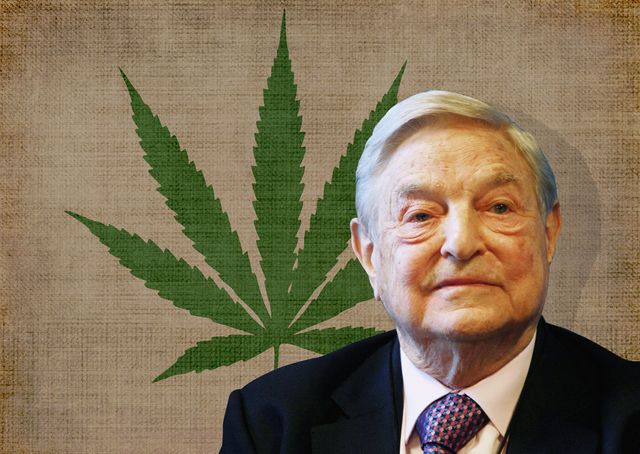
Although marijuana is considered to be a low-risk drug, consistent use can drive up a myriad of health risks including major depression, poor sleep, and dependence. George Soros has sponsored a campaign to change marijuana legalization since 1994. Click to enlarge
To much of the public, marijuana is relatively innocuous compared to illicit narcotics.
But many researchers have come to the conclusion this view is false, especially when a person uses the drug on a regular basis.
Researchers from the Aarhus University Hospital in Denmark recently delved into the records of more than 6.6 million people in Denmark born between 1985 and 2021 and found of those with cannabis use disorder – defined as being unable to stop using in spite of it causing damage to their health and social lives – about 41 percent of those individuals were diagnosed with major depression.
They also found chronic marijuana use quadrupled a person’s risk of being diagnosed with bipolar disorder.
There have been many anecdotal reports of high-potency marijuana vapes causing psychotic breaks, suicidal thoughts, and deaths by suicide.
Additionally, chronic cannabis use has been known to trigger the onset of schizophrenia and psychotic breaks.
A study published in the May issue of the journal Psychological Medicine found cannabis use disorder was linked to about 30 percent of schizophrenia diagnoses in young Danish men in the year 2021.
Dr Nora Volkow, the director of the federal National Institute on Drug Abuse who co-authored the study has proven a staunch advocate for tighter rules governing access to the drug.
She said, according to their findings, ‘As access to potent cannabis products continues to expand, it is crucial that we also expand prevention, screening, and treatment for people who may experience mental illnesses associated with cannabis use.’
And as marijuana limits have loosened, a black market industry of high potency strains and vapes has emerged, with such products that provide a high much more potent than previous ones.
Regular cannabis use can disrupt the delicate balance of neurotransmitters responsible for regulating mood and motivation.
Many people who already live with depression may self-medicate with marijuana for its calming abilities, but continued use could actually have the opposite effect.
It IS addictive
Contrary to popular belief, it is possible to become addicted to cannabis. The drug is becoming easier to access and more potent in more places, increasing the risks of addiction.
New research from University of Washington and Kaiser Permanente Washington Health Research Institute estimates 21 percent of marijuana users had become addicted.
Smoke and mirrors. There’s a pun in there somewhere.
I don’t smoke weed or use any illegal drug, and I’ve never smoked.
In France, you can legally buy weed. If you are stopped, it must be in the packet you purchased it in and the receipt which was stapled to that packet must be their when the Nazi police inspect it.
You can’t take you personal use weed back into the UK. Now, I don’t know, but I think is use is pretty prevelent across England. When you get to London, the City is awash with weed. The smell and smoke is everywhere, but you can’t legally buy it, and the reason for this is that weed is a huge component of organised crimes takings, and there’s no VAT on drug sales in the UK, and these sales go into the big bust banks where the money is laundered.
If you legalised weed in the UK, the banks would wince from their losses, and another thing, the UK Nazi regime uses estimated drug and vice revenues to boost GDP, which has fallen 0.5% over the last year, and 30% since Brexit.
Now I have a dilemma. Do I carryon buying wine with the new 50p tax hike, or you I move to cheaper weed? Such as life in Nazi Britain.
Note, they go on about the Netherlands and Amsterdam, but no one mentions that you can legally buy weed in France from vape shops and tabacs, which are everywhere.
Excellent post! The price of going to pot! I’m livid about people’s lives going up in smoke! A smoke-screen, indeed, right into Satan’s seductive, seedy, smoky set-up! Here’s another expose of this cannabis crap!
“Brutal Marijuana Studies Now Emerging – It Should Never Have Been Fully Legalized”
(Excerpts:) “For years, marijuana advocates claimed that if only America would loosen restrictions, we’d all see how beneficial the drug is. But now, more than 10 years after the first efforts to do just that, we are seeing that the critics were right…mental illness to addiction and impaired driving…an increasing problem everywhere it is being tried…[it’s] just as addictive as any other drug. And 41 percent of users have developed major problems with depression…quadrupled risk of developing a bipolar disorder and added to a rise in psychotic breaks, including thoughts of, and deaths by, suicide, with pot linked to 30 percent of cases of schizophrenia…adults who used cannabis 20 or more times in the previous month were more likely than non-users to get six or fewer hours of sleep per night…pregnant women will put themselves at a 70 percent higher risk of birth defects if they regularly use pot during pregnancy, and they will be 2.3 times more susceptible to a stillbirth…heavy pot smoking is just as bad on your body as heavy tobacco smoking. Smoking anything — pot or tobacco — increases the risk of coronary artery disease and also puts users at an increased risk of lung disease.”:
“https://www.westernjournal.com/brutal-marijuana-studies-now-emerging-never-fully-legalized/
It is one of the downsides of Free Enterprise that a lot of people are willing to sell a product just because it is addictive, and get millions of customers: you almost get a society composed purely of addictions
They took their lessons from the mother of white treachery,the dutch whore of babylon,the orange narco cartel.they were the world ‘s first international drugs syndicate, cultivating poppies in Indonesia to dump it on the chinese,as a weapon of war.that is what the voc (united east India company)was about.they still take pride in their voc mentality and their ‘golden century’ ,pretending it was a spices trading company .in reality they never brought large amounts of spices to Europe,as their ships were too small to carry any bulk cargo.most of their trade was done locally in the east and the Carribbean .on their way back they would bring gold and silver made from this trade.they also brought chinese porcelain,silk and other artisanal products of Chinese origin .
Future fast forward to 1878,they brought coca plants from Bolivia to Indonesia for cultivation.these coca leaves where processed in the royal Dutch cocaine factory in amsterdam, established in 1900.this is the cocaine that fueled the leather jacketed jewish Bolsheviks .in the 70’s they supposedly stopped this trade.they offshored all production to Latin America,but remained the greatest cocaine dealers of the world through the port of Rotterdam.klaas bruinsma,a dutch elite kid ,with the orange hag mabel wisse smith were the first cocaine cartel leaders/dealers in the world,setting an example, laying the seeds of things to come.that is the time when cocaine was glamourised/advertized in pop culture through hollywood and the Porsche driving yuppies of the financial districts.
If YOU are weighing pros against cons, there are NO pros here, ONLY cons. Cons like; “it IS addictive”, (an unproven assertion), but to instill even more fear and trepidation, IF you get old, your hair MIGHT fall out, too (trust me). Another definite maybe – “it turns out the seemingly harmless drug may not be so benign” and for even more proof, there’s a picture of George Soros with a leaf behind him.
Like the zillions of article/hit pieces before it, this doesn’t settle any science, or give you any real facts, either, just more Fake Evidence Appearing Real.
But, hey, daily mail, so there’s that.
In Britain and most of Europe cannabis is graded as a class C drug but in the USA it has always been classified as a class A drug along with heroin and cocaine etc. . Despite thousands of years of usage of this natural growing herb no deaths have been attributed to its use unlike legal drugs like aspirin , paracetamol , alcohol etc The hemp plant , male plants have nil THC , used to be used for many purposes like ropes, clothing , food , and could be used to replace plastics but because of these bogus health claims it`s legal growth and usage is highly restricted around the world. Big pharma is strongly opposed to any natural cues and medications because the make billions from chemical products ALL with horrendous side effects which articles like this one never mention of course .
This hag mabel wisse smith is a modern mata Hari, working on behalf of the royals as an agent of change.klaas bruinsma became a folk hero after he was supposedly assassinated.so by 1990 this cocaine business was taken over by the morroccans,first as street dealers and eventually the largest players with death squads,beheadings and assassinations.even crime reporters and a lawyer were killed.
As with all things filthy and addictive,again you will find the Dutch/orange hidden hand at work.they are the ones that created this weed industry as a countermeasure to the importation of hashiesh.but that was not their intention,they wanted the whole world to be served weed and addicted.the only way to realise this was by using technology to grow unlimited amounts of weed anywhere,anytime at affordable prices,instead of natural hashies wich can only grow in certain areas, dependant on the weather.also it had to be smuggled ,raising its price.so Philips created indoor growing lamps ,the chemical industry created nutrients and the seed industry began creating seeds with ever an growing thc potency.the dutch state began to revise all previous literature on the bad effects of weed, calling it a recreational drug.coffee shops were allowed to do business,even tough cannabis was illegal,up until today.this was a time when they closed all youth/neighborhood centers.so the only place these kids could go to was the coffeehop around the corner,were they blew their brains on cheap homegrown weed,with a potency never seen before.the minimum age for entrance was 16 but it was not enforced.that is how the racist state of the Netherlands maintains its power,by drugging every body down from a young age.this is soma for the people in a brave new world.i remember when Amsterdam was the global avant garde of the modern weed culture,when bodies from all over the world flocked to amsodom to immerse themselves in this coffee shop culture.
Of course it’s difficult to imagine these dopes can get any more stupid.. or that you could actually fit any more imbeciles in the joint…
But apparently that’s not the score…
These bodies were impressed by the liber-al-legism experienced in this filthy orange city-state,all deviancy unimaginable could be found here under the guise ;vrijheid blijheid (liberty happiness),soon to be exported to a city near them.be it homo-marriage,narco-kultura and foreigners of all hues and persuasions.
How can we blame Marihuana? Do we have a problem with Nature?
All the problems associated with this matter amount to, as always, man itself…
Check your own mind…how is its relation with your soul…is this a harmounious one? or is it a bag of wild cats?… if you have a problem, that is where you should be checking out whats going on…
I find two problems people can wrongly attribute to this gourgeous plant, although in reality are due to his own actions:
1- you´re not consuming the natural plant, but the “boosted” version because man, had the “great idea” to manipulate its natural form in accordance with…..his sick mind.
2- you do too much.
If you lack control over yourself, anything could be a problem…
Paraphrasing Paracelso: The dose is the difference between the medicine and the venom.
BTW, is Rixon a pot hater?
Hmmm…
Hi Rixon, feel at home to answer, heh heh…
I couldn’t disagree any more with this article if it was twice as wrong!
I have used cannabis since 1968, daily use since the eighties.
I have grown my own supply for several years and am still a contributing member to society.
A more comical, yet just-as-wrong film, Reefer Madness, can be viewed on YouTube for your cultural enhancement.
Even now, the cannabinoid researchers are finding novel applications for this wonder plant.
Israel has been at the forefront of a lot of cannabis research, but that alone can’t dissuade one’s curiosity.
Even Hitler was right, sometimes😉
Notice all these younger men in their 20s/30s with gray hair on their beards? That’s from smoking weed.
Rats in a cage press the lever to get the pellet all day long because there’s nothing else to do. Let them have a normal Rat life with other rats doing rat things and they don’t. Maybe life just sucks when everything is going to hell and that makes people depressed. Have you looked around lately?
Don’t forget this is from the same clowns that brought you the Chemical Imbalance theory of Mental Illness. A theory that doesn’t have a single proven study of validity. Ever notice Psychiatrists don’t require a Blood Test before proscribing? What’s up with that?
Ir maybe the Beer Company’s have lost enough customers that are fighting back with some DisInfo.
That’s why ZOG heavily promotes it in their TV shows/movies/social media. The more degenerate/weaker the population is, the more secure/stronger the Jewish parasite becomes. Remember that TV trash a few decades ago called ‘That 70’s Show’…every episode they showed these teenagers smoking weed. This was done to popularize it & compel the youth watching this filth to use it too. Monkey see, monkey do.
all regular consum of any drugs (alkohol, opium,
heroin,cocain,gras, met etc) changes + affects brain
and krokodil even rest of body substance .
This is nonsense.
THC content in flower tops out at around 25-30%
Thats what you’d normally call “marijuana”
Smoking weed doesn’t make you crazy… seriously… is this Reefer Madness all over again?
Now that said, there are other forms of THC (nobody should be using the term marijuana any longer) that have evolved into highly potent methods.
Shatter, Diamonds, or other highly purified products can be upwards of 90% THC.
That CAN cause problems for a lot of people because the extract is so potent that even a small amount could send someone on a bad acid-like trip for the better part of a full day – or more depending on how much was ingested.
But to say “marijuana causes schizophrenia” is patent BS.
This is exactly what Joe Friday & Bill Gannon warned about & instructed against when making arrests or in a public relations seminar in the late’60s/early 70s ‘Dragnet’ tv show. The hippies on the show poo-pooed this knowledge but a few paid attention. We boomers are reaping what we have sewn.
Shude B–CANNABIS IS FROM nATURE (caps error) and Nature is good for us? even the animals that poison with one bite, or a cliff you can fall off, or minus 70 degree temperatures that freeze you? or a hot and dry desert, or a shark in the water, or a stinging jellyfish? Idiot Bob Marley made that argument–it’s Nature so it’s God, and, God, him like me, ya nar
Elites are more than happy when the masses of goyim are sedated, docile and inhibited (promoting and decriminalization of weed, antipsychotic drugs massively distributed and pushed by big pharma, etc..) Plus the fact that genetically modified weed today has at least 10 times more THC than let’s say 30 years ago. Soon i’ll have a serious problem to get a nicotine vape or affordable pack of ciggies yet the weed will be totally normalised and promoted.
Comments by Liar are spot on. Furthermore, the Dutch East India Company had a factory where they made cocaine that was supplied to troops on both sides of WW1. Years later, the same factory was occupied by the Hells Angles. In WW2, the British airforce was making 1 million hits of meth per day.
Marijuana was/is a strong smelling grass with little amounts of thc,if any at all.this is what the hippies smoked before the influx of mor(occ)ons and their native hashiesh into the western world through the Netherlands.this land was an international market place for everything illegal and illicit,from women to drugs to weapons.again the dutch narco-state would be the world’s biggest mover of hashiesh on the high seas through klaas bruinsma and his associates,the modern pirates/buccaneers.well into the nineties this relationship between state and crime was laid bare in parliamentary hearings.the most critical member of this committee killed .
so much nonsense written here reminds me of calling into a local bbc news programme some years ago upon which the young presenter announced firmly
“of course the cannabis of today is 30 times stronger than that of decades ago”
I wanted to know when he last smoked weed? and how, him being about 30,
would he know about so long ago anyway? a smoker of woodbines since the age of nine and of weed from about 13 onwards,
I had a “psychotic” experience once at age 18 that nearly sent me barking for life!
as a result of smoking a viciously strong SA weed known as “Dagga”
in SA smokers mixed it with a sedative Mandrax, in order to smoke it without tripping as if on Acid not always pleasant!
I unwittingly smoked half of a fat joint of it pure, no tobacco.
a horrible terrifying experience followed mere seconds later that lasted for quite some years. “the horrors”
though used to the odd little panics or paranoiac imaginings over time,
this was one step beyond!
having had and endured the experience changed aspects of my life eventually for the still continuing better.
definitely wasn’t “schizophrenia” it was waking with a brain cracking jolt to the realisation that I was Alive for real and in the same instant lost and alone in an empty cosmos…..
I sought help from the familiarity of “normalcy” and sanity represented in the surrounding bricks and mortar,there was non to be had.this certainty cracked the brain into even smaller smithereens.
my journey began from that point
a lot of absolute twaddle in the comments here!
Kudos to the people that know who they are…
one final admission,
I will concede that weed can be dangerous, fatal in fact if handled incorrectly!!
drop a 25 KG sack of it onto someones head from a tall building!
you can’t tell me that won’t kll them!
!https://open.spotify.com/search/the%20logical%20song
“The Emperor Wears No Clothes” By Jack Herer
https://www.jackherer.com/emperor-3/
The many many important uses for Cannabis and Hemp all laid out for you. That is if you have an open mind 🙂
Sound track for your reading pleasure:
https://www.youtube.com/watch?v=KQnzeKKg7Yc
Psycho-Techno mesmerism,
with a biog dash of pharmacopeia.
lol lewis..
There is a big division between indoor and outdoor grown weed.the outdoor variant is low on thc,whereas the indoor variant is a gmo, chemical thc-bomb.until recently they had growshops all over the country,where you could buy all supplies necessary to start your own plantation.nowadays most weed comes from spain,as it is a huge country with less social control,making it easier for brown or yellow folks to blend in amongst the Spaniards and create fronts for their operations.there have been busts of large warehouses used to grow weed on an industrial scale,all with state of the art electronic climate,light and water/ nutrient control.the thing is to avoid paying for the electricity ,as it would take a big chunk out of the profits.also consuming mega amounts of electricity for a warehouse raises a flag with the utilities company.this is why electricity has to be tapped illegally and unmetered.the orange plan for global sedation has been very successful.from domestically growing weed in basements and attics to large warehouses in spain and the usa,in order to keep up with demand in an ever expanding market and provide for the ever growing mass of happy depressives .
Holland got its Jew Central Bank even before England, which explains what it turned to. There is not a lot of great Culture out of Holland–I cannot think of a Dutch composer or great author of anything
Moderate your ass Rupert!