
Ian Fantom — Oct 1, 2022
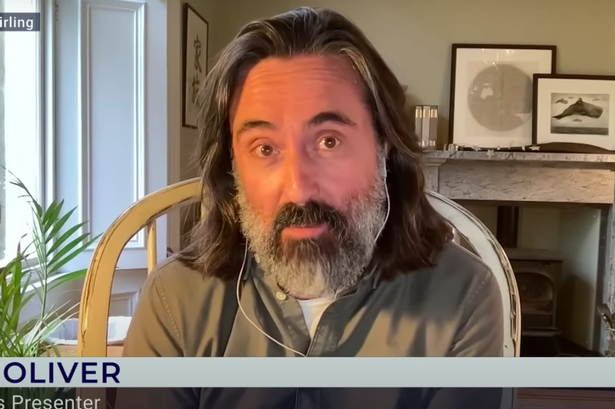
The way in which money is created out of nothing by central banks is well-know in the alternative information communities, but until now it has remained a taboo topic on all the generally available broadcasting channels, and no MP dare even mention it. That makes Neil Oliver’s monologue on The Story of Money on Saturday evening (1 October) all the more remarkable. At last the cracks are appearing in the money supply scam that has been controlling all aspects of our lives.
—
I was first targeted in 2003, and was bewildered at the cause. I had merely proposed a centenary exhibition for Esperanto Association of Britain at the London Language Show, featuring the main driver of the cause in the UK in those pioneering days, the then megafamous journalist W T Stead. I immediately came under verbal ridicule from the Editor of The British Esperantist, and that, together with some other issues, led to my early withdrawal as their Information Officer.
A year later, when the centenary publicity would have occurred, I and W T Stead became the subject of a leading article of ridicule in The British Esperantist [ref: https://legacy.esperanto.org.uk/lbe/arkivo/957/01.html]. I approached the President, who went into a melt-down, accusing me of being paranoid and childish. He was supposed to be a university professor, but he was really going over the top in behaving like a three-year-old. It was that that led me to go onto their committee to find out just what was going on.
I first heard of the creation of money by the central banks out of thin air from Ben Dyson, who was giving lectures in various towns, prior to setting up Positive Money [ref: https://positivemoney.org/]. Their objective was to bring about more public understanding of how money is created out of nothing, then lent out at interest. They did a brilliant job, showing how a child could understand it.
I asked a graduate in economics what they learned at university about the money supply. He told me that they’re not interested in that sort of thing; they’re interested only in how to make money. So it seems that at all levels people are just looking out for themselves, irrespective of the damage they may be doing to others, and to democracy itself. That’s not a conspiracy; it’s more like a top-down pyramid.
Then eventually Ben Dyson left Positive Money, to work for the Bank of England. Positive Money stopped talking so much about the money supply, and judging from their newsletters seemed to be putting virtually all their efforts into the climate change issue, at first saying they were trying to persuade the governor of the Bank of England to put money into the Climate Change lobby. Whatever the original intention of Positive Money may have been, it seemed to me at that stage that it was behaving very much as one would expect from controlled opposition.
The marginalised solicitor and legal advisor to the Esperanto Association at one stage phone me to say that he had just read an amazing book, ‘None Dare Call It Conspiracy’ by Gary Allen. [ref: https://www.daupub.com/product-page/none-dare-call-it-conspiracy-by-gary-allen-with-larry-abraham] When he mentioned W T Stead I really pricked up my ears. He had been working with Cecil Rhodes in order to set up a secret society with the purpose of bringing about world peace. Or so he was told. Everything had to be confidential. Cecil Rhodes in his initial approach to Stead insisted that the only other person who knew about this venture so far was Lord Rothschild.
I replied that that was strange, because I’d just read an amazing book, too, called ‘The Brotherhood of Darkness’ by Stanley Monteith. [ref: https://www.abebooks.co.uk/BROTHERHOOD-DARKNESS-Stanley-Monteith-Highway/31290736533/bd] This, too, had reported on the Stead-Rhodes business. Most references went back to Carroll Quigley’s books ‘The Anglo-British Establishment’ [ref: http://www.carrollquigley.net/pdf/The_Anglo-American_Establishment.pdf] and ‘Tradegy and Hope’ [ref: http://www.carrollquigley.net/pdf/Tragedy_and_Hope.pdf]. I followed these through, at first trying to figure out whether Stead was a goodie or a baddie. But Stead in the end told Rhodes that he should have been sent to prison for what he had done in connection with the Jameson Raid, a failed false-flag attack on the Boers, aimed at setting off the Second Boer War. Stead launched the Stop The War Committee, and later wrote that he had been enticed by Rhodes by the ‘magnetism of his personality’. Rhodes’s secret society eventually was responsible for a network of Round Tables, with influence behind the scenes in setting up the network of central banks.
In proposing to feature W T Stead in the Esperanto centenary exhibition I had clearly trespassed onto the Establishment’s territory. Stead was an everyday name in his day, having invented the ‘new journalism’, which targeted a new generation of literate working people. He dared to uncover stories about people in high places, first gaining fame, or notariety, in exposing a network of child prostitution in high places. He even foresaw the eventual cause of the Great War, and undertook a mystery visit to Russia, where he gained an audience with the Czar to explain it all.
His death in the Titanic disaster of 1912, together with that of Lord Astor, made front page headlines. Lord Astor, and some of the others who died, were leading opponents of the setting up of the Federal Reserve, which was to follow in 1913.
A monument on the Thames Embankment opposite The Temple Underground station stands to this day. Yet his name was all but airbrushed out of history [ref: https://www.attackingthedevil.co.uk/]. What I had experienced was undoubtedly part of that airbrushing out of history.
The manufacture of money out of thin air by unaccountable bankers is at the centre of virtually every control mechanism in Western politics today. I had to conclude that there was only one thing more central to the Globalist agenda than that, and that was control of the language, without which they could not have set up the network of central banks in the first place.
I think there is now a real danger that they will apply that control of language to denigrate Neil Oliver for his outspokenness over such a massive taboo topic, just as they did against Jeremy Corbyn, who was trying to propose his own Corbynomics. I know the guy who provided him with a DVD of The Money Masters [ref: https://www.youtube.com/watch?v=uUy9ErVwpQk] years ago, for which he was enormously grateful. Aljazeera has just produced a series of programmes about how that denigration campaign was organised within the Labour Party. [ref: aljazeera_labour] I myself gave Jeremy Corbyn a CD of my Esperanto research reports, more-or-less as a warning to him; he was especially interested as a former secretary of the Esperanto Parliamentary Group.
The Fed is now about to start a test run for Chinese-style social credits. [ref: https://www.federalreserve.gov/econres/feds/credit-scores-social-capital-and-stock-market-participation.htm] This is getting really dangerous. We should all be watching out for any spurious insinuations of ‘Fascism’, ‘Conspiracy Theory’, ‘Paranoia’, ‘Antisemitism’ etc in the wake of this enormously significant cracking of the money supply taboo. Neil Oliver deserves a deep expression of gratitude from us all.
= =========== =
All UK and USA politicians are Globalists
what that means is that they see the world not in its separate countries but,
under just one ruling body.
The EU was based on an original idea by Adolf Hitler as a bulwark
against Russian Communism, but today its run by the jewbankers.
The European Commision has never had an audit, as many millions go missing each year,
its run for the benefit of the banks, the idea being that these power blocks of countries
would amalgamate down and down until there was just one single power block run from Jerusalem.
The jews claim they are gods favourite race, hardly as they dont believe in him,
they say Moses carried down from the mountains these 10 huge carved stones with the cammandments on them, so why dont they follow these commandments ?
because its all bullshit.
The jews want Globalism which is one world currency one world army one world police
one world centre for propaganda news etc
This is why Rothschild threatened revenge on the UK for leaving his EU,
and this will start with a destroyed economy.
In two World Wars the spirit of Britain was exalted by the media, patriotism was the byword,
the news papers daily told of German atrocities, which were almost all fictitious, the real reason for W W 2 was that Adolf Hitler put the rothschilds in prison and distributed the money back
among the German people.
The one thing the Globalists cannot take is Nationalism, e g each nation wanting to keep
its national identity, culture and way of life, so the quickest way to spoil this is by the
mass people trafficking of immigrants, something each UK government has always wanted.
A brave Englishman once said
“England expects every man to do his duty”
Wil you stand up and be counted ?
The central bank scam has been exposed for decades and more. Nothing new here. The goyim sit either stunned and bewildered, or doped up and useless. The smart goyim are paid pennies to sell out their kinfold. The very rare goyim are dare stand up and not he bought is quickly killed, often to the cheers of his fellow goyim. It’s quite often a goyim stooge enforcer who will do the killing or arresting. Thanks Masons.
This video is merely revelation of the method and mocking the victims of the scam. They could reveal the vaccine deaths and 9/11 culprits in the mainstream and the Goyim will continue to sit like stunned mullets as their children are raped and eaten. At what point do we actually agree that the Goyim are actually the very cattle that their Judeo Masonic Bolshevik overlords proclaim?
*the very rare Goyim who dares to stand up and not be bought is quickly killed
The UK government through various wars fought for Rothschild have amassed a national debt of
£15.8 bilion this last quarter of 2022 alone.
The Bank of England is run by jewish bankers
if we nationlised the bank, it would be money owed to us, the people who own it.
We owe so much money it can never be repaid, they own us body and soul
You think you own your car ? you do not
you are now only the registered keeper.
you think you own your home ?
you do not, you are only the legal occupier
You think you own your children ? you do not they can come and take them any times they want and they can foster them out to pervert couples and they do.
You think you own your own body ? you do not when you die, unless you legally opt out
they can rob you of your organs, eyes thyroid glands etc and they do.
The jews own us, its time we took it all back.
The links are a bit messed up, but they are there. I think I forgot to save the latest editing. The link I intended to insert regarding Stead being forgotten was a trailer for the main website on Stead: https://www.youtube.com/watch?v=mC8thmKupmQ
I know this issue has been known about for a long time; the point of my article was that the elephant in the room is now being noticed, and so the whole facade on the secretive state is now breaking down.
Well said Neil Oliver
@Pan.
“At what point do we actually agree that the Goyim are actually the very cattle that their Judeo Masonic Bolshevik overlords proclaim?”
Indeed, they call us “Useless eaters” and in many cases they are right.
It is more useful to think of the “central bank system” than “central banks” per se. Central banks help facilitate the creation of money out of thin air for residential and business owners via the commercial banks. (“Commercial banks” represent the noninvestment wing of the UK High St banks. In the USA there is a separation between banks that provide loans and those that provide investment functionality that we don’t have…)
When Austrian economists allude to the “printing press” of government and central banks, they often neglect to mention that the primary dealers/buyers of government bonds use MONEY CREATED PRIVATELY to purchase government issue.
Further, the quantitative easing we have heard about where central banks purchase government bonds from institutions has caused an inflation of asset prices – stock market – rather than provided money for the wider economy. The “printing press” is thus not seen here either.
The term controlled opposition with respect to “Positive Money” has been mentioned. I think I was on their mailing list a few years ago, and came to the same conclusion about them. I recall it sent out an email requesting funds for some of its “young stars”. So, in respect of the usually mooted Austrian mechanism of the so called “printing press”, I suggest this is also a limited hangout since it misrepresents what goes on.
(I see Austrian economics as the Tweedledee to the Tweedledum of Marxist economics.)
***
Unfortunately, being famous and a “nice” bloke doesn’t mean one’s prognostications are the best fayre to be had on the matter, save the matter may register on the radar screens of awakening normies more than the more exact expositioners. But credit to Oliver, he is leveraging his “celebrity” status on the side of the angels…
I am very happy to be contradicted on my monetary analysis if someone can show the error of my reasoning. I too am a student, and despite the distance I’ve travelled in trying to understand the monetary system, I realise there are often complexities not helped by the lexicon of financial terms.
A Nursery Rhyme.
Sing a song of six quid,
I’ll pocket fifty-four,
Four and twenty grand, sir,
Why not borrow more?
And with your name to broker,
Accountants all shall sing
“And wasn’t that a 9 to 1,
Fractional reserve scam.”
The King is in his council house,
The Crown Estates have gone,
The Queen is in the privy
Pleasing a wealthy john,
A Rothschild in the garden
Is melting down the gold,
With lead and tin debasing
Its purity ninefold.
I say this now again: “useless eaters” came from mishearing Revilo Oliver, who said that the bLACKS AND OTHERS EAT, (CAPS ERROR), RATHER THAN CONTRIBUTE TO, CIVILISATION. See how the sentence has two meanings? The Blacks eat our civilisation. (For Simon Smith, and everybody else).
Simon Smith: “Further, the quantitative easing we have heard about where central banks purchase government bonds from institutions has caused an inflation of asset prices – stock market – rather than provided money for the wider economy. The “printing press” is thus not seen here either.”
Free money, or virtually free money, with no interest to pay back, or to pay out on return.
The problems started when Thatcher and Raygun deregulated the City and Wall Street. There was an exponential growth in funny dealings ushered in by the ex Apollo scientists who created many new products, and this led to a lack of grease, or cash, in the system. Even though the system doesn’t make any genuine profits, because money is cheap, so why would you stipulate a return on any investments? So we have a two tier system. The corporates who get free money and have financial institutions buy their stocks, and then we have your everyday business which relied on private investors, such as HNW individuals, crowd fund in, pawn brokers, family &, friends, and plain hard work.
One of the COLC is to put small and medium businesses under the cosh. They were under the cosh during Covid. The idea is to forces these businesses under banker control. And to do the same to the sheeple.
The problem with an affluent society, or a society which thinks it is affluent, is that they can’t be controlled.
Very hard to see where things are going, because, no one has been in this situation before. Truss let the cat out of the bag, by saying ‘We had no choice’, as in, the Bank Of England, via the BIS told the regime what to do, so they could have an excuse to flush another £65 billion into the system, which is a debt grease gun.
Funny, but where is my first comment?
When our best hope for improvement is for things to go from worse to bad then we are finished. And all because the people in charge who had just about all the money divvied out between them still didn’t think they had enough. When extracting so much wealth to the point society can no longer function, and having all that money but there’s now nothing being made to spend it on, it means in the end having all the money is just the same as having no money at all.
At the Battle of Beachy Head in 1690, the combined British and Dutch Fleets were soundly defeated by the French Navy. As a consequence, control of the English Channel was temporarily seized by France.
Roman Catholic France terrified William of Orange, an agent of the Frankfurt bankers and the Protestant usurper of the English throne. France’s victory at Beachy Head was the pretext, used by William III, to facilitate the founding of a central bank in England. This, despite the fact, that the Dutch had taken, by far, the heavier losses during the naval battle. The King’s call to rebuild the Royal Navy, was the signal for other agents of the Schiff-Rothschield axis to manoeuvre.
Lobbying began in 1691 with William Paterson’s proposals and continued until 1694, when the first Earl of Halifax, Charles Montagu, by his persuasions, managed to secure a Royal Charter for the establishment of the Bank of England.
By a provision of The Tonnage Act of July 1694, a central bank was conjured up, ostensibly in order to provide government with the funds to build war ships to restore British naval superiority. It was a ruse, of course. The financiers for whom Montagu spoke, would lend the British Government £1•2 million at an annual interest rate of 8% until the debt was paid and an annual administration fee of £4,000 would be charged to the borrower. That may seem reasonable enough so far but it was the further accommodations of The Tonnage Act which have brought us to where we are. The assorted private lenders were to be incorporated, as “The Governor and Company of the Bank of England,” creating a legal entity which was to be allowed certain banking privileges, amongst which, would be the right to issue promissary notes, based on the returns, guaranteed by legislation.
The government would repay the debt from tax revenues, therefore the Bank of England’s promissary notes were backed, from the first, not upon capital reserves but upon the labour of Britons themselves.
The Bank of England, from conception to foundation, was a jewish conspiratorial plot and it succeeded.
It should be noted that the Bank of England (or the Scottish banks) can only print paper money. The minting of coinage has never left the Crown’s control. The money supply in the UK is distinct from the American, in that regard.
I think Neil Oliver did okay. I was pleased that he included the Bradbury Pound in his capsule-analysis because it’s a lesser known aspect of British monetary history and an important one. The Bradbury was Britain’s Greenback but ultimately, it didn’t amount to anything more than an interim device to protect the Bank of England, while it foundered, prior to World War I.
Neil is NOT correct, the funds(credits) are created by YOU, when you sign the promissory note called: loan agreement. YOU create the credit, through your estate, as creted by your birth registration and held in trust by the respective municipal service corporation, masquerading as government. The Birth Certificate is the EVIDENC OF THE TRUST, this obviously makes them the trustees and YOU the beneficiary. However, YOU are deemed a dead, incompetent minor trustee. See: Cestui Qui Vie Trust Act of 1666, it is a two pages, with four short sections.
The Bank merely converts YOUR credit, to their asset and then “lend” the same to you.
Neil is however 100% correct, the Bank system MUST be busted open and the culprit held liable for the galactic fraud that is it.
In court, guess what they view you as?? yes, a trustee, when you instead are the rightful beneficiary. In trust law, the trustee ALLWAYS pay.. -the beneficiary does not.
money out of thin air is worthless .
only worth has CREATIVE WORK !
that was Hitlers kapital . jews dont
create positives . their souls are negative .
Like the old Mob saying: SILVER or LEAD what will it be?
Everybody who talks about money is the “only” one who understands, but most of the 1990s Icke books gave us a chapter on money being lent into existence, and the audio-tapes of “Dave Starbuck” did, and TTS gave us McFadden and somebody else, but it’s as if they might as well have not bothered. We learn it, and watch nothing happen for thirty years
Credit used to be advanced to us unwashed common folk on the basis of the reliance of the amount being paid back with interest. Now you want the “government” to take over the creation of that credit and the terms of loans being granted? You think that will be more fair? Are you serious? Are you nuts?
Mr. Olicer, are you not a Scotsman? The interest is the price we pay for the use of that credit. If the credit was free as you seem to think it ought to be, then how could a reserve bank lend out more than it has? How could anyone even get a loan to start a business or to sustain a farm? How could anyone get a mortage? It is the ability to expand the money supply out of nothing while maintaining trust in the money system that enables the expansion of the credit which necessitates the expansion of the money supply. This causes a rate of inflation which has to be controlled. The inflation necessitates interest on the credit leant out and a margin of profit which works as incentive for the lending businesses. With things like massive trade imbalances everything simply gets Fk uped, because for the banks to extend credit to us unwashed common folk, we find that both they and the government also have creditors in which they have granted things like bonds to get the cash back, but what happens when all of a sudden, the bond holders stop believing that the banks and their governments are very reliable?
Right now, the BIS is likely behind all of the UN and WEF pretexts which appear to be the main excuses being used for the deliberate slowing our economies to settle (i.e. “adjust”) the bonds and treasury bills out there with the lack of real security (i.e., “collateral”) from government over-spending, foreign debt, deficit financing, etc. mainly in the West leading to defaults, or major liquidity freezes. Hence, the debt is now being washed away with inflation which most of the debtors love, and those who are creditors owning cash, bonds, or pensions generally hate.
The private banking establishment does not want compete government controls over the advancement of credit or the actual creation of money, and because the money has to recirculated back to the lending banks it seems that both the private establishment and our governments turn blind eye to organized crime and money laundering. There are alternatives if we want better checks and balances to the private banksters and a system free of government and social-credit controls making everyone suck holes compliant to the top-down policies of our corrupt governments. Instead of giving our governments such controls, what we need are tough checks and balances on the banking industry from independent populist, honest, and accountable governments.
The Federal Reserve has only one purpose, i.e. to polarize the world between those who can be motivated by money (bought) and those who will NOT do literally anything for money.
It is a material pumping-mechanism to get people who will not do something for a million dollars, but will do it for 10 million dollars.
It is an inverted Ponzi-scheme which marginalizes true value (quality of human individuality) by building a pyramid based on the multi-level marketing of licentious behavior.
You give them money for a thirty-year bond, and they loan it out through their member banks at 10 times the amount.
Globalization is merely a euphemism for a monolithic singularity of greed capitalized by valuing self over other.
This renders Godlessness spontaneously combustible in the faux-capitalist Chinese communism—-the far-and-away biggest Fed debt-holder—-pointing the way inexorably to the fate of humanity.
I wish a big holocaust for all globalists-
freemasons, illuminates + their leftist,
pervert suporters . but jews see themself
as god . so if you kill a jew you killed god
ha ha ha ha ha ha ha ha ha ha ha ha ha
@michaelpaulbo
one more to the list
i do see a 77 here also 🙂
@FredB STFU
WTF
no more to say to you
@ Fred B
What a peculiar post. It reads like the apologia of a bank manager.
Credit endowed of fiat is fraudulent. The lender is staking money that he doesn’t have. Interest paid on banking loans may, indeed, expand credit but it’s naive to equate this with greater affluence generally. Mortgages can ruin families; businesses can fail.
Inflation is merely stealth taxation. It is much too easily manipulated. Repayments upon a principal with interest, do more than keep money in circulation as a counter-weight to inflation. These returns allow the banks to exponentially inflate their own lending power, in accordance with the contingencies of fractional reserve banking regulations.
In the UK, for certain types of loans, there is no limitation of the fractional reserve ratio and therefore no relationship whatsoever, between the amount of credit loaned and the wealth actually held by a bank. For most loans, the fractional reserve ratio is 9 to 1. This means that if a bank has £1 million in its vaults, it is entitled to lend nine times the principal; so the bank can lend an additional £9 million that it doesn’t possess, at interest. This is device, not a feature of an integrated economic cycle, as you suggest.
Government’s borrow from central banks at variable fractional reserve rates and repayment is guaranteed in the form of government bonds, which are inflation-proof. The debt becomes the taxpayer’s debt, who are the very same mortgage-holders and small-time entrepreneurs, already beleaguered by being in hock to the same agencies.
The poor widow who put her last two Mites into the collection box at the temple, would not be so fondly remembered, if she had triggered an interest rate rise throughout Judea.
Did the Essenes have mortgages?
OK – generalization alert but I’m tired and its been a long day.
Jews don’t “work” in the true sense of the word, certainly not in trades where they use their hands, etc.
The “successful” ones (in their eyes) are 3 things, banksters, real estate lords, and stock market gambling winners (includes politicians because they are one and the same, it’s easy when you invest, then write the laws- Lordal globing anyone?
These parasites are the ONLY reason we live on a slave planet, the ONLY reason the abundant earth is wasted and poverty exists, and the ONLY reason the vast majority dies before reaching true spirituality or even pondering their situation on this planet, they die (especially now after the autoimmune/cancer jab) just before “retirement”.
Oliver is cross-eyed from Pictish incest
“Neither a lender nor a borrower be” was intelligent advice, as the lender is a predator and the borrower makes him possible: Israel was promised world dominance by always lending and never borrowing, a trick allegedly learned in Babylon