
Introduction – March 9, 2021
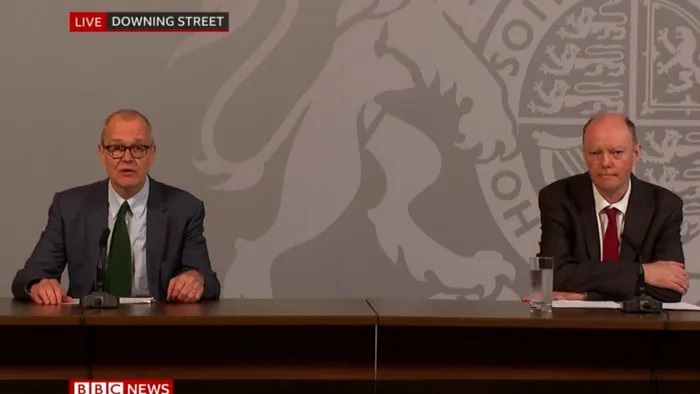
The following warnings need to be seen in context to better appreciate the implications. So lest we forget it’s worth recalling that less than a year ago Professor Neil Ferguson was warning that half-a-million Britons could die from Covid-19.
Of course, that prediction has since been completely discredited. Nonetheless, Chris Whitty, England’s chief medical officer and Sir Patrick Vallance, the government’s chief scientist, are now warning that we could see a renewed surge in Covid-19 cases.
Again, a little perspective is in order. Little more than six months ago Valance and Whitty warned that winter could bring as many as “50,000 new cases a day” of Covid-19 in England. Pointedly though, they didn’t state how many deaths that might cause.
That’s a significant omission because essentially it’s only half the story.
Having seen how Neil Ferguson had painted himself into a corner with his estimate of 500,000 deaths they left themselves a little leeway by specifying the number of ‘cases’ rather than deaths.
Big difference. Like saying people were “sick” or were “injured” without spelling out what those sicknesses or injuries were.
The vast majority of those “cases” recovered completely, and many were entirely without symptoms. So one has to wonder if the real objective behind these warnings is to heighten public anxiety in order for more people to get vaccinated?
All of which should lead us to ask why a mass vaccination program, together with lockdowns and their economic impact, is necessary? When Covid-19 is no more than a variant of the seasonal Colds and Flu we see every year?
Fresh wave of Covid infections will hit UK this year, experts say
Clive Cookson, Jasmine Cameron-Chileshe — FT March 9, 2021
Another wave of coronavirus infections will hit the UK at some point later this year, the top government scientific and medical advisers warned MPs on Tuesday, as they cautioned against speeding up the planned relaxation of the lockdown restrictions in England.
“Things can go bad very quickly,” said Chris Whitty, England’s chief medical officer. “A lot of people may think it’s all over but I would encourage them to look at continental Europe right now. It is easy to forget how quickly things can turn bad if you don’t keep an eye on them.”
Whitty and Sir Patrick Vallance, the government’s chief scientist, told the Commons science and technology committee that infections would inevitably surge again at some point later this year when social interactions intensify, because not everyone will be vaccinated and the vaccine is not fully protective in everyone who receives it.
“What we are going to see is, as things are opening up, that at some point we will get a surge in virus,” Whitty warned. “We hope it doesn’t happen soon. It might for example happen later in the summer if we open up gradually or because of the seasonal effect it might happen over the next autumn and winter.”
Whitty cautioned against focusing on specific forecasts when he was asked by one MP about recent modelling by government scientists that relaxing restrictions might lead to 30,000 more deaths by the end of June. “Forward projections of numbers are very difficult,” he said. “The first principle is that if you open up too fast, a lot more people will die. But it is not realistic to pretend that there will not be more deaths.”
Vallance insisted that the five week interval between the lifting of restrictions in England, as laid out by prime minister Boris Johnson in late February, was essential to assess the impact of each one.
Most pupils in England returned to classrooms on Monday for the first time since the Christmas holidays but the UK prime minister is under pressure from some of his own backbenchers to open up the economy more quickly than planned.
Vallance explained that it would take three to four weeks to evaluate the effect of each step on infection rates, hospitalisations and deaths. The fifth week was needed to advise everyone affected about any changes to the government’s timetable. If you shorten that, “you are essentially flying blind”, he told MPs.
He gave the example of the return of schools this week, pointing out that scientists were unsure about its impact on infection rates. Modelling showed that the effect on transmission of sending children back to classrooms could be an increase anywhere between 10 per cent and 50 per cent, he explained.
‘prophetic modelling’ – amazing
30,000 more deaths by end of june – well around 1500 people in the UK (not inc. scotland and wales) die every day in n ormal times – so easy to fudge the figures and use their psychological torture onto people who never do any research and ‘trust the science’
Could those already vaccinated go the way of RFK jnr’s ferrets?
Covid19 is yearly common flu renamed.The jab “may”only stop you from getting a bad reaction from covid19.But will not stop you from getting covid19, as many if not all are testing positive post vaccination for covid.Other side effects from the vaccine clearly not as bad as getting covid19 snot nose and itchy throat,is blindness,deafness,paralisys,
stroke,ADE,organ failure,nerve damage,brain damage,bells palsey,Numbness,fatigue,head ache,nausia, genetic mutation,blood clotting,over creation of non nutrilizing antibodies,skin rashes,muscle tissue damage, gangerine and many more.Clearly better to take a chance with our dear friend the yearly flu sorry covid and have a 99.9% chance of survival than take the cov19 jab from hell and get a nasty surprise reaction.
UK flu season is around december to march – lets see what happens to the experimental ‘ferret people’ when the wild flu comes around
When I hear the term “expert” it is a red light to me that signals there are falsehoods ahead.
What experts???
Fools not experts.
The Human Race is over…the Rats won.
Well, you just KNOW the pesky Satanic Communist Khazars are cooking up new versions of danger to subdue and subjugate the stupid masses around the globe. I just can not imagine the level of STUPIDITY
of someone who has taken the “jab”. The mRNA injection is NOT a vaccine. It is death.
More Brit lies. Britain like Canada is a nation run by the Rothschild cartel and the people have no real freedom. They are using their power to attain global financial hegemony. If Western agents spread another lab virus around there will be a civil war and hell to pay. Too many people are fed up and with the UN Agenda and Great Reset crap being imposed and there is simply nothing to lose.
Constant fear of the bogeyman. Keep them hysterical as it stops them thinking. Much easier to control that way.
” ‘Things can go bad very quickly’ said Chris Whitty, England’s chief health officer.”
Isn’t that just the case? The mob could break down the doors of the Bastille at any time. Chris Whitty is sweating, diluvian-style. His fear’s more palpable than his meagre threats.
There are court cases galore bearing down on him. He knows that the odds are inexorably shifting in our favour.
He’s been advised by his masters to keep up the offensive but his stomach is weakening.
Expect protected witness status for Whitty soon and the endowment of a new identity for his troubles – hopefully as a transitioning transgender man waiting for her procedure.
Expert….Ex is an hasbeen and Spurt is a drip under pressure