
Will Knight – Wired July 2, 2020
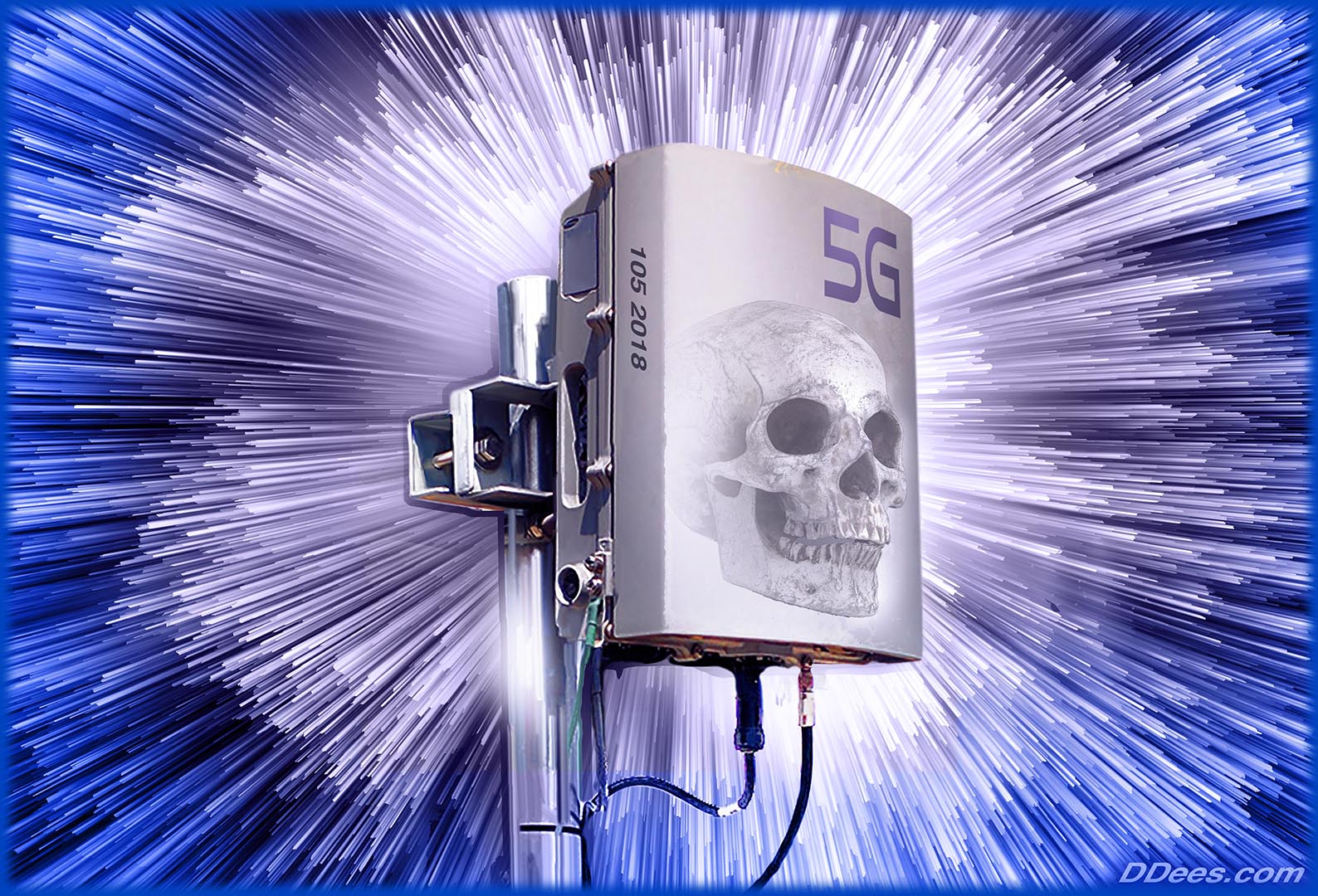
The world came together to build 5G. Now the next-generation wireless technology is pulling the world apart.
The latest version of the 5G technical specifications, expected Friday, adds features for connecting autonomous cars, intelligent factories, and internet-of-things devices to crazy fast 5G networks. The blueprints reflect a global effort to develop the technology, with contributions from more than a dozen companies from Europe, the US, and Asia.
And yet, 5G is also pulling nations apart—with the US and China anchoring the tug-of-war. Tensions between Washington and Beijing over trade, human rights, the handling of Covid-19, and Chinese misinformation are escalating global divisions around the deployment of 5G. A growing number of countries are aligning with either a Western or a Chinese version of the tech.
“National security and commercial interests are all entangled, and it’s very hard to separate them,” says Scott Wallsten, president of the Technology Policy Institute, a think tank.
The way 5G was created, and the way it is now being deployed, capture an ongoing conundrum for Western countries—how to balance healthy competition and collaboration with national interests and the rise of China.
The 5G dispute centers on Huawei, arguably China’s most important tech company, with a dominant position in networking equipment, a big smartphone business, and increasingly sophisticated chips. The company is accused of stealing technology and of having close ties to the Chinese government that might enable cyberespionage. It has become a symbol of China’s ambitions to dominate the technology, through innovation as well as nefarious means.
“National security and commercial interests are all entangled, and it’s very hard to separate them.”
Scott Wallsten, president, Technology Policy Institute
The US and some allies, including Australia, New Zealand, Japan, and Taiwan, have banned Huawei and other Chinese telcos like ZTE from their networks. Other nations have balked at US-led efforts to keep Huawei and other Chinese firms out of the picture. Argentina, Brazil, Russia, the Philippines, and Thailand, all welcome China’s 5G tech.
A key question is how this bifurcation will affect the workings of a standard that was meant to be open and global. “We risk further fragmenting the internet and the way different networks connect to each other,” says Wallsten.
Even if 5G was meant to be a truly global communications standard, the technical plans reflect shifting national strengths and resulting tensions.
Russia Today is carrying a story:
“Okinawans ‘shocked’ & demand transparency after Covid-19 outbreaks at US bases increase Japanese prefecture’s case toll by 40%”
https://www.rt.com/news/494506-okinawa-us-marines-coronavirus-outbreak/
In the comments section all I put was “5G?”. It was censored. So much for Russia being some counterweight to the NWO.
I think I heard this morning that BT has said it will take 10yrs to strip out all of Huawei’s UK tech. Without Huawei, 5G is going to be a very slow rollout.
Great News!
I have heard that some unscrupulous people have drilled a small hole through the bottom of the pole, then tipped petrol into it via a funnel and set it alight, which will carry the burn right up the wiring and incinerate the array.
tut tut
technocracy works well only with one tyrant master, more than one is only a matter of time before thermonuclear exchanges, end of transhuman madness. mankind internal software in the hands of humans? this is worst than slavery , our freedom hangs on EMP explosion to get rid of all satellites and signals.
although Bill Gates gets his depopulation with/without selling the vaccine, survivors will have a better world to live in.
Simon Smith: RT has removed its comment section! RT has already censored comments about 5G/EMF, just before it removed its forum! It seems to be an orchestrated effort to silence any opposition and to use the “pandemic” as a means, to implement the NWO agenda.
5g was needed for more accurate tracking of cellular phones.
It gives much more accurate coordinates than 3g or 4g to the operator who performs the tracking
5G Gigantic Health Hazard
Dr Barrie Trower & Sir Julian Rose
Steiner Had a Unique Take on the Connection Between 5G and Viruses
How The ‘Great Reset’ Is Targeting Our Children & Plans To ‘Reimagine’ Humanity
Spiro Skouras
Technocratic Takeover & Hijacking Of Humanity
http://grizzom.blogspot.com/2020/07/technocratic-takeover-hijacking-of.html#more
And it works best if we stay 6 feet apart.