Is it possible to live truly “off-grid” in the UK?
by tts-admin | Mar 21, 2020 |
Neil Wright – March 21, 2020
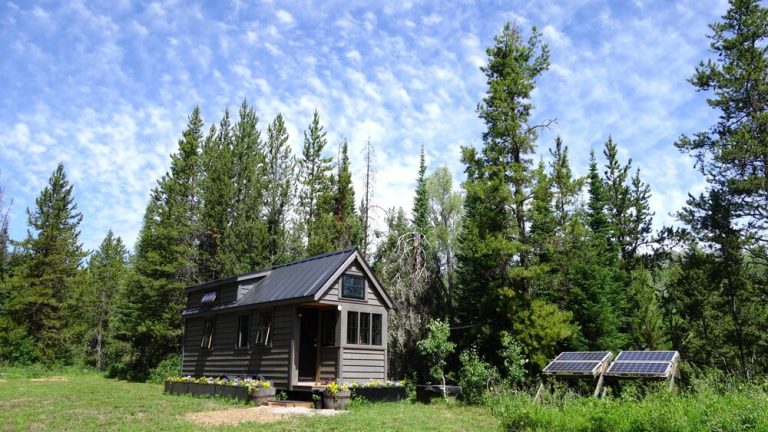
Living off the grid — a life independent of any economic structure or system — is pretty much synonymous with freedom. No one has any doubts that it wouldn’t be an easy life, but the labour would be honest hard work, and the self-sufficiency it enabled would be immensely rewarding.
But does this type of freedom really exist in the UK? In theory, under extraordinary circumstances, the answer is maybe. Or maybe just temporarily. The first obstacle would be finding a place to live.
Living in an off-grid abode
It is not illegal, technically, to live off the grid in the UK. But it is strongly discouraged. For starters it is not possible to march into the Highlands and claim a spot with good soil as a new home. The local authorities will demand planning permission after 28-days.
The best thing to do is find what is called ancillary accommodation, where you essentially can live on your own land if you own it, or a friend’s. In most cases, this will limit a person to a garden, or even the front-drive to a house.
So, let us imagine a perfect scenario: you either own a large plot of land, or you are perched on a friend’s. Would off-grid living still be feasible?
Off-grid power
Thanks to modern technological advancement, energy sufficiency actually isn’t too difficult to achieve. Solar panels work well in the UK, even on cloudy days. Better still, they can last for over a decade before they need replacing. Some of them are free-standing and flexible, and can be positioned to follow the sun. With a 100-watt panel, two people can expect to have their energy needs reasonably met — with some sacrifices (getting rid of the TV and watching television on a laptop, using a wood gas stove instead of a microwave oven and kettle).
A good generator can back up the solar panels if it’s exceptionally cloudy, or on long winter nights. Generators are noisy and smelly, but they are also known to last a long time.
Gas is crucial, as it keeps us warm in winter and (in refrigerators) keeps food cool in summer. Installing a gas system is relatively inexpensive — around £500 — and should last a while, but it is easy to burn through a single gas cylinder in just over a week. Generators and gas, though make living “off grid” technically possible, still require interacting with the structures of society (i.e. by purchasing fuel). So, whether this is true off-grid living or semi-living is a matter of debate.
Off-grid water
Water is probably the most difficult resource to gather in the attempt to truly live off-grid. Most of the UK’s lakes and streams are polluted or inhabited by germs that can make us ill. The water can be collected and treated with either over-the-counter tablets or by placing the contaminated water in a plastic bottle in direct sunlight (the UV light will kill all the pathogens in a few hours). But this is incredibly impractical, and depends on either societal structures of brilliant weather.
A big risk with a great payoff would be to dig a viable well. Some places are more suitable than others, though. For example, there is a band of Jurassic limestone that meanders right through the middle of England that holds a high-water table. But digging one will require a lot of money and will almost definitely wrinkle the noses of the authorities. A water pump with a great pressure capacity will also need to be installed to deliver the water to the surface if a well was successfully crafted.
Rain barrels seem to make the most sense, to collect rainwater, but they need to be buried so that they don’t fall over. They also freeze over in winter.
Building a self-sustaining water system would require expertise knowledge; be a huge
gamble, and might not work. As a result, most off-grid enthusiasts still get their water from public water sources.
Off-grid food
A completely sustainable off-grid diet means a de facto vegan one, which isn’t a bad thing. You can hunt for food with air rifles and pistols, but a lot of animals are protected for ecological reasons. For example, you cannot shoot even pigeons or deer without a license. And deer are so plentiful in Scotland that the authorities are even toying with the idea of reintroducing wolves to thin the numbers.
Raised beds, containers, and small gardens certainly can be self-sufficient — but it is far from ideal. You are vulnerable to pests, disease, a turn of weather, wildlife and so on, and what you can grow is tempered by the seasons. A lot of people who grow their own food are vulnerable to digestive problems and bad breath. Getting the right compost is hard to do without extensive travelling for the right components, or waiting for the seasons to change (leaves in Autumn make great compost). Of course, one can always ask for excess cardboard or food waste from a supermarket — but that can attract rodents and is, in a sense, still a reliance “on the grid”.
Foraging is another way to put food on the table, but it is more like a seasonal hobby than a serious way to make ends meet. Foraging is not illegal in the UK, anywhere. And the Scots are more relaxed about it — but it is strongly discouraged. The authorities want you to think that it is illegal. You are within your rights to wander on to someone else’s private property to pick fungi, or plants that have grown naturally. That person can ask you to leave, but they cannot take your foraged goods off of you — that would be stealing. There are some protected funguses and plants that cannot be foraged, however.
Realistically, being completely off-grid when it comes to food production is not entirely, wholly possible. Although you can reduce your reliance on the supermarkets by a massive amount, and be self-sufficient for large parts of the year.
Off-grid health
The off-grid lifestyle implies certain remoteness — maybe even loneliness — to it. The labour-intensity to be self-sufficient probably requires at least one other person who is capable of doing all the chores that you can do. This becomes more important in the event of an illness.
In the UK we have the National Health Service which is definitely an “on-grid” structure. But I imagine even the most extreme off-grid enthusiast wouldn’t turn down its services in a time of need. In this case it is really important to have a fixed address — and if you are practising ancillary accommodation you will do.
This is because the NHS runs everything through the local health clinics and hospitals that are relevant to you. The NHS would not turn you away if you do not have a fixed address, but it would make it very difficult for them to work towards resolving any health problem, and as a result they would probably just do the bare minimum to keep you going.
Some thoughts and conclusions
With all this in mind, then, it seems that it isn’t really possible — under current circumstances — to live a life free and independent of the UK’s structures. The country is too small and the laws are too restrictive.
It is possible under golden conditions (already owning a large part of meadowland and farmland yourself) to be somewhat off-grid, intermediate most of the time, completely off-grid some of the time.
Living off-grid may even be more expensive than living on the grid. As Stephen L. Wood said, remarking on nearly 50 years of independent lifestyle: “you will not have a monthly bill for water… but you will still get a propane billing”. At the end of the day, a cabin in the woods will only depreciate in value, not appreciate. But then again, surely part of the charm of off-grid living is to be completely rid of all of the intricacies and problems of modern-life.
—
This Author
Neil Wright is a copywriter and researcher. He has an interest in travel, science and the natural world, and has written extensively about off-grid living in the UK on his website.

This is a rather light-hearted look at off-grid living. Maximus Ironthumper has a YT channel and he is pretty off-grid. He used his woodland stock for his burner, has extensive water harvesting, solar, solar water heater panels. But he uses bottled gas for his work… see his name for a clue. He has a video on his experiences getting land and using the planning laws to get it as a legal residence. Getting post wasn’t very hard and as he says, having a good relationship with his neighbour was a big help. Your neighbours can pose serious problems with land use. Another channel I follow is Kris Harbour Natural Building. He has solar, water turbine (very interesting) and he’s just installed a brilliant wind turbine that he built from scratch You should see all the very cheap buildings that he has built, just amazing. He has an old diesel van that he runs on old veg oil. I think total off-grid is a route to an early grave. Better to have the ability to be off-grid when things turn desperate such as now, but being mentally able to dip in and out is probably the best route. Some of you may have watched BBC 2 Win The Wilderness: Alaska. It was a pretty poor program, BUT, here we had two people who built a life in the Alaskan wilderness. There clearly had much of their kit flown in on their homemade airstrip, so not that off-grid, but this couple were now so old that they couldn’t do the work to support the way they lived. They had kids with grandchildren who did not want to take on the property. So if you go down this route, are you willing to see the decline in your homestead as you age? Who will take over? If you sell, where do you go?
I have an off-grid-ish campervan, solar, four big leisure batteries and a composting toilet. I still need vehicle fuel and gas for cooking inside the van. Getting water is an issue, but I don’t need campsites. A follow a few people who do this full-time van life. One chap is in Portugal and another chap is in Spain and they are having a difficult time with the local police as they are being moved on and aires are being closed down due to corona.
I’m a prepper and I have some stores at home and I’ve put a lot of spare gear out in the national forest outside my back window. I can be lost in the woods 5 minutes after leaving my door. I bought a few supplies in anticipation of an economic collapse, not a bug which I believe is cover for an economic collapse, so I’m not under pressure yet. If I am pressured I’ll be off to the forest with the means to fish, hunt, trap and provide safe water.
The few people I told I was a prepper listened with interest. They all asked good questions, and I feel some thought it a sensible plan for a bloke with few bills and no responsibilities. If I do go off the grid and thrive, I’ll be reluctant to join society again as I approach my 60s. I may as well live my last days out there, and I have ID tags to identify my remains.
I have lived off grid without a penny in my pocket, and I did this in Hawaii, where there is enough wild food for free to survive. There is no greater exhilaration than to leave the evil Jewish society behind and go it alone against all odds. I can not think of a greater expression of love and freedom than telling the whole Jew system to go f-ck itself.
To survive outside the system in northern climes would be an extremely difficult task. There is ample amount of clean water available but the food you need which is actually a lot is not available especially where it snows. In the winter there is no food but sparse game.
I have also lived off grid in a cabin snow country. I ate wild game and heated my home with wood. It was idyllic lifestyle hunting and fishing, cutting firewood as “work”. Not work at all but non-stop joy especially if you are supporting loved ones. Fishing is the best, locating near a lake with abundant fish like in Wisconsin or Minnesota is ideal for survival.
Many of things you think you need, you don’t like a refrigerator. Food keeps well in dry cold climates, we would make bottomless pots of elk stew cooked on top of the wood heater, adding more potatoes and onions and meat everyday to keep the pot full. People who trudged over in the snow could always get a big bowl of stew or a big slug or two of whiskey, for the walk back to their place in sub zero temps.
I think anyone who wants to do this should, and not look back. Society is totally screwed and living off the grid in a remote area is far better than doing time in Camp Fema having to eat shit for Jewry.
living off the grid is not for modern people. however, if you wish to do so, take a step change, for living off the grid will mean removing yourself from modern amenities and modern thinking. No electricity, no internet, no plumbing, etc. armed yourself with knowledge of nature, (whichever natural place you are planning to live, be it the tropics, the temperate jungles, the snowy regions, etc)
then you are ready to be one with mother nature.
Else, do not wish for third world war
One of the happiest people recorded in the history of English imperialism have been the south Tasmanian aboriginals that survived on the need for very few tools that were disposable and could be self made when needed. Four hours work a day to sustain themselves while the rest of the day was spent playing, laughing and giggling.
No euranglolander can repeat that and that’s what you’ll need to do in reality to escape this shit entirely. Live like the aborigines of times before. If you can’t eat snake, goanna, witchy grubs and roots, stay out of the kitchen and keep dreamin. Fancy saying solar power is off grid, how strange since it came from the grid to begin with.