
Introduction – Nov 30, 2019
Two years prior to the latest terror attack on London Bridge another terror attack had taken place at the very same site. In both cases, Muslim extremists were involved. One of culprits in the first attack, Khuram Butt had even been under active investigation by MI5 at the time after his family voiced concerns over his radicalisation.
In the aftermath of the first attack, MI5 was accused of a “damming list of failures“.
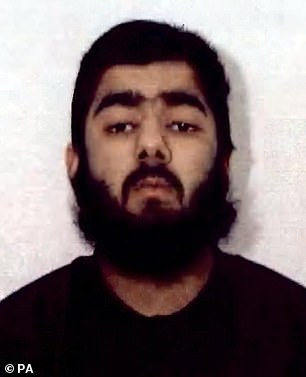 Now two years later “Muslim extremists” have again targeted the very same site. What’s more the prime suspect in the latest attack had been involved in an earlier terror plot to bomb the London Stock Exchange. That plan was allegedly thwarted by MI5 and Usman Kahn was jailed in 2012 for his involvement.
That wasn’t the end of Khan’s involvement in radical Islam, however. Whilst in jail he had reportedly asked for help to be free from its influence but according to his solicitor, none was forthcoming. So naturally, upon his release it was only a matter of time before Khan fell under its malign influence.
Khan was released from jail on licence in 2018, half way through a 16-year sentence. He was reportedly wearing an electronic tag at the time of the attack. Only just as Khuram Butt had evaded scrutiny while preparing to bomb the London Stock Exchange, Usman Khan’s preparations for the latest terror attack seem to have been missed.
Or were they? One has to ask because there are so many oversights, missed opportunities and coincidences that one has to wonder if whole War on Terror isn’t a carefully orchestrated drama using crisis actors, false flags and fall guys? All of which are being used to create the illusion of conflict. With a few real outrages, that the authorities have prior knowledge of, just to add some verisimilitude to the proceedings.
Was this latest London Bridge attack just the latest in a series carefully concocted ‘events’? Ed.
London Bridge attacker had asked for help to deradicalise – lawyer
Vikram Dodd – Nov 30, 2019
The London Bridge attacker had asked for help to be deradicalised while he was in prison, but none was forthcoming, his solicitor has claimed.
Vajahat Sharif told the Guardian Usman Khan had come to realise that violent extremism was wrong and accepted his understanding of Islam was deficient.
Khan was one of nine members of an al-Qaida-inspired terrorist group convicted in 2012 of plotting to bomb the London Stock Exchange and build a terrorist training camp in Pakistan that was disrupted by MI5 and the police. He was also a supporter of al-Muhijaroun, the extremist group with which scores of terrorists were involved. However, Sharif said Khan became disillusioned with the group after his imprisonment, and that extremists may have targeted him to be “re-groomed” after release from jail, with devastating consequences.
He said Khan first mentioned wanting to be free of Islamist extremism after his conviction in 2012, and then repeatedly throughout his time in jail, last mentioning it in 2018 before his release.
“He requested intervention by a deradicaliser when he was in prison,” Sharif said. “The only option was the probation service and they cannot deal with these offenders. He asked me on the phone to get assistance from a specific deradicaliser.
“He asked [me] once or twice before he was released in 2018. Probation do a good job with conventional offenders but they can’t deal with ideological offenders.”
Khan, 28, killed two people and injured three others before being shot dead by police during a stabbing rampage at London Bridge on Friday afternoon. After his conviction in 2012 he was given an indeterminate jail sentence, with a minimum term of eight years. On appeal in 2013, it was replaced with a 16-year, fixed-term sentence and an extended period on licence.
Sharif said Khan, whom he last spoke to in March, was released to a bail hostel from where he had to report to a police station every day, had interactions with the probation service and had to wear a tag.
“In prison he begin to realise his Islamic thinking was not correct; he accepted that. He criticised the al-Qaida ideology and violent extremism. He did recognise that his Islamic understanding was incomplete. A lot of these characters pick and choose from different sermons, it’s like an echo chamber.”
Sharif said the policy for terrorist prisoners needed to change to boost efforts to turn them away from supporting ideologies that incite violence: “There is a flaw in the policy. You should have substantial ideological evaluation of these individuals before they are released on licence.”
Sharif said Khan appeared to be rehabilitated and was a model prisoner during his time in HMP Whitemoor: “He was having a go at Isis before his release. I’ve no idea what happened after his release, that is what is shocking. Maybe he was not ideologically robust enough to resist the radicalising groomers – I thought he was a reformed character.”
He said that when Khan was arrested in 2010 he supported al-Muhijaroun, but “by the end he was disillusioned with them”.
“His parents are thoroughly decent, hard-working people, first-generation migrants from Pakistan. His family were at a loss when he was arrested and charged.”
A lot of p[eople do not know this but the jewish controlled MI5
are the ones who radicalise vulnerable and mentally unstable folk
just as Churchil did in W W 2
nothing changes does it ?
It’s all bollox. This was just another scripted false-flag terror attack using a patsy and crisis actors. So he had on a fake bomb vest, he hadn’t detonated it despite being attacked, so why did the police (crisis actor) shoot him? If the officer believed he was wearing a bomb vest, then this terrorist was shot in the head and from 6 feet, his head would have been obliterated all over the pavement. Remember Charlie Hebdo, where the crisis actor terrorist shoots police officer at point-blank range with a high powered automatic weapon, I’ve seen the unedited video and no way on this Earth did that officer take a real bullet. Of course, this close range action adds impact to the fake news narrative.
Then we have the failure of MI6, MI5, and the Met police to detect and stop this guy, who in reality works for British intelligence & has new been retired with a skin job and a big payoff.
Ordo Ab Chao …. all Hegelian Dialectic, Luciferian cabalism …nothing more, nothing less.
Good points Carl. In addition there appears to be no blood on the knife. The man (officer?) running away with the confiscated weapon also appears to throw a bag of white powder to one side as well.
If it is a hoax – and it seems highly likely – someone has pointed out how following the Boston Marathon hoax and the law of unintended consequences viz members of the public taking photos from above – then TPTB might like certain bridges because of the absence of the possibility of photos from above.
There is also a political dimension to this as well IMO. It shifts the focus of the threat of Islam from the demographic bomb to often hoax (bomb) events. ALSO it gives a chance for TPTB to get their “scales of justice” out and infer an idiot that pulls off an hijab “is just as bad as Islamist” etc Within the grand scheme of things: more friction = the need for more Orwellian measures.
Nationalist leaning individuals might think accepting and propagating the official narrative adds grist to their political mill; it doesn’t. For one thing truth should be the only weapon used against these bastards in charge, and secondly by subscribing to the often false Islamic terrorist narrative it makes it easier for TPTB to create pseudo nationalist events – if and when they occur, which people accept at face value. The Oklahoma bombing was probably such an event.
Smacks of false flag, as stated, if he really had a bomb vest, he would have detonated it when the swarm of civilians came to disarm him.
As stated when he was face down on the ground after being disarmed, they shoot him almost immediately rather than pounce on him to cuff him?
I mean had they arrested him, he would just vanish into obscurity like the alleged NZ shooter, where is his public trial and mass media coverage to no end? Instead we had photos of a non related man in court on the charges, nothing since.
So why the need to portray him as dead? Maybe they belive more people will accept the lie if he is said to be dead?
My honest opinion on it is that the guy either died in prison and it was covered up so he could be used like this in future, or they killed him shortly after his release with this purpose in mind, since an actor was used to stand in for him, he just had to allegedly die during his arrest, otherwise they would not have anyone to stand trial…
Afterall I have already seen footage showing him sit back up like the Undertaker from WWF prime days. This was shot later in the evening from a window with a view angle onto his alleged dead body, long after the bridge and streets had been evacuated for safety.
People are trying to dispel it as fake claiming you cannot hear Big Ben ringing from London Bridge… Pure nonsense as it is not far down the road from London bridge (2.4 miles on the shortest walking route, less in a direct line as sound travels)
So I assume he thought it safe to get up and get gone.
Not so Great Britain, is a Zionist controlled country, and the plebs need to be kept in fear, to justify the ever growing Orwellian state, which in many instances has surpassed the wildest dreams of the Zionists, they don’t help people, they use people. so WTFU.
It’s when you read the comments on YT videos and newspapers. The public are just fast asleep. They simply haven’t a clue what’s going on. Completely unaware that Jews are shafting them up their backsides while pilfering every penny they can from them. It’s when you realise this that you think “why on earth do I bother in writing and trying to warn people of the impending doom?”
You then start thinking really if putting your neck on the line is really worth it? What will the papers say of you, when you’re arrested by the internet police, for trying to warn people? I can imagine the headlines “hateful neo nazi and vile anti Semite nationalist…blah….blah” instantly triggering the public, who’ve been brainwashed to go into a fervour the minute they read ‘nazi’ and ‘anti Semite’ together. And here’s the thing, I’m an anarchist, not a national socialist and quite frankly, if disagreeing with Israeli murder of Palestinians and the Jewish New World Order’s desire of genociding the world’s population makes me anti Semitic, then I’ll wear that badge with honour.
Again, as repeated above, clearly a false flag attack. Certainly agreeing with Mojo Jojo, who on earth, from the camera angles can tell who on earth this man is? Very probably suicided by special branch, or whomever, then an actor comes in, fake bullets, suspect ‘dead’, questioning over. And in the YT channels and papers, what are the zombie population of Britain saying? Yup they’re saying the ‘execution’ saved the UK taxpayers hundreds of thousands of pounds in court costs. It’s just laughable. They had him on the ground, subdued, no way to detonate anything and boom, bullet in the head to kill.
Now, what if he was actually a crisis actor, told it was all a drill? What if the police actually did kill him, even though they said “don’t worry mate, we’ll make it look real but we won’t kill you?” The police could make up whatever they wanted couldn’t they? It’s a repeat of 7/7 with the execution of the alleged bombers in Canary Wharf, when they realised that the trip down to London, for the mock terrorist attacks, wasn’t a mock one at all and they were then, at the time, Britain’s most wanted, with armed police, closing in to silence them, so as not to give the game away.
We just don’t know do we?
Remember the point blank, 11 shots to the head, with a glock pistol, to Jean Charles de Menezez, killed in Stockwell Tube station on the 22nd July 2005? Many believed that the clear execution was due to the fact that he, an illegal immigrant, from Brazil, worked as an electrician on the underground and saw/worked on something he shouldn’t have, most notably the putting in the explosives either on the tube train’s undercarriage, or on a certain part of the line network. This was a clear execution and a cover up, big time. Any truthful media would have ripped this story to shreds, along with a patriotic judiciary, but when both are controlled (along with the government) by Jews/Zion then you can kiss any chance of that goodbye.
I really don’t think people are going to wake up. I’m sorry for my pessimism, but those who are awake are an incredibly insignificant part of the minority population. You all know that the ADL is doing its best to control the internet. They will succeed, just as YouTube has in kicking off anyone right of Marxism and Facebook. Once they have control of the internet it’s goodnight Vienna. Then they’ll start hunting down people, courtesy of IP addresses, who have viewed these websites and arrest them under a terrorism law, with right wing material to be extremist (read criticism of Jews).
People by phones with facial recognition and fingerprinting and they think it’s just dandy. They love it. They have absolutely no clue the prison and hell they’re creating.
They will succeed in the US in destroying the 2nd amendment, just as they have the first with hate speech. You’ll say never, but they’ll use the children.
The Jews are winning, whether you like it or not. The public is very, very fast asleep. They haven’t a clue what’s going on and by the time more have awoken, they’ll be executing them en mass, Bolshevik style, throughout the west. If they manage to get control of the internet, as I stated, it’s over. And really what’s to stop them? They own all western governments. They own the msm. They are now using YT and FB to indoctrinate the public on the internet. They own the judiciary. The own the human right’s courts……Who is going to refuse government control of the internet? What is going to stop the government asking for all IP records of westerners who have viewed certain websites on their ‘banned’ list and then locking them up on terrorism charges?
We are at a very grave situation indeed. There will be people who comment on here regularly who will agree, but unlike 1940 Europe, we are a heavily divided people. The Jews know this, because they’re responsible for this. Our battle is not only with the system, but pretty much 80% of our own people! They haven’t a clue and are completely on board, with all the BS that the msm pumps out.