Iran fortifying buried nuclear sites as talks with US continue, report says
Iran appears to be preparing for the worst-case scenario should the talks over its nuclear program breakdown

Iran appears to be preparing for the worst-case scenario should the talks over its nuclear program breakdown

If the U.S. struck Iran it has the capability to retaliate, hard. All U.S. military sites in the Middle East would be vulnerable and tens of thousands of U.S. lives would be at risk. Does Trump grasp this? Or have his ‘advisors’ kept information about Iran’s real capability from the president? Is that why he keeps threatening Tehran?

According to Douglas Macgregor, when U.S. Secretary of Defense met with Prime Minister Netanyahu at the Pentagon in February he told the Israeli delegation: “We are ready to do whatever Israel needs”. Since then however, he’s changed his mind and he’s now advising against striking Iran. That’s why his head is on the chopping block

The treaty that the United States and Iran signed in July 2015, was the most exhaustive and stringent nuclear agreement in history. No other nuclear treaty comes close. So why did Trump REALLY pull out?
Former intelligence analyst Larry Johnson on how Iran’s development of over the horizon radar means that it will have advance warning of any attempted Israeli strike. Plus Johnson expands on the growing divisions in Israel itself, which could even result in civil war

A deal between Washington and Tehran on Iran’s nuclear program would be a disaster for Netanyahu. If sealed, it would make a unilateral Israeli strike on Iran’s nuclear facilities almost inevitable

Senior Iranian General Kioumars Heidari says that Iran possesses highly advanced weapons, which have not been publicly unveiled yet, but which are fully operational and about which the West knows nothing
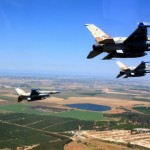
Zionist hardliners are weighing up the prospect of striking Iran’s nuclear sites – even as the U.S. and Iran are in talks over Tehran’s nuclear program. IF the Israeli strikes go ahead they will be carried out with no U.S. assistance and with the aim of setting back Iran’s nuclear program for a few months to a year or more

After a decade of relentlessly demonising Donald Trump both as president, and while he ran for the White House, the New York Times has done a complete about face. Mike Whitney reflects on what may have prompted this sudden turn around
More insider insights from a former intelligence analyst, Larry C. Johnson; with perspectives on the forthcoming U.S./Iranian talks and how, despite an easing of relations with Putin, Washington insiders view regime change in Tehran as a necessary stepping stone to their ultimate goal; regime change in Moscow
The proposed attack, originally scheduled for May, would have combined a bombing campaign with commando raids on Iran’s nuclear sites. But Israeli military commanders said they would not be ready until October, prompting Netanyahu to opt for a quicker assault that would have required US logistical and defensive support.
The U.S. would need an army of at least a million to subdue Yemen, which remains defiant despite U.S. air strikes, and the U.S. Army doesn’t amount to more than half a million. According to former intelligence analyst Larry Johnson, it would not serve U.S. interests to take on Yemen and its backer Iran, although it would serve Netanyahu’s designs. And this is exactly where the U.S. now seems to be heading