
Hannah Boland and Ellie Zolfagharifard – The Telegraph May 16, 2020
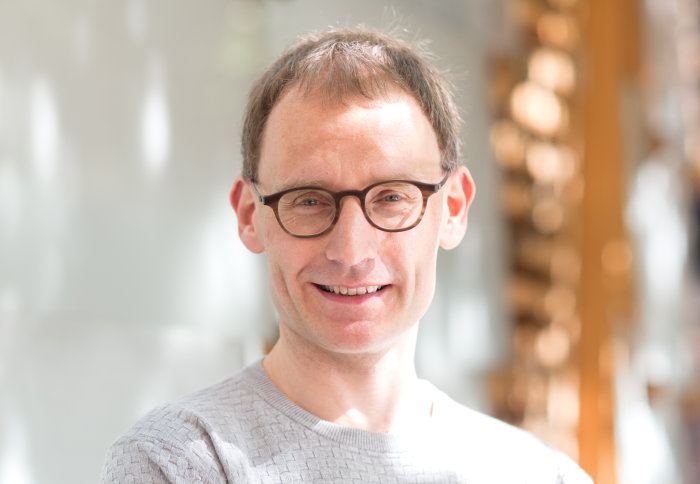
Professor Neil Furguson. Click to enlarge
The Covid-19 modelling that sent Britain into lockdown, shutting the economy and leaving millions unemployed, has been slammed by a series of experts.
Professor Neil Ferguson’s computer coding was derided as “totally unreliable” by leading figures, who warned it was “something you wouldn’t stake your life on”.
The model, credited with forcing the Government to make a U-turn and introduce a nationwide lockdown, is a “buggy mess that looks more like a bowl of angel hair pasta than a finely tuned piece of programming”, says David Richards, co-founder of British data technology company WANdisco.
“In our commercial reality, we would fire anyone for developing code like this and any business that relied on it to produce software for sale would likely go bust.”
The comments are likely to reignite a row over whether the UK was right to send the public into lockdown, with conflicting scientific models having suggested people may have already acquired substantial herd immunity and that Covid-19 may have hit Britain earlier than first thought. Scientists have also been split on what the fatality rate of Covid-19 is, which has resulted in vastly different models.
Up until now, though, significant weight has been attached to Imperial’s model, which placed the fatality rate higher than others and predicted that 510,000 people in the UK could die without a lockdown.
It was said to have prompted a dramatic change in policy from the Government, causing businesses, schools and restaurants to be shuttered immediately in March. The Bank of England has predicted that the economy could take a year to return to normal, after facing its worst recession for more than three centuries.
The Imperial model works by using code to simulate transport links, population size, social networks and healthcare provisions to predict how coronavirus would spread. However, questions have since emerged over whether the model is accurate, after researchers released the code behind it, which in its original form was “thousands of lines” developed over more than 13 years.
In its initial form, developers claimed the code had been unreadable, with some parts looking “like they were machine translated from Fortran”, an old coding language, according to John Carmack, an American developer, who helped clean up the code before it was published online. Yet, the problems appear to go much deeper than messy coding.
Neil Ferguson
· 2001
Professor Ferguson worked on research that led to the mass culling of hundreds of thousands of farm animals during the 2001 foot and mouth disease epidemic. His work was later challenged in reviews by other academics.
· 2002
Predicted that between 50 and 50,000 people could die from exposure to BSE (mad cow disease) in beef. He also predicted that number could rise to 150,000 if there was a sheep epidemic as well. In the UK, there have been fewer than 200 deaths from the human form of BSE
· 2005
Prof Ferguson claimed that up to 200 million people could be killed from bird flu. In an interview with the Guardian, he compared it to the 1918 Spanish flu, adding: “There are six times more people on the planet now so you could scale it up to around 200 million people probably.” Only several hundred people died worldwide.
· 2009
The Imperial team predicted that swine flu had a case fatality rate of between 0.3 per cent and 1.5 per cent, with his most likely estimate landing at 0.4 per cent. A Government estimate based on his advice was that a reasonable worst-case scenario was the disease would lead to 65,000 UK deaths. Swine flu killed just 457 people in the UK, with the chief medical officer concluding in 2009 that the actual mortality rate was 0.026 per cent.
· March 2020
A paper produced by Prof Ferguson’s team predicted that the coronavirus pandemic could lead to 250,000 deaths in the UK unless stringent lockdown measures were implemented. His research is said to have convinced the Government to change direction.
· May 5 2020
Professor Ferguson quits the Scientific Advisory Group on Emergencies (Sage) after The Telegraph confronts him over his married lover visiting him at his home, thereby breaking the lockdown rules
Many have claimed that it is almost impossible to reproduce the same results from the same data, using the same code. Scientists from the University of Edinburgh reported such an issue, saying they got different results when they used different machines, and even in some cases, when they used the same machines.
“There appears to be a bug in either the creation or re-use of the network file. If we attempt two completely identical runs, only varying in that the second should use the network file produced by the first, the results are quite different,” the Edinburgh researchers wrote on the Github file.
After a discussion with one of the Github developers, a fix was later provided. This is said to be one of a number of bugs discovered within the system. The Github developers explained this by saying that the model is “stochastic”, and that “multiple runs with different seeds should be undertaken to see average behaviour”.
However, it has prompted questions from specialists, who say “models must be capable of passing the basic scientific test of producing the same results given the same initial set of parameters…otherwise, there is simply no way of knowing whether they will be reliable.”
It comes amid a wider debate over whether the Government should have relied more heavily on numerous models before making policy decisions.
Writing for telegraph.co.uk, Sir Nigel Shadbolt, Principal at Jesus College, said that “having a diverse variety of models, particularly those that enable policymakers to explore predictions under different assumptions, and with different interventions, is incredibly powerful”.
Like the Imperial code, a rival model by Professor Sunetra Gupta at Oxford University works on a so-called “SIR approach” in which the population is divided into those that are susceptible, infected and recorded. However, while Gupta made the assumption that 0.1pc of people infected with coronavirus would die, Ferguson placed that figure at 0.9pc.
That led to a dramatic reversal in government policy from attempting to build “herd immunity” to a full-on lockdown. Experts remain baffled as to why the government appeared to dismiss other models.
The Imperial college funded and aided by the Gates foundation. Furguson funded and aided by the Gates foundation. He has repeatedly got the figures wrong over the past decade to try to shut down society. This time he ”succeeded” to an extent (Hopefullyanyone would think the far Left traitor had an agenda.
Fortunately getting caught with his pants down led to his resignation and the government seeing the FULL picture of his flawed model, hopefully the government can salvage something from the carnage he inflicted on this country and get us back to work.
Furguson needs to be arrested and charged with criminal manipulation of figures to destroy the UK
My take from this article is that since the Imperial College computer program is suspect, then Britain would not have instituted a lockdown and follow Sweden’s approach in managing the cv19?
we are totally screwed.
Disclaimer. What follows is my opinion only. I accept that I could be wrong, but I’d challenge anyone to prove that I am.
In politics, nothing ever happens by accident, and this worldwide shutdown has long been a Rothschild wet dream, perhaps forty years or more in the planning.
I believe Ferguson was chosen as the scapegoat, albeit one fully deserving of our contempt and vilification, BECAUSE he was already PROVEN to be incompetent.
The visit by his adulterous girlfriend was probably arranged as a convenient excuse to throw him to the wolves once he’d served his purpose in fronting that part of the scam.
The tiny DEAD particles given off by dying cells are NOT the CAUSE of illness, but one of it’s EFFECTS, but the “virus theory” SCAM has been maintained for so long now that many in the bio-weapons laboratories probably believe their own LIE that these cell fragments really are capable of spreading disease.
With this falsehood as their starting point, they mix “virus” particles from different diseases in the belief that they are creating a “killer plague”.
How many “killer flu” scares have we had in recent decades? Every one of them has been a failure because these agents of the devil don’t understand the nature of disease.
This time though, they convinced themselves they’d “got it right”, that their latest concoction really would kill most of the world’s population.
WRONG!!
They should have read Arthur Firstenberger’s book, “The Invisible Rainbow”.
Their “killer plague” turned out to be another dud, just like all previous attempts, but everything was in place for the long-planned world shutdown and the worldwide imposition of communism (also known as judaism), so they went ahead with it anyway.
The penalty for treason is defined in law, but will we have enough lamp posts and enough rope?
I invented that computer program. You can feed anything into it and the results are always the same~ “Just make it up dummy, they’ll believe any thing an expert says, especially if it is a computer modeling”. Sales have been fantastic, with governments all over the world clamouring for my services. In a few years I shall overtake Gates on the rich list and become a philanthropist,wish me luck.
Unreliable coding led to the lockdown – Ha! Sounds like disinfo and misdirection or else the author has no clue who runs the world.
It was the Jew World Order that did the lockdown. Anyone who believes some poor low level stooge like Furguson has the power to lock down the world is naive at best.
There is one institution only that has power over presidents, prime ministers, and the rulers of the world – the Jewish Banking Cartel aka the Rothschild Banking Cartel.
Nobody but the Jew World Order bosses have anywhere near this much power over the rulers of the nations that they could order a lockdown and have their orders followed.
If any other people besides the JWO bankers told the leaders of the nations to do a lockdown those other people would only be laughed at.
Put your hands up, those who would buy a second hand car from Neil Ferguson’s ??
M.P.’s are not asked to put their hands up ??
Since it is clear to so many us for some time now that the virus was simply a pretext for the lockdowns, the question became what are the exact reasons for the crazy control measures. Over the last month there has been numerous explanations seemingly unrelated. However, they are all related and all a part of the same package as I have commented before.
Furthermore, everything we are undergoing right now has been meticulously and manically planned and our governments are simply following a prepared script in carrying it out. The other day I cited evidence and reasons to show that the economic crash which ostensibly began last September with the crash of the Repo market according to most leading economists, was also in the planning works for a long time. Getting rid of regulations which controlled bank lending practices with the repeal of the Glass Steagall Act in 1999 was no accident and that predictably ensured the crashes of 2007-2008 and the much bigger one we are in right now, They were entirely foreseeable with the ever expanding unsustainable debt bubble since then.
Then there is the fact that the banking cartel running things lets nothing happen by accident and plan things decades and even 100 years in advance. The main agenda of the power elites is their precious NWO which if we follow the UN Agendas and the announced intentions of the banking cartel means, their plans simply require more and more centralized control by them over us. Our debt-ridden and debt-rigged economies have now been almost entirely shut down based on their highly orchestrated fear mongering over a flu bug, making our populations now almost entirely dependent on the government handouts, and malleable for virtually any control measure they care to force us into.
Less cars, hardly any air, ship or train travel, the wide-scale shutting down of entire industries, social distancing which kills social mingling in all forms of recreation commerce and of course a great deal of consumption, all these measures are related to UN sustainability Agendas. They even closed down gold mining on the pretext that someone may get the flu bug, when there is such a huge shortage for actual bullion. Our economy has been deliberately put in deep trouble trouble by design before 2019 and the recent shutdowns when we should be working to increase our productivity are serving as a death blow to make us completely dependent on our governments and the money lords. For their NWO there is no way on God’s little green earth that the draconian changes outlined in the cartel-run UN sustainability Agendas, could occur without the cartel through our governments and the media which they control exercising exercising the present draconian control measures over us.
We know that more internet and wireless communication with planning for more more remote working with the corporations which will be allowed to survive, will require movement into the shorter microwave zones with 5G. That is part of the planning and it is being rolled out at the same time as the plandemic. We know that ID chipping is part of the long-term NWO planning and that it also is being trotted out for likely implementation at this time and is being coordinated with a forced vaccination program. We know that these are further control measures and that they are related to NWO planning. We know that we have been subjected to some 20 years of fake science which created a fake crisis of man-made global warming, which when it was discovered that there was no actual peril or relation to CO2 or any other man-made effluent, and that the earth is actually cooling, that the host of paid globalist crisis actors simply ignored the facts and renamed the crisis “climate change”. We know that that crisis was intended to help usher in the NWO UN sustainability Agendas. We know that all of the charletons advocating a NWO for the past 70 years have been either paid agents or advisers to the CRF, the Trilanteral Commission, the Bilderberger Group which are all minions of more covert organizations and ultimately to the central banking cartel holding the purse strings of global finances. We know their thinking, their philosophy, and their planning and all we have to do now is name and expose the lot of them, and especially all of those who are the principals.
To bring about all of their draconian control measures over our lives, they have use agents like Jeffery Sachs have globe trotted to cajole, pressure, frighten, and trick people of great wealth and influence, based usually on oversimplified hockey stick graphs showing increases in world populations over the last 100 years, which in fact is their underlying pitch to all others in justifying the UN sustainability measures. They show limited natural resources and like Malthus over 200 years ago they always predict our demise. They are essentially no more than population reduction advocates masking their pitches with moderate measures but always using hockey stick graphs to create alarm when there ought to be none. They never show graphs which indicate that we are living longer, that there is no need for want with our food growing and manufacturing capabilities, and that as nations develop their birth rates naturally decline, and now in every developed nation to the point of harmful non-replacement levels. This is precisely what Gates agent Sachs did in the Vatican over the past 7 years. They lobby and convince audiences with data as slanted and fake as the hockey-stick climate warming data which was debunked in a Winnipeg court a few years ago.
The Masonic New World Order which is being run out is essentially the Old World Order which has caused all of the major wars in the world for the past 200 years, and which has worked with the banking cartel to debt-rig and control virtually every nation under the sun. They have no visible opposition. Welcome to the totalitarian nightmare. See you in the gulag.