
Press TV – April 19, 2020
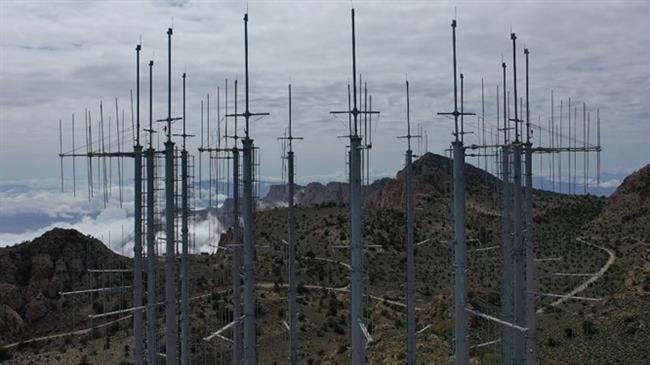
Khalij-e Fars radar system. Click to enlarge
Iran’s Army has unveiled two new homegrown strategic radar systems in another move to further enhance its air defense capability.
The radars, named Khalij-e Fars (Persian Gulf) and Moraqeb (Watchful), were unveiled in a ceremony on Sunday in the presence of Chief Commander of Iran’s Army Major General Abdolrahim Mousavi.
Khalij-e Fars is a long-range and strategic radar system with an operational range of over 800 kilometers. It is a phased-array three-dimensional radar system with modern technology that can detect all conventional and radar-evading targets as well as ballistic missiles.
Moraqeb is also a three-dimensional advanced phased-array radar with high precision and a range of 400 kilometers. It can spot airborne targets with high accuracy and detect different types of small targets at low and medium altitudes as well as radar-evading and unmanned aerial vehicles.
The system has been designed and manufactured by the Army’s Air Defense experts in cooperation with Iranian knowledge-based companies.
Iran has also unveiled a state-of-the-art missile defense system designed and manufactured by experts at home.
The surface-to-air missile system, dubbed Bavar-373, is a mobile missile defense system designed to intercept and destroy incoming hostile targets. The system employs missiles that have a maximum range of 300 kilometers.
Iran has taken great strides seeking to attain self-sufficiency in producing essential military equipment and defense systems in the face of decades-long sanctions and arms embargoes on the country.
The country consequently produces a wide variety of advanced weapons systems and equipment based on its own technological capabilities.
Iran shows off drones that can reach Israel, threat increases
Seth J. Frantzman – Jerusalem Post April 19, 2020
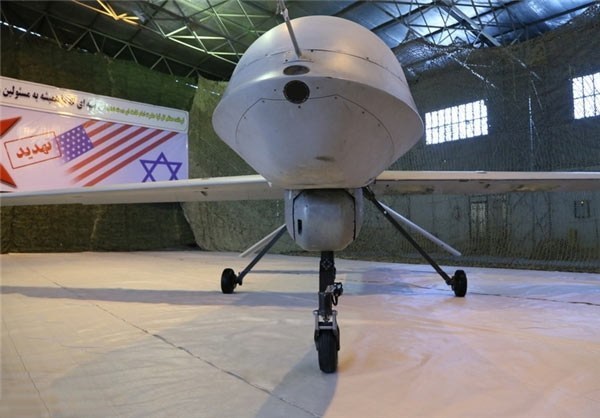
The Iranian state TV released pictures of a US MQ-1C drone, that has recently been downed by the IRGC and reverse engineered. The General Atomics MQ-1C Gray Eagle Attack drone is a medium altitude long endurance (MALE) unmanned aircraft that is an upgraded MQ-1 Predator as an extended-range multi-purpose UAV. [PHOTOS] Click to enlarge
Iran has been producing drones since the 1980s and is an innovator in drone warfare. It used 25 drones and cruise missiles to attack Saudi Arabia last September, and has flown drones into Israeli airspace.
Iran’s Defense Minister Brig.-Gen. Amir Hatami showed off the drones on Saturday. He said that one jet-powered UAV could fly at speeds of 900 km. per hour at an altitude of 12,000 meters. This would rival the best drones that the US and other countries are now using. These drones have a range of up to 1,500 km., he said, and can fly for several hours. It is a message to Israel, the US and their allies: We can reach you.
Iran says it has provided a “mass delivery” of the Ababil-3 and Karar drones to the air force. The country has a new drone unit that it established in recent years and its IRGC has been using drones to target various enemies, including ISIS. The Ababil-3, Hatami says, can fly 150 km., and the Karar is armed with various weapons that now give the drones “pinpoint” attack abilities. The implication is that these drones have guided bombs and can operate like cruise missiles.
The Ababil-3 is a redesign of earlier Iranian drones, with twin tails. It is likely based on a South African design which itself may have been borrowed from old Israeli designs, such as the Israeli Hunter or Mastiff. The Ababil-3 is supposed to be a medium-range reconnaissance drone, but Iran says it has “combat” potential and can carry other payloads as well. It has an electro-optical add-on that enables it to collect footage. Iran used this capability in September 2018 to target Kurdish dissidents in Iraq, filming its missile attacks with a drone.
Meanwhile, the Karar is designed to be a “strategic” drone that Iran says can be used as a kamikaze drone – basically like a cruise missile. Iran has successfully deployed these kinds of technologies to the Houthi rebels in Yemen, who have used them against Saudi Arabia in dozens of attacks.
The new drones allegedly have some sort of guided missile or smart bomb ordnance. It’s not clear if Iran has perfected the technology and ranges it ascribes to its drones, but attacks in Iraq, Syria and Saudi Arabia are evidence that Iran’s drone threat is increasing.
Hey iranian people world wide
the British salute you, long may you prosper
Christian and Muslim must stand close to defeat the evil of the jew.
God be with you
The article falsely claims that Iran attacked Saudi Arabia last year, so its just a bit of mis-direction thrown in, what else should we expect from the Jerusalem Post? Always scrutinise articles and believe what parts can be correlated to other articles you accept as true whilst remembering the grand agenda played out by a controlled media. Not doing this has resulted in the public being so divided that authorities have been able to fool the majority into conforming with their asinine instructions for a fictional pandemic. Yes there is a virus, yawn, but it’s not even as bad as regular flu. And the world economy has been trashed for this lie, that’s the real trouble which will be felt for years along with their disgusting vaccine ‘final solution’, i.e. our murder. Only God can save us, for those who can’t believe this, run to a forest/jungle in a Continent, ditch all electronic equipment and live in a primitive survival, communal culture. In the future you may be the only true humans left, the rest being cyborgs or synthetics. Alas this isn’t science fiction, Logan’s Run is becoming a very real possibility.
If we place a standard Radar on a 1000 meter tower or hill from the sea surface, we can get about 260 KM range due to the curve of earth’s surface. To reach longer ranges beyond horizon, we need to reflect off the ionosphere. So both of these radars are Over The Horizon radars.
There is a great documentary about the history of Iran’s indigenous radar development, called Battle of Waves “نبرد امواج” (https://youtu.be/W71aImUZMAw) unfortunately it has no English subtitles.
About 20 countries make radars and sell and Iran is among the first 12 and this has happened in just 13 years under sanctions! Iranian radars sold internationally (not many buyers, but steadily growing!) usually cost 1/3 of the competition, so great value for money! In the documentary it is mentioned that at some point they made a particular radar and if they wanted to buy a similar radar it would cost 11 times more! Some Iranian companies involved in radar tech have developed other related products too with medical or industrious applications such as MRI.
Iran has the biggest and most varied collection of captured and destroyed US, Israel drones in the world, no other country has even 1/4 of the numbers. Now you guys remember how many times they ridiculed and said Iran Missiles were Photoshop ‘ed’ !? You can still find US officials twits. However after RQ-170, RQ-4, Aramco and finally EinAlAssad with no one killed and over 100 people having mild concussions… it is clear who is really in the business of Photoshop!
They have sold the idea to the world that if you resist US, you are finished and if somehow you survive you are in ruins and you can’t advance in technology in any way, Iran has proved that’s not the case and so if people of the world in particular weak and oppressed countries of the region realize this then they seriously stop obeying US or buying weapons from US. After all 90% of US power is just projected and media power. Even now, most of the people of the world think Air-Craft Carriers are still a sign of superpower status, the truth is against a missile capable adversary these are actually a liability, huge slow moving targets in the sea that can be destroyed by relatively very inexpensive missiles. A missile that goes out of atmosphere and then right from above the target launches its guided warhead with speed of 13 Mach or 4.4 Kilometer per second is almost impossible to defend against.
However the Zionist Media power and their mastery of deceit, infiltration and subterfuge is undeniable. Just after missile attacks on Ain-Al-Assad, the passenger jet incident happened, Iran took responsibility but we know it was a US, Israeli operation to fool the Iranian air-defense.
Zionist Jews, Zionist Christians and Zionist Muslims and Zionist Hindus have allied together against the people of the world.
@carol summers
Thanks! Experience has shown that God is only with people who are vigilant and strive for good selflessly. Look at Yemenis, I am really proud of them, in many ways their struggle against evil is purer than ours. You see if Iran is holding, it is partly because of its allies, had Hezbollah failed against Israel in 33 day war, US was ready to attack and back then we were not ready. No doubt Iran allies are also holding because of Iran, but their importance should not be ignored. The leader of Hoothis lost 30 kilos they are fasting everyday, obviously he is concerned for the suffering of his people and lack of food, but God is on their side, that’s why Saudis have achieved nothing other than killing the innocent and they are loosing despite US backing them and selling them weapons. In the Hoothis’ flag they have some slogans and the last line is death to Jews! And they are fighting Saudis! Amazing flag they have.
So yes, experience has shown that God is only with people who are vigilant and strive for good selflessly and we should all be such people, there are good Jews too who are against Zionism…. and then there are really Evil Iranians too, even now doing their part for their evil masters.
one good news in the midst of horror news
I have said in previous comments that Iran has acquired advanced radar tech, probably from Russia & China and this is why there’s been no attack from Israel or the US.