
Introduction – July 26, 2019
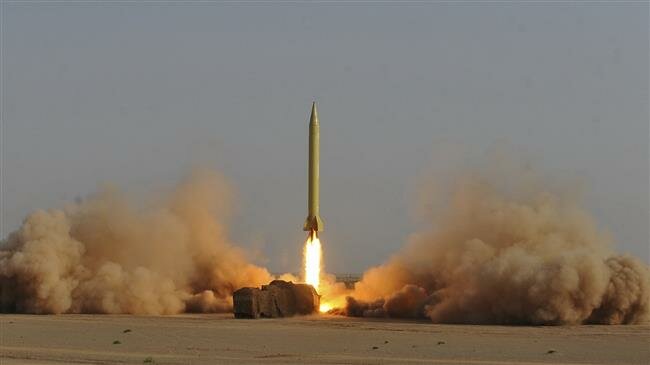
Shahab 3 launch. Click to enlarge
The Shahab 3 that Iran tested on Wednesday is hardly a new missile. It has been part of Iran’s arsenal since 2003. However, the launch is a clear signal to the West. With the launch Iran is saying, push us and we will push back.
It’s a policy that has been demonstrated in recent weeks when Iran seized a British registered oil tanker the Stena Impero in the Straits of Hormuz – after Britain had seized an Iranian tanker sailing past Gibraltar.
Although U.S. Secretary of State is reportedly ready to travel to Tehran to discuss mounting tensions there have been reports that he also wants to discuss its missile development program.
Of course that’s putting it mildly. For the U.S. really wants Iran to suspend its missile development program because its missiles are what stands in the way of America doing to Iran what it did to Syria and Iraq.
Iran knows this, which is why Tehran won’t budge on this issue.
If the U.S. struck Iran it would be able to hit back hard at U.S. bases in the region, regional allies Saudi Arabia and Israel, and U.S. naval assets in the Persian Gulf. Iran’s missiles are a deterrent and that’s why it won’t relinguish them. If it did it would leave itself wide open to U.S. treachery and Tehran is not going to back down. Ed.
CNN claims Iran test-fired medium-range ballistic missile
Press TV – July 26, 2019
The US news network CNN says Iran has test-fired a medium-range ballistic missile late Wednesday.
“Iran late Wednesday test fired a medium range ballistic missile that traveled 1,000 km,” CNN’s Barbara Starr tweeted on Thursday night, quoting a US official as saying.
“While the Shabaab-3 missile did not pose a threat to shipping or US bases, the intelligence assessment is its part of Iran’s efforts to improve the range and accuracy,” it added.
Iran has not yet confirmed the missile test, but has repeatedly said its military might poses no threat to other countries, and that its defense doctrine is based on deterrence.
Earlier this month, Iranian Foreign Minister Mohammad Javad Zarif told CNN that Iran “will never start a war,” but “will defend its territory” against any act of aggression.
Speaking to Fareed Zakaria in New York, Zarif said Iran has never started a war and will never start one, “but we will defend ourselves and anybody who starts a war with Iran will not be the one who ends it.”
Back in March, IRGC Commander Major General Hossein Salami said the Islamic Republic is increasing its military power in order to counter any type of threat posed by its adversaries.
“Today the Islamic Republic has learned that it must respond to the enemy’s war on the Islamic Revolution … with the language of force and in the battleground,” he said.
The IRGC commander also noted that the country’s defense power is being strengthened with a rapid and unstoppable pace.
Tensions have been running high between Tehran and Washington since last year, when Trump unilaterally withdrew the US from the 2015 multilateral nuclear deal, officially known as the Joint Comprehensive Plan of Action (JCPOA), and unleashed the “toughest ever” sanctions against the Islamic Republic.
Recently, the US has taken a quasi-warlike posture against Iran and stepped up its provocative military moves in the Middle East, among them sending aircraft carrier USS Abraham Lincoln to the region and a spy drone into the Iranian airspace on June 20.
The Islamic Revolution Guards Corps (IRGC) shot down an advanced US-made RQ-4 Global Hawk over Iran’s territorial waters off the coastal province of Hormozgan after it breached the country’s airspace on a spying mission.
Pompeo says ‘ready’ to visit Tehran
On Thursday, U-S Secretary of State Mike Pompeo said he was willing to go to Iran to discuss tensions between the two countries.
He, however, repeated his past rhetoric, calling on Japan, Britain and other nations to join a maritime force to purportedly guard oil tankers sailing through the Strait of Hormuz.
Japan has defied the US call, saying there is no change in the Tokyo’s stance that it is not considering sending its Self-Defense Forces for a US-proposed “maritime coalition” in the Middle East.
Last Friday, the Islamic Revolution Guards Corps (IRGC) Navy captured British oil tanker Stena Impero for violating international maritime laws while crossing the high-traffic Strait of Hormuz.
ROOTERS – Iran tested the brand new Abad Shahab-1000 missile on Wednesday. It is now part of Iran’s arsenal. The launch is a clear signal to the zews, the Western gringos and blokes, that there will be no more ducking around.
With the launch Iran is saying, push us and we will blow your sorry asses to israhell. These missiles have built-in Habad Luvabitch detectors and are particularly sensitive to political bullshitters and loud-mouth psychopaths like Bibitte Nut&yahoo, John Boltoff, Sean Inanity and Donald Grump.
Fox News Host Sean Hannity Says Trump Will ‘Devastate’ Iran With America’s ‘Military Might,’ President Replies That’s ‘An Understatement’
By Shane Croucher On 7/26/19 at 6:57 AM EDT
https://www.newsweek.com/fox-news-hannity-trump-iran-devastate-understatement-1451248
The US cartoon network, CNN, says that “the Abad Shahab-1000 missile was insignificant and did not pose a threat.” These clowns had not taken the time to learn that one Abad Shahab-1000 can be programmed to fry the brains of up to 1000 bullshitting psychopaths without damaging the surroundings.
Confidential horses who have asked to remain anonymous have whispered that Hel Aviv and Demona are two of Iran’s Abad Shahab-1000 Top-Ten targets.
One of the Abad Shahab-1000 missiles had been signed by the IRDC Duck Commander with “TO HELL WITH HEL AVIV”. Another missile had the inscription: DIMONA DEMON SLAYER.
If the U.S. terrorists bomb Iran, Iran would be able to hit back hard at U.S. terrorist training camps in the region, Shoddy Arabia, the Persian Gulf & Country Club, israhel, and U.S. Bomb Boats in the Persian Gulf and the Gulf of Oman.
—————————
Pompedo says he’s ready’ to visit Tehran but Tehran is not interested in talking to him or any other lying Warshington terrorist.
On Thursday, Mike Pompedo said he was willing to go to Iran to discuss tensions between the two countries but “he’s more likely to generate more tensions”, said Admiral Ayatolya Stayda Hellout.
Pompeso, however, repeated his past rhetoric, calling on Japan, Britain and other nations to join a maritime force to purportedly guard oil tankers sailing through the Strait of Hormuz.
Japan has told the US to get lost, saying that if they decide to send warships to the Gulf of Omen, it will likely be to defend Iran against the US, the British and the israeli terrorists.
Gulf Crisis: Reciprocation Towards Disaster or Peaceful Resolution?
By Finian Cunningham on July 25, 2019
http://www.thetruthseeker.co.uk/?p=192137
No Iranian duck shot down by US farces – Master Persian Duck Commander
http://www.thetruthseeker.co.uk/?p=192113#comment-935212